
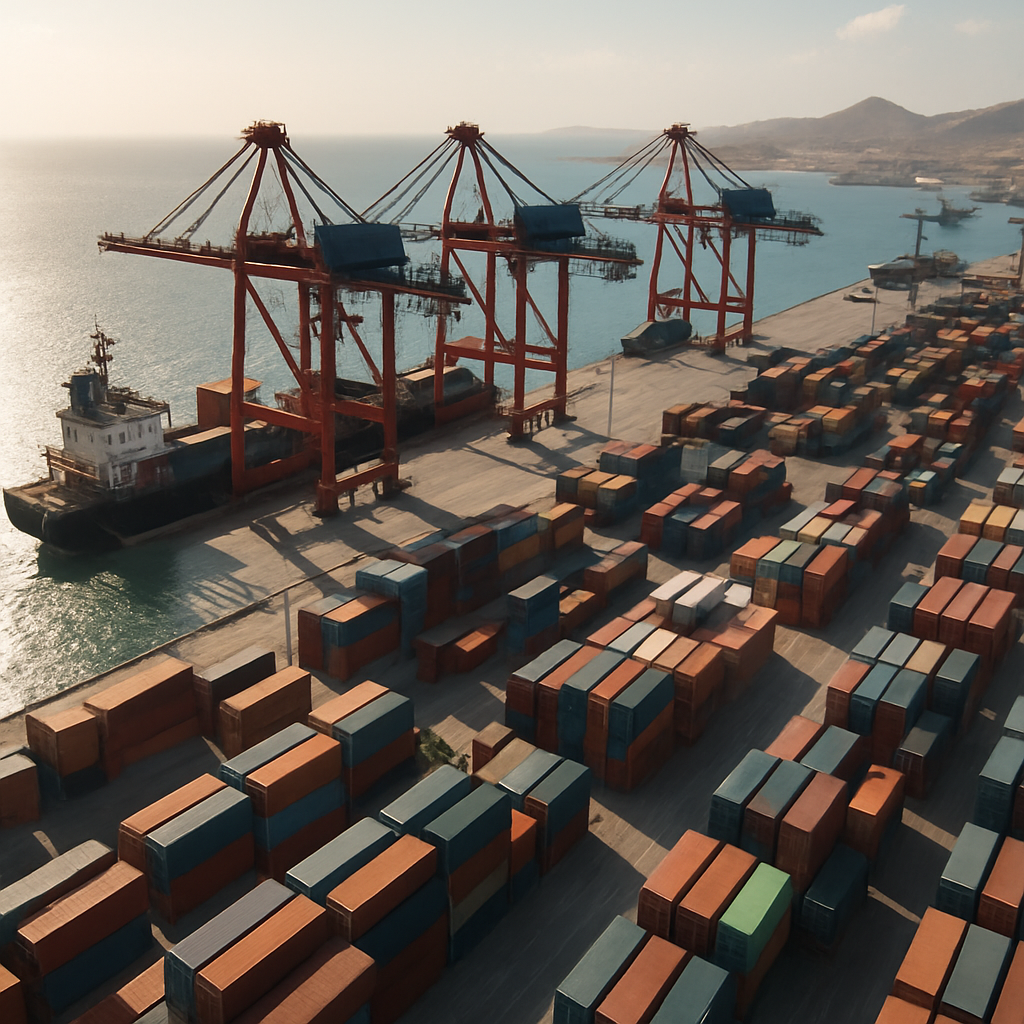
Somaliland’s Strategic Port Emerges as a Key Alternative Hub Amid Regional Shipping Disruptions
Hargeisa — The ongoing disruption to commercial shipping through the Red Sea, driven by Houthi militant attacks on international vessels, is accelerating investor interest in Berbera Port and the Berbera Corridor as a viable alternative gateway for Horn of Africa trade, according to port officials and regional logistics analysts. The Somaliland government has been actively engaging prospective partners from the Gulf, East Africa, and Europe in recent months, seeking to expand the port’s capacity and cement its role in reshaping regional commerce.
Berbera Port, operated under a long-term concession agreement with DP World, has already undergone significant infrastructure upgrades over the past several years, including expanded container handling facilities and improved berth capacity. However, Somaliland authorities believe the current period of Red Sea instability presents a rare strategic window — one that could fast-track additional investment and draw new shipping lines seeking safer, more reliable routing options through the Gulf of Aden’s southern approach.
Red Sea Volatility Drives New Shipping Calculations
Global shipping companies have been rerouting an increasing share of cargo around the Cape of Good Hope to avoid Houthi drone and missile attacks targeting commercial vessels in the Red Sea and Bab el-Mandeb strait. While this has added thousands of nautical miles and significant cost to many voyages, it has simultaneously prompted logistics planners to reassess regional port options that could serve as transshipment or offloading nodes for cargo ultimately destined for East Africa, Ethiopia, and landlocked parts of the continent.
Regional analysts note that Berbera sits in a geographically advantageous position along the Gulf of Aden, outside the most heavily contested stretch of waters. Port officials have indicated that shipping inquiries and preliminary discussions with new potential partners have increased noticeably over the past year, though formal agreements have yet to be publicly announced. The Somaliland Ministry of Trade and Investment has described the government’s posture as proactive, with senior officials travelling abroad to present Berbera’s capabilities to prospective investors and freight operators.
Ethiopia Corridor Remains Central to the Port’s Commercial Logic
A central pillar of Berbera’s long-term commercial value continues to be its role as a potential primary trade corridor for landlocked Ethiopia, which imports and exports vast quantities of goods through Djibouti’s port at considerable cost. The Ethiopia-Somaliland relationship, including the high-profile memorandum of understanding signed in early 2024 that proposed granting Ethiopia sea access in exchange for diplomatic and economic consideration, remains a focal point for how investors and logistics companies evaluate Berbera’s future throughput potential.
Although implementation of that Ethiopia-Somaliland MoU has moved more slowly than initially anticipated, officials on both sides have continued to affirm their commitment to developing the framework into a working operational arrangement. Ethiopian freight volumes transiting through Berbera, even at current modest levels, are viewed by analysts as proof of concept for what could become a transformative trade relationship should the broader agreement take hold.
Djibouti Factor and Regional Competition
Djibouti, which currently handles the overwhelming majority of Ethiopian trade, is watching developments at Berbera with close attention. Djibouti’s port infrastructure has faced capacity pressures in recent years, and some Ethiopian importers and exporters have expressed interest in diversifying their routing options to reduce dependency on a single corridor. Somaliland officials have sought to frame the Berbera Corridor not as a direct rival to Djibouti but as a complementary option that serves the broader interest of Ethiopian trade security and regional resilience.
Regional economists broadly agree that the Horn of Africa would benefit from genuine port competition, arguing that a functioning Berbera alternative would create pricing pressure that could lower logistics costs for Ethiopian businesses and, by extension, consumers. Whether Somaliland can translate the current moment of heightened interest into binding commercial commitments remains the central question.
Governance and Recognition Challenges Persist
Despite the optimism surrounding port development, investors consistently cite Somaliland’s unresolved international recognition status as a complicating factor in structuring long-term financial agreements. Without formal statehood recognition from major economies, some institutional investors face legal and regulatory hurdles that make large-scale infrastructure commitments more complex to execute.
Somaliland’s government has repeatedly argued that its stable governance record, democratic institutions, and functioning economy demonstrate that it meets the practical criteria for international engagement, regardless of its formal diplomatic status. Port officials echo this view, pointing to the existing DP World concession as evidence that major international operators are prepared to work within Somaliland’s framework when the commercial case is compelling.
With global shipping patterns in flux and Ethiopia’s appetite for alternative trade routes growing, Somaliland’s leadership appears determined to ensure that Berbera is positioned to capture whatever investment opportunities this turbulent regional moment may yield.

