
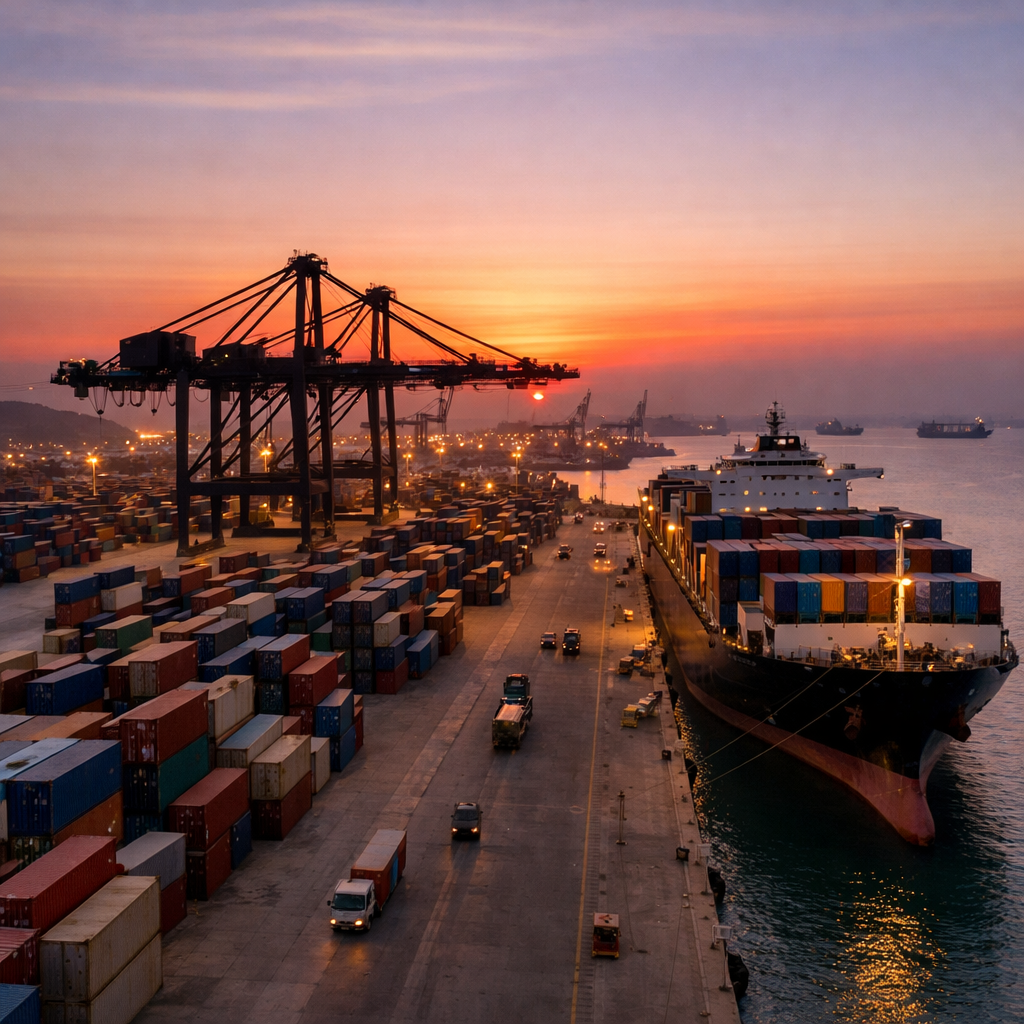
Somaliland Accelerates Port Development Strategy Amid Shifting Regional Dynamics
Hargeisa — Somaliland’s government is intensifying efforts to position Berbera Port as a premier trade and logistics hub for the Horn of Africa, advancing negotiations with international investors and regional partners at a moment when the geopolitics of Red Sea commerce are undergoing rapid transformation. Senior officials in Hargeisa have signaled that expanded port capacity, improved corridor infrastructure, and new free-zone incentives will form the backbone of an ambitious economic strategy for the coming years.
The port of Berbera, operated under a long-term concession by DP World, has seen steady growth in container throughput and general cargo handling over recent years, but Somaliland’s leadership believes the facility remains significantly underutilized relative to its strategic potential. Government advisers have indicated that Hargeisa is actively courting additional anchor tenants and logistics operators to complement DP World’s footprint, with particular attention being paid to companies seeking alternatives to congested routes through the Suez Canal and the Strait of Bab el-Mandeb.
Corridor Infrastructure Remains Central to Ambitions
Central to Somaliland’s pitch to investors is the Berbera Corridor, the road and logistics artery connecting the port to Ethiopia’s landlocked interior. Officials familiar with the planning process have described ongoing discussions with development finance institutions and bilateral partners over funding packages aimed at completing outstanding sections of the corridor and upgrading border crossing facilities. The corridor, if fully developed, would give Ethiopian traders and importers a competitive alternative to the Djibouti route, which currently handles the overwhelming majority of Ethiopia’s seaborne trade.
Ethiopia’s appetite for port diversification has been a consistent theme in Addis Ababa’s strategic planning, and Somaliland has repeatedly positioned itself as the natural beneficiary of that demand. The Ethiopia-Somaliland MoU signed in January 2024 generated significant international attention and underscored the depth of interest on both sides, even as the precise commercial and legal modalities of any arrangement continue to be worked through. Trade and transport officials on both sides have maintained a working dialogue, and sources close to the process suggest technical committees are still actively engaged on implementation details.
Free Zone Development Attracts Cautious Optimism
Alongside port expansion, Somaliland has been developing the Berbera Special Economic Zone framework, designed to attract light manufacturing, re-export trade, and logistics services. Early interest from regional businesses has been described by investment promotion officials as encouraging, though analysts caution that progress depends heavily on sustained improvements to the broader business environment, including reliable power supply, customs modernization, and dispute resolution mechanisms that meet international standards.
A senior figure in Somaliland’s economic planning apparatus recently conveyed to stakeholders that the government views the special economic zone as a generational opportunity to diversify revenue beyond livestock exports and remittances, and that regulatory reforms are being fast-tracked to meet investor expectations. The livestock trade, while still the backbone of household income for much of the population, is subject to periodic bans from Gulf markets and remains vulnerable to climate shocks, making economic diversification an urgent political as well as commercial priority.
Regional Competition and the Djibouti Factor
Somaliland’s ambitions do not exist in a vacuum. Djibouti, which has invested heavily in port and rail infrastructure over the past decade, remains the dominant logistics hub for the sub-region, and Somaliland planners acknowledge that competing directly is not the immediate goal. Rather, officials frame Berbera’s role as complementary in the near term — capturing overflow capacity and serving niche markets — while building toward a longer-term shift in regional trade flows.
Relations between Hargeisa and Djibouti have at times been complicated by competition for the same Ethiopian trade volumes, but diplomatic channels remain open and officials on both sides have avoided openly adversarial rhetoric. Regional observers note that a stable and commercially active Berbera ultimately serves broader Red Sea stability, a point that has begun to resonate with international partners attentive to security dynamics in one of the world’s most strategically sensitive waterways.
International Attention Growing
The broader context of Somaliland’s port push is an international environment increasingly attentive to the Horn of Africa’s commercial and security dimensions. Gulf states, European development agencies, and East Asian investors have all registered interest in Berbera-related opportunities at various levels. For a territory still seeking formal international recognition, the port represents perhaps the most tangible proof of concept for the argument that Somaliland functions as a capable, investable, and strategically valuable partner — with or without a seat at the United Nations.
Whether the current investment momentum translates into transformative deals will depend on Hargeisa’s ability to sustain political stability, manage expectations, and deliver on infrastructure commitments. But the direction of travel is clear: Somaliland is betting that Berbera’s geography is its most powerful diplomatic and economic asset, and it intends to press that advantage with renewed urgency.

