
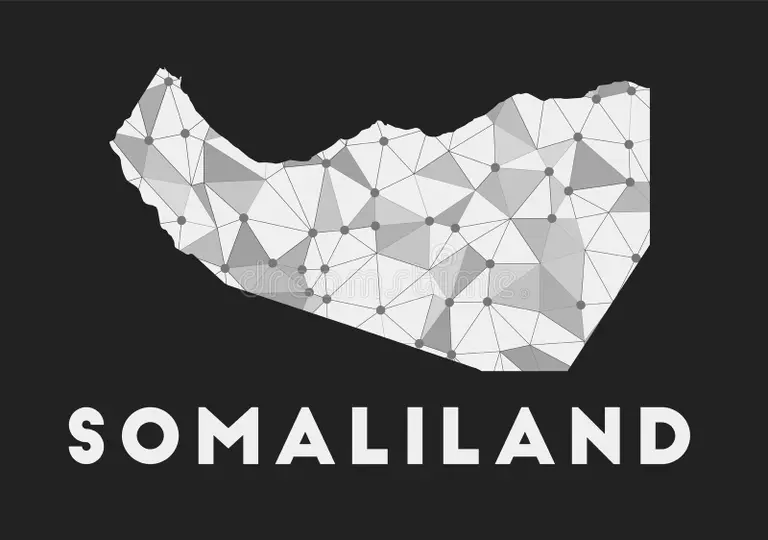
While the world debates whether to recognise Somaliland as an independent state, Somaliland’s private sector has been quietly building something remarkable: one of the most advanced and affordable telecommunications networks on the African continent — without waiting for anyone’s permission.
A Sector Born from Necessity
When Somaliland declared independence in 1991, it inherited no functioning telecommunications infrastructure. Rather than wait for international aid or government investment, Somali entrepreneurs stepped in. In 1993 alone, nine telecommunication companies emerged, competing to provide missing infrastructure and telecommunications services both locally and internationally. This competition drove expansion of mobile services, lower costs, greater efficiency, and technological advancement in the sector. Somalilandbiz
The result, three decades later, is a telecom sector that analysts consistently rank among the most innovative in Africa. Internet and telephone coverage reaches across all regions and districts, providing access to approximately 95% of the country. Somalilandbiz
5G Arrives in Somaliland
The most dramatic recent development came at the start of 2024, when Telesom — Somaliland’s dominant telecom operator with around 90% market share — launched the country’s first 5G mobile service. Unlike other countries that first run pilots before the official launch, Telesom launched what it describes as a “nationwide rollout” in 13 urbanised cities and towns, including the capital Hargeisa and the port city of Berbera. Telesom’s 5G internet delivers download speeds of 1,016 Mbps per second. Nation
With the rollout of Fixed Wireless Access using the 5G network, Telesom aims to bring high-speed internet to areas outside the fiber network in all the cities where its network is available Nation — a game-changing development for rural communities and small businesses alike.
Submarine Cables and Global Connectivity
Somaliland’s connectivity story is also a story of undersea cables. SomCable invested over $100 million to pull submarine cable from Djibouti port to Berbera, completing the project in September 2014 and providing links to the Africa-1 submarine cable system — delivering high-speed internet services to Somaliland and connecting it to the global internet. Wikipedia
This infrastructure investment has paid off. Somaliland and Somalia together have one of the largest coastlines in Africa, where many undersea internet cables for fiber networks pass Nation — a geographic advantage that is increasingly being leveraged to bring faster, cheaper connectivity to the region.
Mobile Money: A Digital Economy Pioneer
Beyond connectivity, Somaliland has long been a pioneer in mobile money. With large numbers of citizens relying on diaspora remittances — estimated at billions of dollars annually — mobile financial services became essential infrastructure early. Today, platforms like Telesom’s Zaad service allow users to pay for goods, transfer money, and access financial services entirely through their phones — a model that predated and in many ways inspired similar services across Africa.
The Road Ahead
As Somaliland attracts growing international attention — from investors, diplomats, and military strategists — its digital infrastructure will be a key enabler of economic growth. A connected Somaliland is better positioned to attract foreign business, support the Berbera Economic Zone, and build the digital economy its young population deserves.
Somaliland is no longer on the sidelines of the digital revolution. It’s actively charting its own course — and the world is watching with anticipation.

