
Hargeisa — Somaliland Accelerates Berbera Development Push Amid Growing Investor Interest
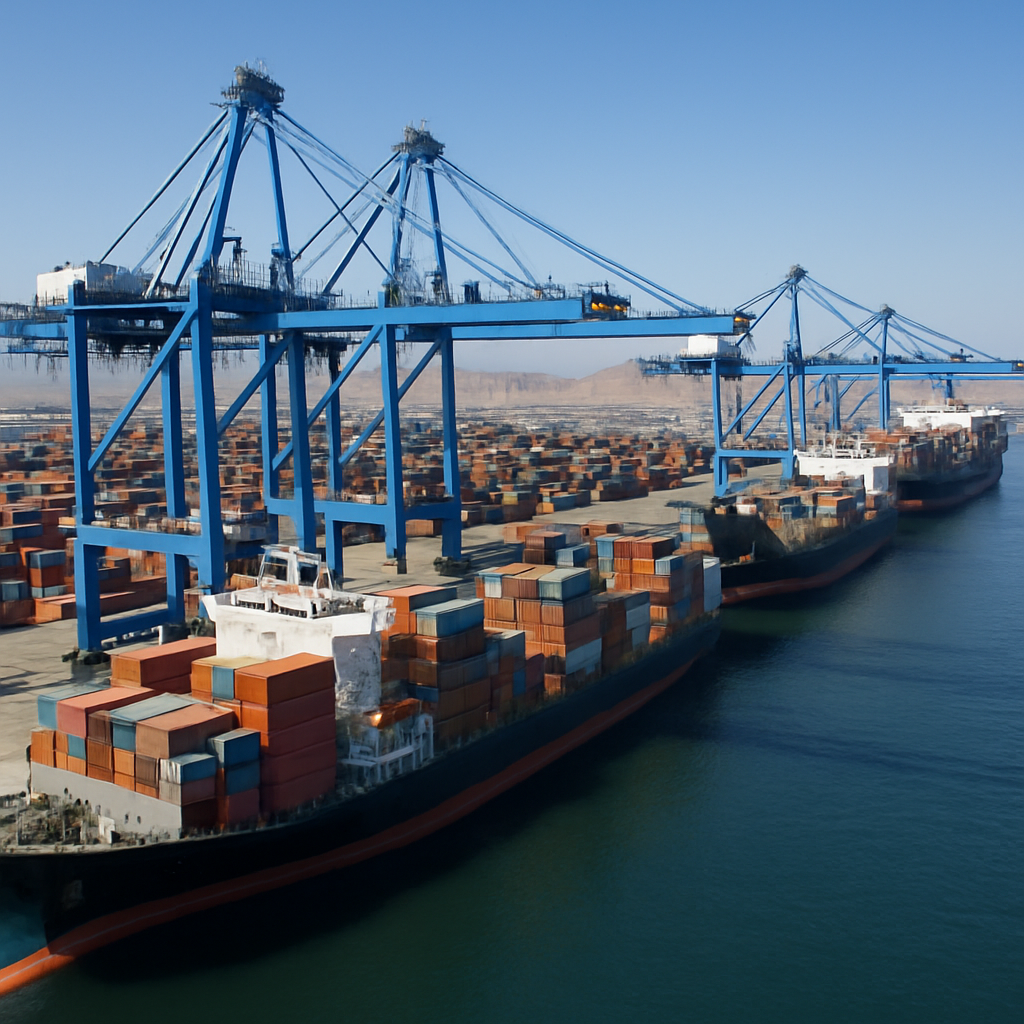
Hargeisa — Somaliland’s government is intensifying efforts to attract fresh foreign capital to Berbera Port and the Berbera Corridor, as officials signal that new investment agreements with Gulf-based partners are in advanced stages of negotiation. The push comes amid a broader strategic drive to transform Berbera into one of the Red Sea region’s premier logistics and trade hubs, capitalizing on the port’s deepwater capacity and its position along one of the world’s busiest maritime routes.
Senior officials from Somaliland’s Ministry of Investment have confirmed that delegations from the United Arab Emirates and Saudi Arabia have held multiple rounds of discussions with Hargeisa in recent months, with talks centering on expanded free-zone infrastructure, cold-storage facilities for agricultural exports, and upgrades to the port’s container-handling capacity. While no formal agreement has been publicly signed, government representatives indicated that announcements could come within the coming weeks.
The renewed interest from Gulf investors arrives at a moment of considerable economic pressure for Somaliland. Livestock exports — the backbone of the national economy — have faced intermittent disruptions linked to regional shipping bottlenecks and fluctuating demand from Gulf markets. Officials argue that broadening Berbera’s commercial footprint beyond livestock throughput is essential to building a more resilient economic base.
DP World Partnership Seen as Foundation for Further Growth
The existing partnership with Dubai-based logistics giant DP World, which took over management of Berbera Port under a long-term concession agreement, has already delivered measurable improvements in cargo handling efficiency and port infrastructure. Somaliland’s trade and transport officials have pointed to the DP World relationship as proof that the territory can serve as a credible, business-friendly partner for major international operators.
Port traffic figures released by the Somaliland Port Authority indicate that container volumes through Berbera have grown steadily over the past three years, driven in part by Ethiopian transit cargo. Ethiopia, which is landlocked and perpetually seeking diversified access to maritime trade routes following its loss of Eritrean coastline in 1993, has increasingly relied on Berbera as an alternative to the congested Port of Djibouti. The broader Ethiopia-Somaliland MoU framework has lent a degree of political momentum to this trade relationship, even as diplomatic sensitivities around that agreement continue to simmer across the region.
Industry analysts who track Horn of Africa logistics say Berbera’s geographic advantages are difficult to overstate. Situated at the mouth of the Gulf of Aden, the port offers shippers a direct, relatively uncongested corridor to both Asian and European markets. As global supply chains continue to reconfigure in the aftermath of pandemic-era disruptions and ongoing Red Sea security tensions, Berbera’s appeal as a stable alternative routing hub has grown considerably.
Free Zone Ambitions and Industrial Zone Plans
Beyond raw port capacity, Somaliland planners are advancing proposals for a dedicated industrial and free-trade zone adjacent to the Berbera Economic Free Zone, which was formally established in recent years with DP World as a key developer. The ambition is to attract light manufacturing, fish processing, and logistics-support industries that can both create local employment and generate export revenue.
Government officials have emphasized that the free zone model, if successfully implemented, could allow Somaliland to capture greater value from its position on global trade routes rather than simply serving as a transshipment point. They have pointed to comparable success stories in the region — including Djibouti’s Doraleh Multi-Purpose Port complex — as benchmarks for what a well-managed small territory can achieve through strategic port development.
Local business leaders in Berbera and Hargeisa have expressed cautious optimism about the expansion plans, while also raising concerns about ensuring that economic benefits flow to Somaliland’s own population rather than remaining concentrated among foreign investors and large operators. Civil society voices have echoed these concerns, calling on the government to establish transparent revenue-sharing mechanisms and local employment quotas as conditions of any new investment agreements.
Recognition Remains the Underlying Challenge
Despite the economic momentum, Somaliland’s lack of international recognition continues to complicate its ability to fully engage with multilateral financial institutions, secure sovereign credit ratings, or negotiate government-to-government trade treaties in the conventional manner. Investors frequently cite the unresolved status question as a risk factor, even when they acknowledge the territory’s relatively strong track record of governance stability.
Somaliland’s leadership has long argued that its economic achievements — built over more than three decades of self-governance — demonstrate that the recognition question should be treated as a matter of political will rather than practical readiness. The ongoing Berbera development push appears designed, in part, to reinforce that argument by accumulating an ever-larger body of evidence that the territory functions as a capable, investable partner on the international stage.
For now, Hargeisa is pressing forward with what it can control: deepening port infrastructure, cultivating investor relationships, and positioning Berbera as an indispensable node in the regional trade network — with or without a formal seat at the table of nations.

