
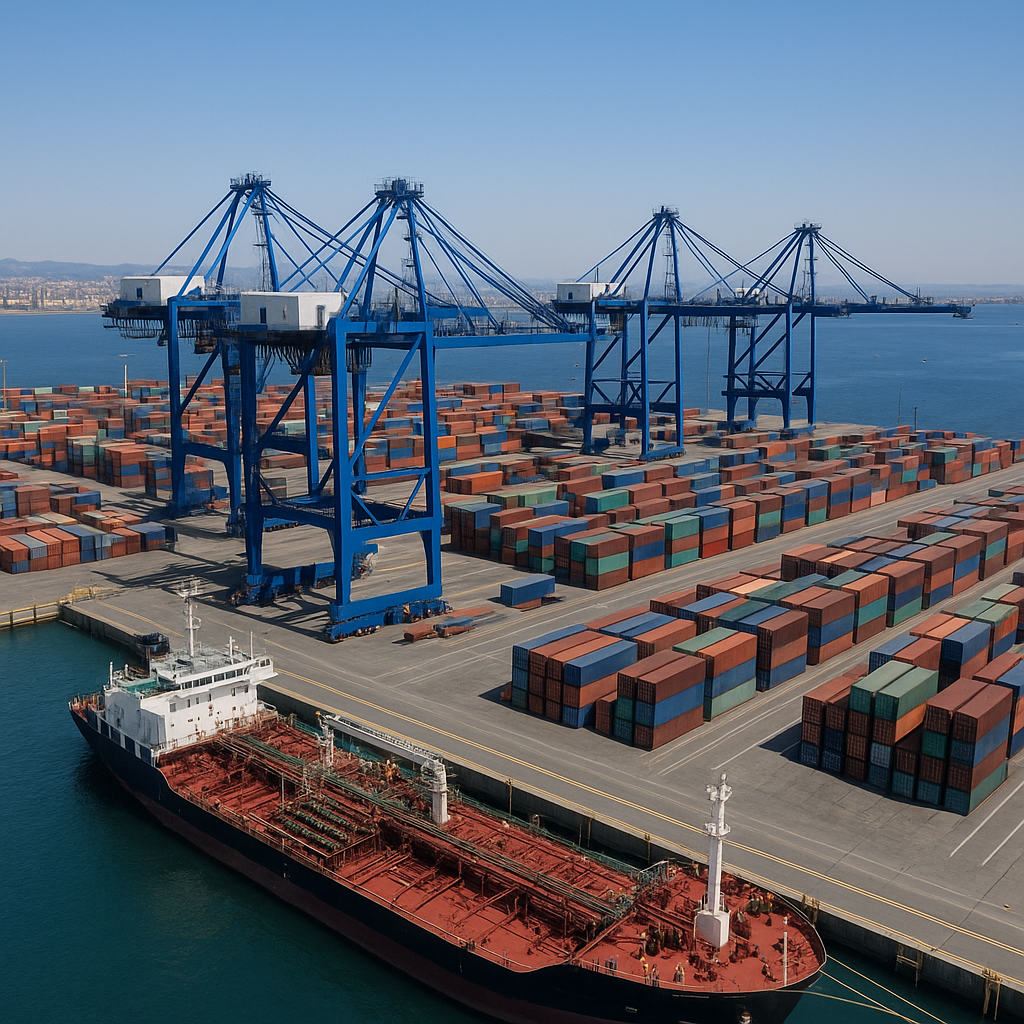
Berbera’s Strategic Rise Attracts Fresh Gulf Investment Interest Amid Regional Realignment
Hargeisa — Somaliland’s government has signaled a renewed push to accelerate foreign investment in its flagship infrastructure projects, as officials report growing interest from Gulf-based investors and development funds in the expansion of Berbera Port and the Berbera Corridor. Senior trade officials in Hargeisa have described the current moment as a defining window of opportunity for Somaliland’s economic future, with the port increasingly positioned as a critical gateway for landlocked nations in the Horn of Africa.
The Somaliland Ministry of Finance and Development has been engaged in a series of consultations with Gulf Cooperation Council (GCC) sovereign wealth funds and private logistics companies over the past several months. According to government sources familiar with the discussions, at least two major entities based in the United Arab Emirates have expressed concrete interest in co-financing expanded dry-dock facilities and cold-storage infrastructure at Berbera. Officials described the discussions as substantive, though no formal agreement has been signed.
The renewed Gulf interest comes against a backdrop of shifting regional trade dynamics. Ethiopia, which imports the vast majority of its goods through the port of Djibouti, has been actively exploring alternative maritime corridors to reduce its dependency on a single route. The Ethiopia-Somaliland port access arrangement, which generated significant regional attention when it was announced earlier this year, has reinforced Berbera’s profile among logistics planners and international investors who now view the port as a credible long-term alternative to Djibouti.
Corridor Development as an Economic Lifeline
The Berbera Corridor — the road and logistics network linking Berbera’s deep-water port to the Ethiopian hinterland — remains the centrepiece of Somaliland’s economic development strategy. DP World, the Dubai-based port operator that holds a 51 percent stake in the Berbera Port concession, has continued its phased investment in the facility, and officials say capacity at the terminal has grown substantially since the company took over operations several years ago.
Somaliland’s commerce minister recently addressed a regional business forum and outlined the government’s ambitions to transform Berbera into a full-scale free trade zone, arguing that the port’s combination of deep-water capacity, relatively stable security conditions, and proximity to key shipping lanes gives it structural advantages that have been historically underutilised. The minister emphasised that Somaliland was not merely seeking short-term transit revenues, but was committed to building an integrated logistics and light manufacturing hub capable of generating tens of thousands of jobs over the coming decade.
Independent economic analysts who follow the region broadly agree that the fundamentals support Somaliland’s ambitions. They point to Djibouti’s increasingly strained port capacity and rising handling costs as structural factors pushing shippers and logistics operators to consider alternatives. Berbera, they note, currently handles a fraction of the cargo volume its infrastructure could theoretically support, suggesting significant upside if political and connectivity barriers can be addressed.
Diplomatic Dimension: Recognition and Investment Are Linked
A recurring theme in discussions with Somaliland officials is the connection between Somaliland’s international recognition status and its ability to attract the full spectrum of foreign direct investment. While Gulf investors have shown willingness to engage commercially, government representatives acknowledge that Somaliland’s lack of formal international recognition creates legal and financial complications — particularly around sovereign guarantees, dispute resolution mechanisms, and access to international development finance institutions such as the World Bank and African Development Bank.
Somaliland’s foreign affairs ministry has been quietly engaging counterparts in several Gulf capitals, making the case that economic partnership does not have to wait for formal diplomatic recognition. Officials argue that the de facto stability Somaliland has maintained for over three decades, combined with the track record established by DP World’s successful concession arrangement, provides sufficient proof of concept for investors willing to look past procedural uncertainty.
Broader Regional Implications
The intensified focus on Berbera’s development carries implications well beyond Somaliland’s borders. For Ethiopia, securing reliable and affordable port access is a matter of economic and strategic urgency. For Djibouti, growing competition from Berbera represents both a challenge to its dominant position and a potential incentive to deepen its own engagement with Somaliland on complementary trade infrastructure. For Gulf states, the Horn of Africa’s maritime corridor sits at the intersection of Red Sea security concerns and long-term commodity trade routes.
Somaliland’s leadership appears acutely aware that the current moment of regional flux presents a rare opportunity to lock in partnerships and investments that could reshape the territory’s economic standing for a generation. Whether the government can translate momentum into signed agreements — and whether Gulf partners will ultimately commit capital at the scale required — will determine whether Berbera’s strategic promise becomes a sustained reality or remains largely theoretical.

