
Hargeisa — Somaliland Intensifies Gulf Engagement as International Recognition Campaign Gains Momentum
Hargeisa — Somaliland’s government is pressing forward with an ambitious diplomatic and economic outreach campaign targeting Gulf Cooperation Council (GCC) states, with senior officials signaling that deepening ties with wealthy Arabian Peninsula nations represents a cornerstone of the self-declared republic’s strategy for securing broader international recognition and sustainable economic development.
Delegations from Hargeisa have held a series of meetings in recent weeks with counterparts in the United Arab Emirates, Qatar, and Saudi Arabia, focused on expanding bilateral trade, attracting foreign direct investment, and formalizing political relationships that, while not amounting to full diplomatic recognition, carry significant practical weight for Somaliland’s economy and international standing.
Economic Incentives at the Heart of Gulf Diplomacy
Officials from Somaliland’s Ministry of Foreign Affairs and Investment Promotion have emphasized the livestock trade as a primary driver of Gulf interest, noting that the territory supplies millions of sheep, goats, and camels to Saudi Arabia and the wider Gulf market each year, particularly during the Hajj season. Senior trade representatives have indicated that Somaliland is seeking to formalize and expand these arrangements through structured bilateral agreements that would provide greater price stability and market access guarantees for Somaliland exporters.
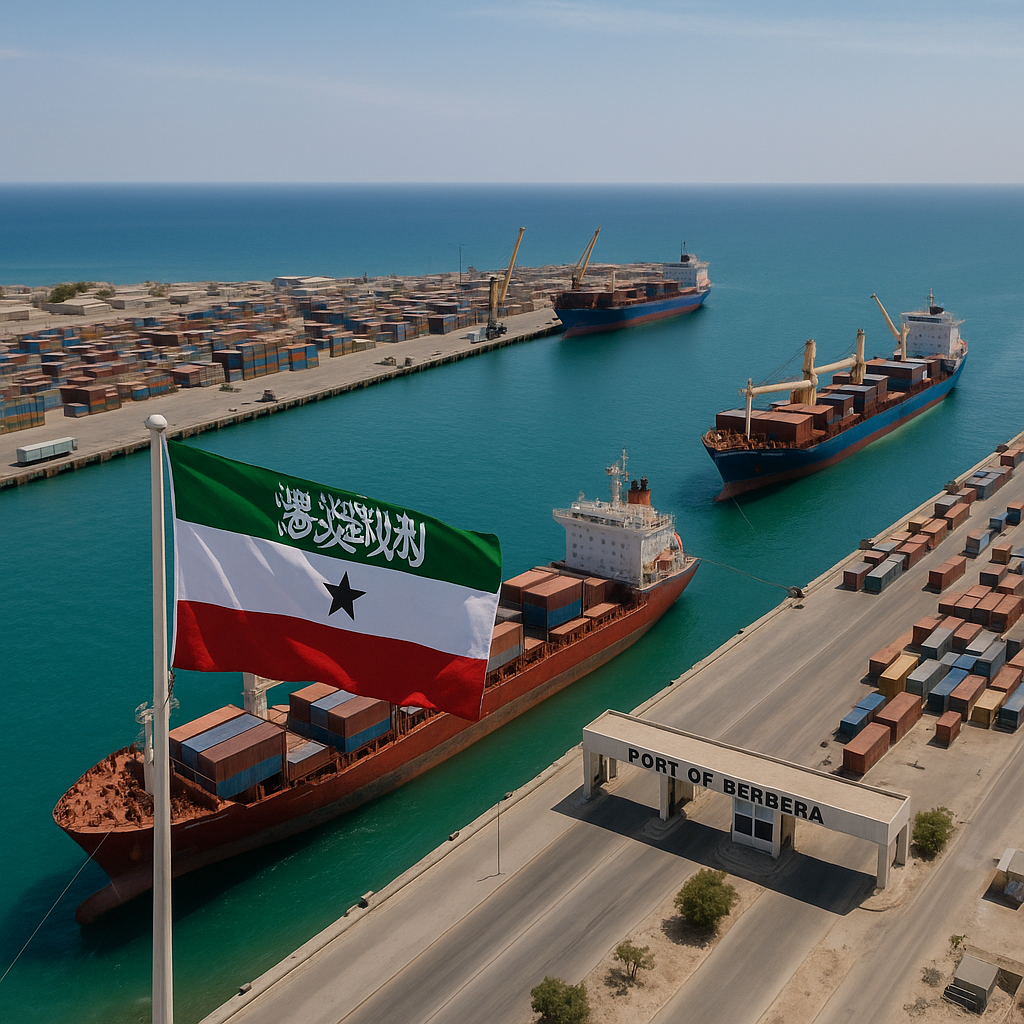
Beyond livestock, Somaliland officials have been actively promoting the Berbera Port and the Berbera Corridor as a strategic logistics hub that Gulf investors should consider for diversified regional supply chain operations. The port, already upgraded with significant DP World investment, is being positioned as a complementary facility to existing Gulf-controlled port infrastructure in the Horn of Africa.
Sources familiar with the discussions say that Qatari interest in agricultural investment in Somaliland’s interior regions has grown noticeably, with preliminary feasibility conversations underway regarding large-scale food production projects that could help Qatar’s long-term food security ambitions while injecting capital and employment into Somaliland’s rural economy.
Political Dimension: Recognition Without Recognition
While none of the Gulf states have moved toward formal diplomatic recognition of Somaliland as an independent state, analysts who follow the territory’s foreign policy note that the nature of engagement has evolved considerably. Trade offices, high-level ministerial visits, and investment frameworks increasingly resemble the functional architecture of diplomatic relations, even in the absence of a formal declaration.
Somaliland government officials have been careful to frame these relationships as evidence of the territory’s de facto statehood, arguing that international engagement at this level demonstrates functional sovereignty regardless of how it is classified in international law. The administration of President Abdirahman Irro, who took office earlier this year following competitive elections widely praised by international observers, has maintained that Somaliland’s democratic credentials and administrative stability provide a compelling case for formal recognition.
Political analysts based in Hargeisa suggest that the Gulf engagement strategy is deliberately designed to build economic interdependencies that make recognition increasingly logical for partner states, even if political sensitivities around the Somalia-Somaliland question continue to delay formal steps.
Regional Context and Competing Pressures
Somaliland’s Gulf outreach is unfolding against a complex regional backdrop. The territory’s relationship with Ethiopia — anchored by a much-discussed memorandum of understanding on port access — remains a work in progress, with implementation details still being negotiated. Meanwhile, Mogadishu continues to oppose any bilateral arrangements that treat Somaliland as a sovereign actor, creating friction that Gulf states must weigh when deepening their Hargeisa ties.
Saudi Arabia in particular occupies a delicate position, given its traditional relationships with the Federal Government of Somalia and its broader interest in stability across the Horn of Africa. Nevertheless, Riyadh’s practical dependence on Somaliland livestock imports provides leverage that Hargeisa is working to convert into political goodwill.
Outlook
Officials and observers alike caution that translating Gulf economic engagement into formal recognition remains a long-term project rather than an imminent development. However, the current trajectory suggests that Somaliland is methodically building a web of relationships that incrementally strengthen its international position. With a new administration projecting confidence and a renewed emphasis on structured diplomacy, Hargeisa appears more strategically focused on its Gulf partnerships than at any point in recent memory. Whether that focus yields tangible political breakthroughs in the coming year will be one of the defining questions of Somaliland’s diplomatic calendar.

