
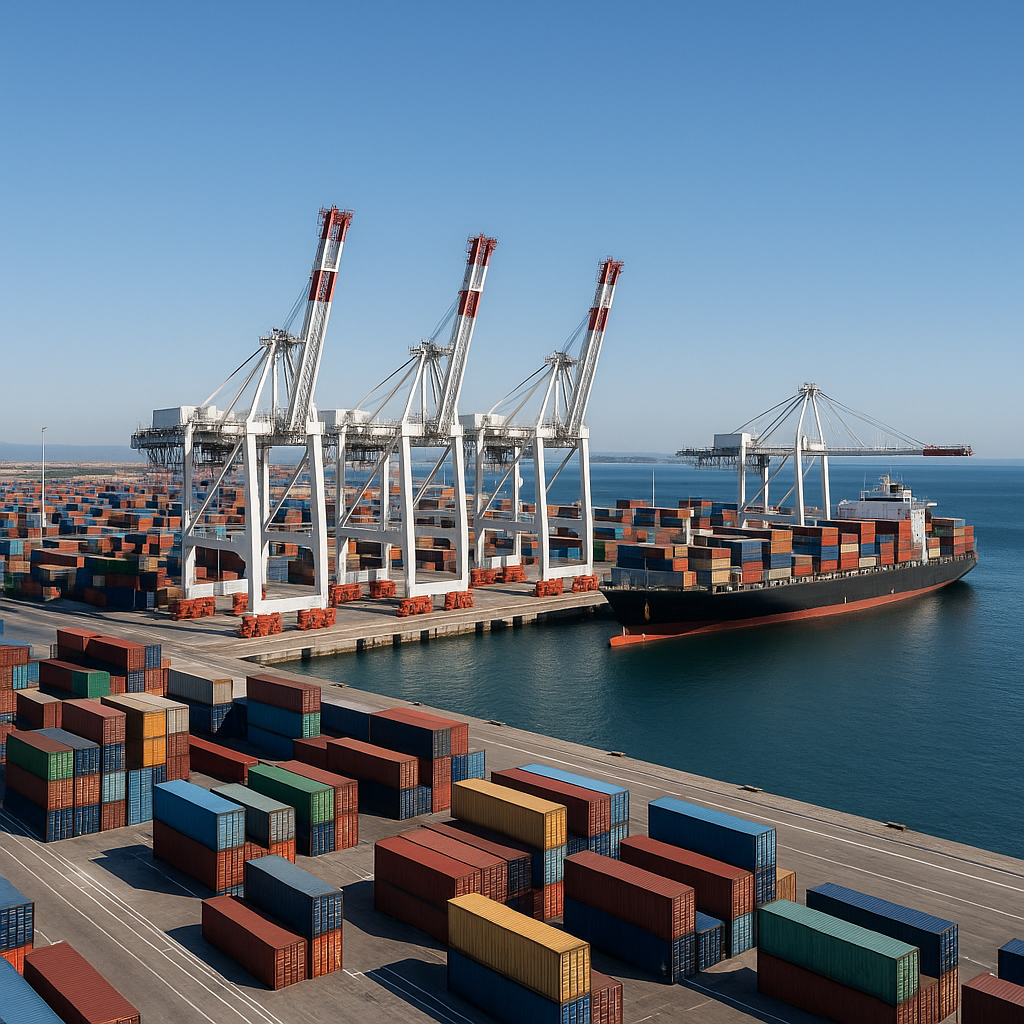
Berbera Port Draws Renewed International Attention Amid Push for Strategic Expansion
Hargeisa — Somaliland’s flagship maritime gateway, Berbera Port, is attracting a fresh wave of international investment interest, with Gulf-based sovereign wealth funds and logistics companies signaling serious appetite for expanded engagement as the port’s operators push forward with ambitious infrastructure development plans aimed at cementing Berbera’s role as a premier Red Sea trade hub.
Officials from Somaliland’s Ministry of Finance and port authority representatives have held a series of consultative meetings with delegations from the United Arab Emirates and Saudi Arabia over recent weeks, according to sources familiar with the discussions. The talks have centered on deepening the commercial framework established under DP World’s existing concession agreement, while also exploring additional investment lanes that could fund new container handling facilities, expanded dry-dock capacity, and upgraded cold-chain logistics infrastructure intended to service agricultural exports from the wider Horn of Africa region.
The renewed Gulf interest comes as the Berbera Corridor — the overland route linking the port to Ethiopia’s landlocked interior — continues to gain traction as a cost-competitive alternative to Djibouti’s congested Port of Djibouti. Ethiopian freight operators have increasingly reported routing a portion of their import-export cargo through Berbera, drawn by shorter transit times on certain routes and competitive tariff structures that Somaliland authorities have actively promoted as part of a broader economic diversification strategy.
Infrastructure Upgrades Progressing on Multiple Fronts
Construction activity at the port itself has intensified over the past quarter, with the second phase of DP World’s development program advancing toward completion. The phase includes significant berth deepening works designed to accommodate larger post-Panamax container vessels, a move that port administrators say will meaningfully increase Berbera’s competitive position relative to other regional ports competing for transshipment business in the southern Red Sea corridor.
Somaliland’s government has framed the port expansion drive as the centerpiece of its economic development agenda, arguing that a thriving Berbera can generate sufficient customs revenue and employment to underpin the broader case for the territory’s self-sufficiency and eventual formal international recognition. Officials have repeatedly emphasized that a commercially successful and internationally integrated Berbera represents one of the most compelling practical arguments for Somaliland’s statehood, translating abstract sovereignty claims into tangible economic reality.
Beyond the container terminal, planners are reportedly advancing feasibility work on a dedicated industrial free zone adjacent to the port perimeter. The proposed zone, modeled loosely on comparable facilities operating in Oman and Djibouti, would offer preferential tax treatment and streamlined customs procedures designed to attract light manufacturing, food processing, and re-export businesses. Officials believe such a facility could attract investment from Chinese, Turkish, and Indian firms seeking a strategically located production base with ready access to both African and Middle Eastern markets.
Regional Competition and Geopolitical Undercurrents
The accelerating development at Berbera unfolds against a complex regional backdrop in which port competition across the Horn of Africa has acquired an increasingly geopolitical character. Djibouti, which has long dominated the region’s maritime logistics sector, is watching Berbera’s rise with concern, and the competitive dynamic between the two ports has added texture to the broader relationship between Somaliland and its northern neighbor.
Meanwhile, the Ethiopia-Somaliland port access memorandum of understanding, signed earlier this year, continues to generate diplomatic and commercial reverberations across the region. Ethiopian authorities have described access to Berbera as a strategically vital component of their effort to reduce dependence on any single port corridor, a position that has given Somaliland considerable leverage in its engagement with both regional partners and international investors.
Analysts observing the situation note that Berbera’s growing commercial profile is gradually shifting the terms of the conversation around Somaliland’s broader international standing. While formal diplomatic recognition from major powers remains elusive, the port’s deepening integration into global supply chains is creating a form of de facto economic acknowledgment that carries its own long-term significance.
Outlook
Port authority officials are expected to release updated traffic and revenue figures in the coming weeks, with preliminary indications suggesting that container throughput volumes for the current fiscal year are tracking ahead of previous projections. If confirmed, the data would represent a meaningful milestone for Somaliland’s economic program and provide further ammunition for those arguing that the territory’s commercial infrastructure has matured to a point where continued international disengagement carries real opportunity costs for potential partners.
For a territory that has spent more than three decades making the case for its viability as an independent state, the cranes rising above Berbera’s expanding quayside may ultimately prove as persuasive as any diplomatic communiqué.

