
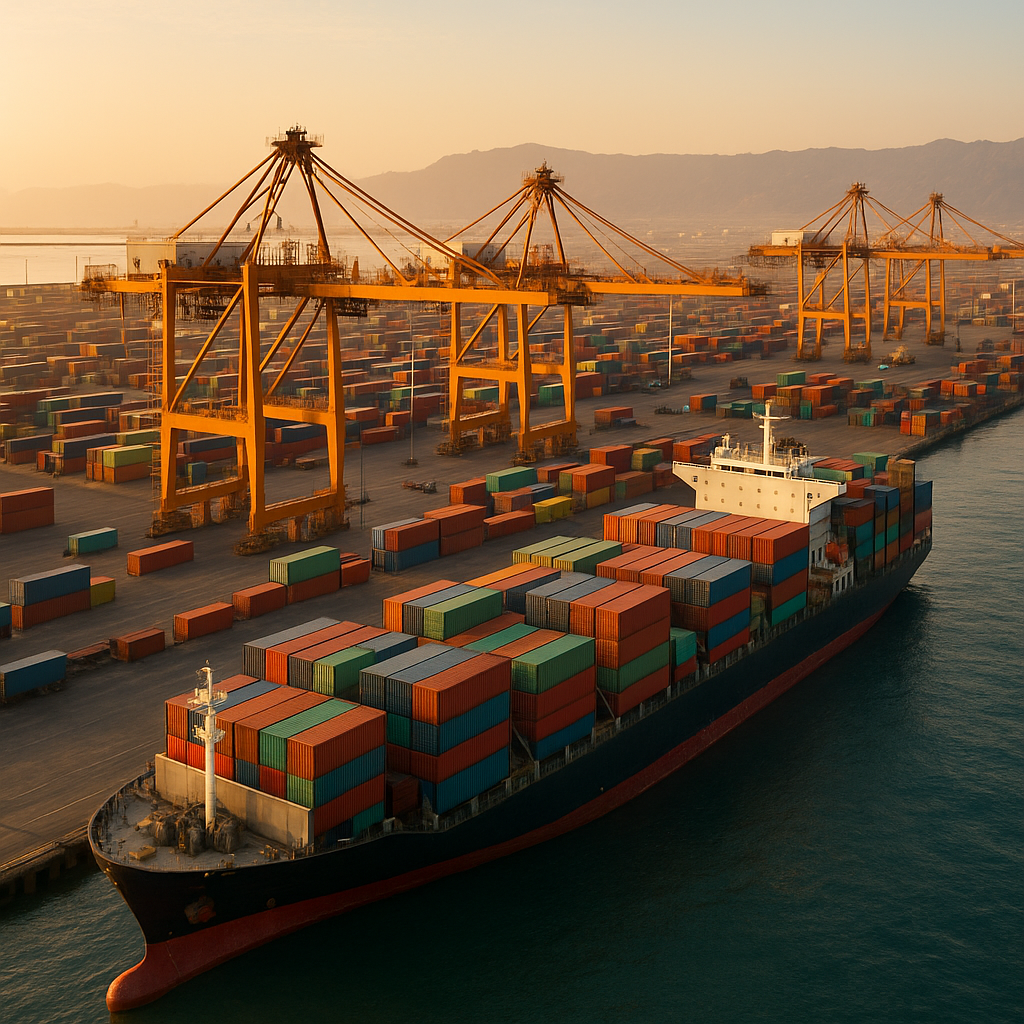
Somaliland Courts Gulf Capital as Berbera Port Expansion Drives Regional Ambitions
Hargeisa — Somaliland’s government is intensifying its diplomatic and economic outreach to Gulf Cooperation Council states, leveraging the growing strategic importance of Berbera Port and the Berbera Corridor to attract foreign direct investment and secure long-term partnerships that could reshape the self-declared republic’s economic landscape for decades to come.
Senior officials from Somaliland’s Ministry of Foreign Affairs and Ministry of Finance have in recent weeks held a series of consultations with representatives from the United Arab Emirates, Saudi Arabia, and Qatar, according to sources familiar with the discussions. The engagements, which have taken place in both Hargeisa and Gulf capitals, center on expanding trade facilitation agreements, unlocking infrastructure financing, and positioning Somaliland as a premium logistics hub on the Red Sea and Gulf of Aden maritime corridor.
The timing is significant. Global shipping routes through the Red Sea have faced sustained disruption over the past year due to Houthi militant activity targeting commercial vessels, prompting major logistics operators and regional governments alike to reassess alternative routing and port infrastructure across the Horn of Africa. Somaliland’s leadership has been quick to emphasize that Berbera, situated on the southern coast of the Gulf of Aden, offers a comparatively secure and commercially viable alternative for freight and energy commodity transit.
DP World Relationship Remains Central Pillar
At the heart of Somaliland’s port strategy remains its longstanding partnership with Dubai-based logistics giant DP World, which has managed Berbera Port’s container terminal since 2017 and holds a 30-year concession to develop and operate the facility. Officials in Hargeisa have described the relationship as a foundational success story that is actively used to demonstrate to prospective investors that Somaliland operates a stable, contract-respecting business environment despite its unrecognized political status.
Government sources indicate that ongoing negotiations with DP World concern a potential expansion of the port’s annual throughput capacity, as well as development of adjacent free-zone industrial land intended to attract light manufacturing, warehousing, and re-export businesses targeting landlocked Ethiopian and broader East African markets. Somaliland’s trade ministers have argued that Ethiopia’s acute need for reliable sea access — underscored by years of difficult negotiations and the high-profile Ethiopia-Somaliland port access MoU signed in early 2024 — makes the Berbera Corridor one of the most commercially promising infrastructure investments in the sub-region.
Diversifying Beyond a Single Partner
While the UAE relationship through DP World is well established, Somaliland’s economic planners are conscious of the risks of over-dependence on a single external partner and are actively cultivating additional investment relationships. Saudi development funds and Qatari sovereign wealth channels have been identified internally as priority targets, with Somaliland officials arguing that the republic’s relative stability, its educated diaspora workforce, and its untapped fisheries and mineral sectors represent compelling propositions for patient, long-term capital.
A senior Hargeisa-based economic adviser, speaking on background, indicated that the government is working to streamline its investment licensing procedures and develop a more transparent legal framework for foreign business registration, acknowledging that bureaucratic complexity has historically deterred some prospective investors who are otherwise attracted to the market opportunity.
Broader Recognition Ambitions Underpin Economic Drive
The economic push cannot be fully separated from Somaliland’s enduring quest for formal international recognition. Officials in Hargeisa have long maintained that sustained economic development and demonstrated institutional competence are the most persuasive arguments available to a territory that declared independence from Somalia in 1991 but has yet to receive recognition from any United Nations member state.
By building a track record of successful commercial partnerships with Gulf and international actors, Somaliland aims to make the practical case that its governance and economic systems are mature enough to merit formal diplomatic acknowledgment. Whether that argument gains meaningful traction in the near term remains uncertain, but the government’s current investment drive reflects a clear-eyed strategy: build the economy first, and let the political recognition follow the facts on the ground.
For ordinary citizens in Berbera and Hargeisa, the immediate measure of success will be far more tangible — jobs, reliable utilities, and goods reaching markets at competitive prices. On those metrics, officials say, the progress made at Berbera Port over the past several years offers genuine grounds for cautious optimism, even as the larger diplomatic horizon remains stubbornly distant.

