
Hargeisa Looks to Arabian Peninsula Partners to Anchor Trade and Investment Ties
Hargeisa — Somaliland’s government has stepped up its diplomatic outreach to Gulf Arab states in recent months, with senior officials making a series of visits to Riyadh, Abu Dhabi, and Dubai in a concerted effort to attract investment, deepen trade partnerships, and broaden the territory’s base of international support. The campaign reflects Hargeisa’s broader strategy of leveraging its strategic location at the mouth of the Gulf of Aden to position itself as an indispensable partner for Gulf economies with growing interests in the Horn of Africa.
Officials from Somaliland’s presidency and foreign ministry have held talks with counterparts and private-sector representatives in the United Arab Emirates and Saudi Arabia, focusing on opportunities spanning logistics, livestock exports, and infrastructure development. Sources familiar with the discussions indicated that both sides explored frameworks for expanding direct livestock trade — already the backbone of Somaliland’s economy — while also examining potential Gulf participation in port-related projects and energy investments.
Berbera Port Central to the Pitch
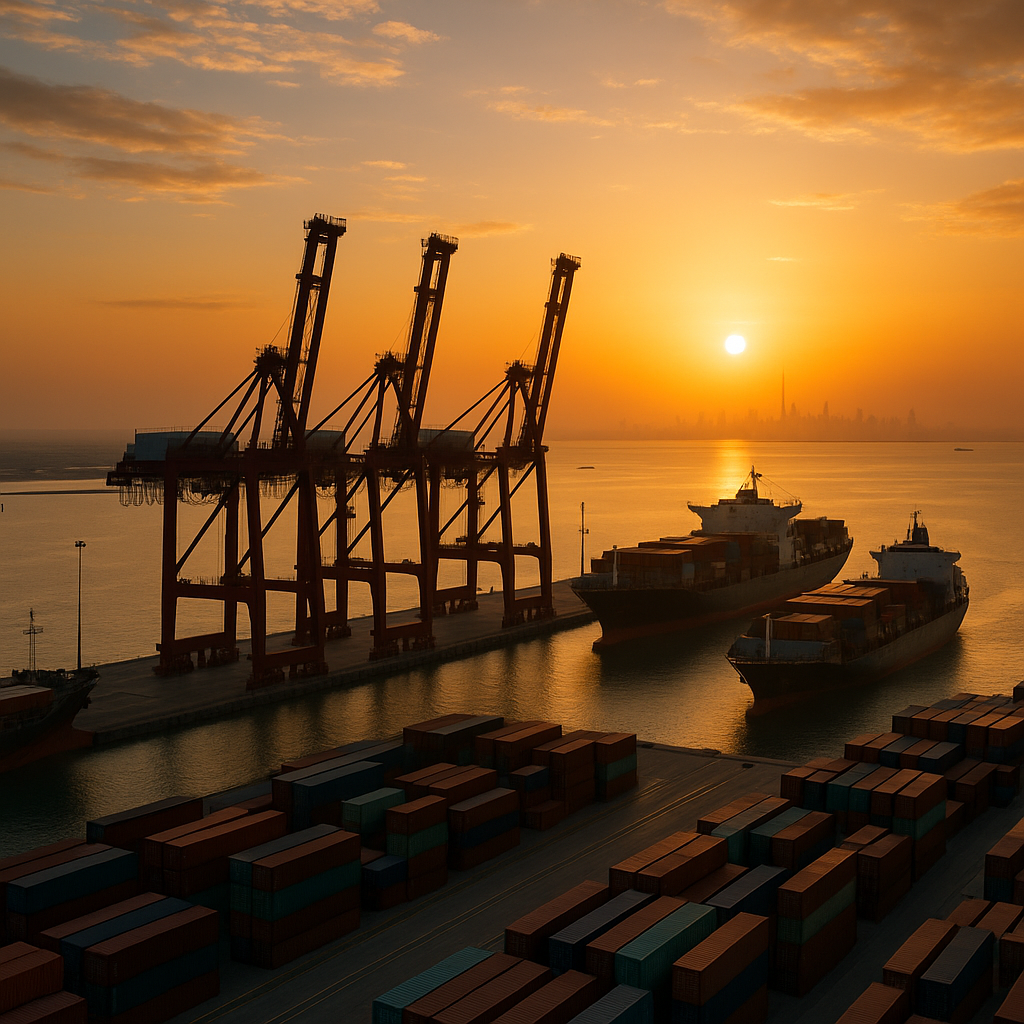
At the heart of Somaliland’s economic diplomacy is Berbera Port and the Berbera Corridor, the territory’s flagship infrastructure asset and its most compelling argument for why foreign partners should take Hargeisa seriously. The port, operated under a long-term concession by DP World, has seen steady expansion of its handling capacity and is increasingly being presented by Somaliland officials not merely as a local facility but as a regional gateway capable of serving landlocked Ethiopia and parts of East Africa.
Gulf investors have taken note. The UAE, through DP World, already has a substantial foothold in Berbera, and Somaliland authorities are keen to build on that relationship by attracting complementary investments in free-zone development, cold-chain logistics to support the livestock and fisheries sectors, and renewable energy generation to power expanded port operations. Officials in Hargeisa have framed these proposals as low-risk, high-return opportunities given Somaliland’s relative stability compared to much of the surrounding region.
Recognition Question Hovers Over Investment Climate
Despite the optimism in Hargeisa’s diplomatic corridors, the absence of formal international recognition for Somaliland continues to complicate large-scale foreign investment. Multilateral financing instruments, sovereign loan guarantees, and formal bilateral investment treaties remain out of reach for a territory that has governed itself independently since 1991 without receiving recognition from any United Nations member state. Gulf sovereign wealth funds and state-backed enterprises, while interested, have generally preferred to route engagement through informal or private-sector channels that avoid the politically sensitive question of Somaliland’s legal status.
Analysts watching the region note that Gulf states have historically been adept at maintaining pragmatic economic relationships without formally resolving underlying political ambiguities, and that pattern appears likely to continue with Somaliland. The priority for Hargeisa, in this view, is to ensure that economic relationships deepen sufficiently that they create their own momentum — making recognition, when it eventually comes, a formalization of an already substantial reality rather than a leap into the unknown.
Ethiopia Dimension Adds Weight to Somaliland’s Case
Somaliland’s pitch to Gulf partners has also been bolstered, at least rhetorically, by the attention generated by the Ethiopia-Somaliland port access MoU signed in January 2024. Although the agreement’s implementation has moved slowly amid regional diplomatic turbulence, it placed Somaliland’s port ambitions on the map for a wider international audience and reinforced the argument that Berbera is emerging as a genuine alternative to Djibouti for Ethiopian trade. Gulf logistics companies tracking Ethiopian import and export flows have particular reason to monitor developments at Berbera closely.
For Somaliland’s government, the Gulf engagement strategy is ultimately about demonstrating that the territory can build durable economic relationships that transcend its unresolved political status. Each investment secured, each trade corridor deepened, and each diplomatic meeting held at senior levels adds incrementally to the case that Somaliland functions as a state in every practical sense — even if the international community’s formal recognition of that reality remains elusive.
Outlook
With Somaliland’s presidential election cycle approaching and domestic pressures mounting around economic delivery, the government has strong political incentives to show tangible results from its Gulf diplomacy before the end of the year. Whether those efforts translate into signed agreements and ground-breaking ceremonies, or remain at the level of exploratory dialogue, will be an important test of Hargeisa’s capacity to convert its geographic and strategic assets into concrete development outcomes.

