
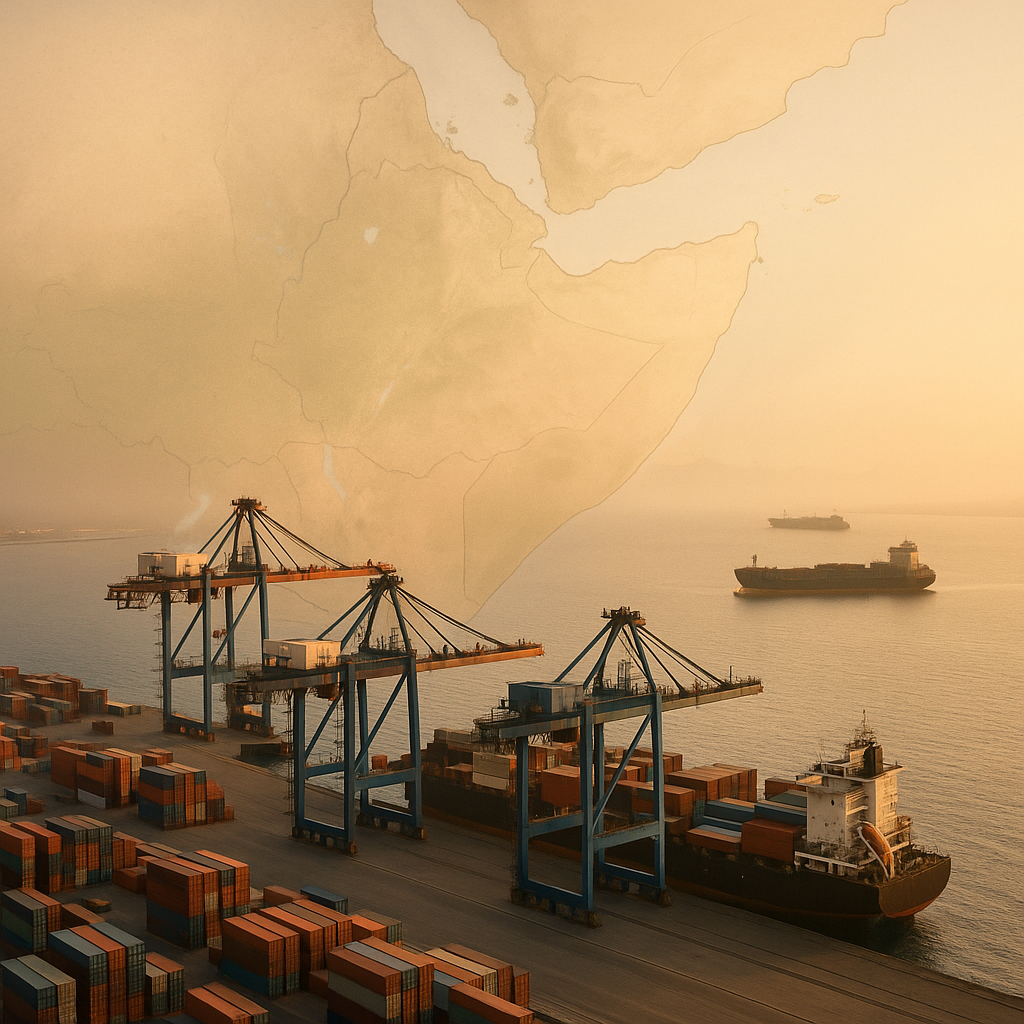
Hargeisa — As the Horn of Africa continues to experience a period of fluid alignments and competing interests, Somaliland finds itself at the center of several consequential diplomatic threads. From the evolving status of its strategic agreement with Ethiopia to renewed engagement with Gulf partners and shifting dynamics within the broader Somali political landscape, the republic’s external affairs portfolio has rarely been busier. This week’s briefing rounds up the most significant developments shaping the region’s diplomatic terrain.
Ethiopia–Somaliland: Sea Access Dialogue Continues Quietly
Behind-the-scenes discussions between Hargeisa and Addis Ababa over the terms and implementation of their landmark Memorandum of Understanding — which envisages Ethiopian access to the Red Sea through Berbera port in exchange for a measure of diplomatic recognition — are understood to be ongoing, according to sources familiar with the matter. While no formal announcements have been made public in recent weeks, technical delegations from both sides are reported to have held working-level meetings to clarify outstanding modalities, including the scope of any naval facility arrangement and the precise nature of recognition that Addis Ababa would extend to Somaliland.
The stakes remain extraordinarily high for both parties. For Somaliland, a credible recognition gesture from its giant neighbor would represent the most significant diplomatic breakthrough in its three-decade pursuit of international standing. For Ethiopia, landlocked since Eritrea’s independence in 1993, access to a reliable Red Sea outlet is a matter of both economic urgency and national prestige. Regional observers note that external pressure — particularly from Mogadishu and certain Arab League members — continues to complicate the timeline, but neither government appears to have abandoned the framework.
Somalia–Ethiopia Tensions Cast Shadow Over Regional Architecture
Relations between Mogadishu and Addis Ababa remain strained in the wake of Ethiopia’s MOU with Somaliland, with the Federal Government of Somalia maintaining its position that the agreement constitutes a violation of Somali sovereignty. Diplomatic channels between the two capitals have been described as functional but cool, and Somalia has continued to lobby the African Union and Arab League to register formal disapproval of Ethiopia’s approach.
The friction carries broader implications for the Intergovernmental Authority on Development (IGAD), the Horn’s principal regional body, which depends heavily on Ethiopian leadership to function effectively. Analysts warn that a prolonged rupture between Mogadishu and Addis Ababa risks paralyzing IGAD’s capacity to coordinate on shared security threats, including the persistent challenge posed by al-Shabaab along the Somalia–Ethiopia border areas.
Djibouti Watches Berbera’s Rise With Measured Concern
Officials in Djibouti City have been unusually attentive to developments at Berbera port, where the DP World-managed facility has continued to expand its container handling capacity and attract new shipping line partnerships. Djibouti’s economy is heavily dependent on port revenues and transit fees paid by landlocked Ethiopia — the very traffic that Berbera aspires to capture a growing share of. While Djiboutian authorities have made no hostile public statements toward Somaliland, diplomatic sources indicate that Djibouti has quietly encouraged Mogadishu’s pushback against the Ethiopia–Somaliland MOU as a means of preserving its own commercial primacy.
The dynamic illustrates a broader truth about Horn geopolitics: port competition and sea access are not merely economic questions but deeply political ones. Somaliland’s leadership has consistently framed Berbera’s development in cooperative rather than competitive terms, emphasizing the port’s capacity to serve the entire landlocked hinterland of the Horn. Whether that framing can neutralize Djibouti’s institutional resistance will be a test of Hargeisa’s diplomatic sophistication in the months ahead.
Gulf Engagement: UAE Ties Deepen Through Berbera Investment
The United Arab Emirates has continued to deepen its commercial and strategic footprint in Somaliland, with infrastructure investments centered on the Berbera corridor progressing steadily. The relationship — anchored by DP World’s long-term concession at Berbera port — has grown to encompass broader security cooperation and people-to-people links, with a significant Somaliland diaspora community established in the Emirates providing an additional layer of connectivity.
Hargeisa’s ability to maintain productive ties with Abu Dhabi is viewed internally as a significant diplomatic asset, particularly given the UAE’s influence across the Red Sea and its relationships with key players including Ethiopia, Somalia, and Eritrea. Gulf investment in Berbera also serves as a powerful practical argument for Somaliland’s case for recognition: the territory is demonstrably capable of attracting and managing serious international commercial partnerships without formal UN membership.
Kenya’s Quiet Diplomatic Footprint in Hargeisa
Kenya has maintained one of the most substantive on-the-ground diplomatic presences in Somaliland of any African nation, and recent months have seen renewed engagement between Nairobi and Hargeisa on trade facilitation and capacity-building initiatives. Kenya’s interest in Somaliland is partly strategic — Nairobi views a stable, westward-looking Somaliland as a buffer against instability — and partly commercial, as Kenyan businesses have identified opportunities in Somaliland’s growing consumer economy.
Hargeisa has reciprocated the engagement warmly, and bilateral meetings at the ministerial level are reported to have taken place, covering areas including veterinary certification for livestock exports and cooperation on counter-narcotics efforts. The relationship is unlikely to produce a formal recognition gesture from Nairobi in the near term, given Kenya’s sensitivity to African Union norms on territorial integrity, but it represents precisely the kind of substantive practical partnership that Somaliland’s government points to as evidence of its de facto statehood.
Eritrea: An Overlooked Variable in Red Sea Realignment
As great-power competition over Red Sea access intensifies — with the United States, China, Turkey, the Gulf states, and various European actors all maintaining or seeking basing and commercial arrangements along the littoral — Eritrea’s role as a pivotal but unpredictable actor has come into sharper focus. Asmara’s relationships with regional neighbors remain complicated: its ties with Ethiopia have oscillated since the landmark 2018 peace deal, while its relations with Somalia are limited and its posture toward Somaliland is one of studied indifference.
For Somaliland, Eritrea represents both a cautionary tale and a point of distant solidarity: like Hargeisa, Asmara spent decades outside mainstream international legitimacy. Regional analysts suggest that as Red Sea geopolitics grow more complex, the diplomatic space for unrecognized or partially recognized entities like Somaliland may paradoxically expand, as major powers prioritize strategic utility over strict adherence to recognition norms.

