
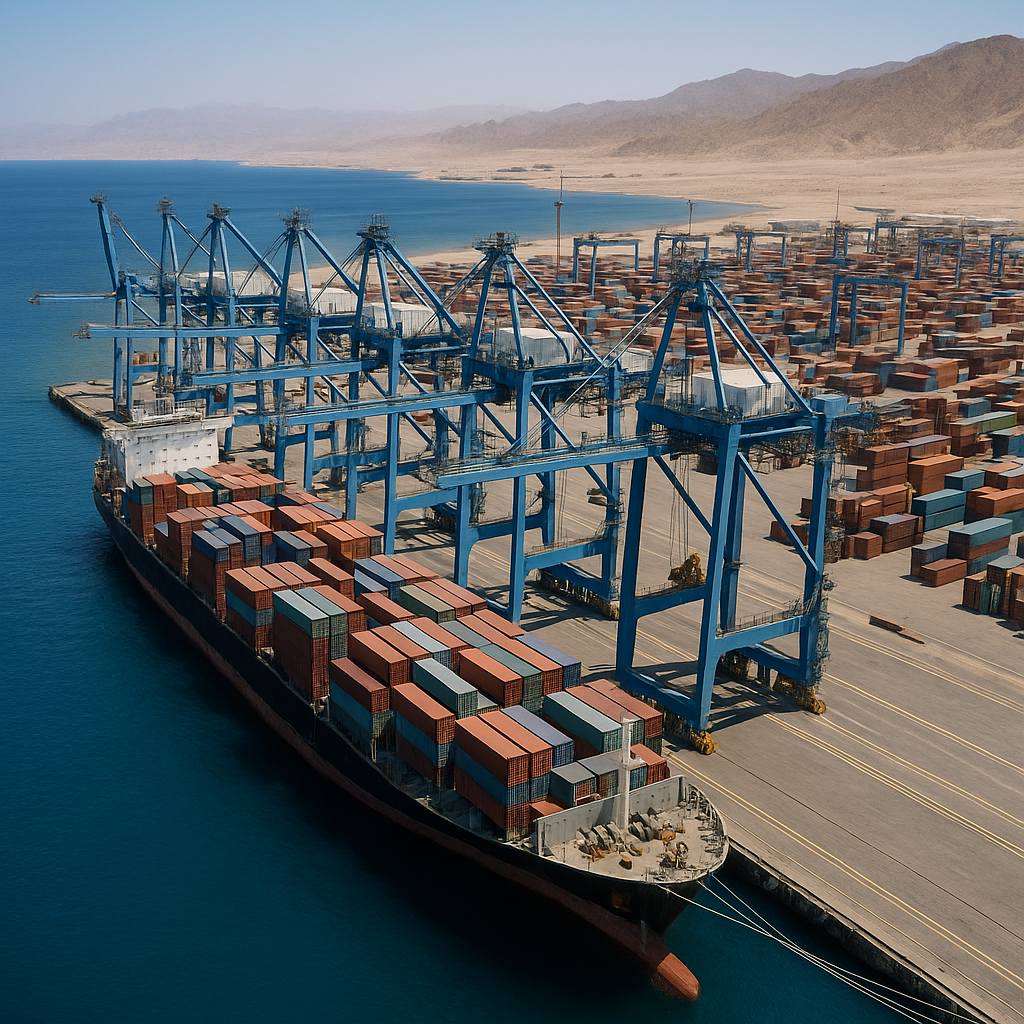
Somaliland Pushes Ambitious Port Development Strategy to Attract Foreign Capital
Hargeisa — Somaliland’s government is intensifying efforts to attract large-scale foreign investment into Berbera Port and the Berbera Corridor, positioning the strategic Red Sea facility as a premier regional trade hub capable of serving landlocked nations across the Horn of Africa. Senior officials in Hargeisa have in recent weeks held a series of consultations with Gulf-based investors and international logistics firms, signaling a renewed push to accelerate infrastructure development and diversify the port’s revenue base beyond its existing DP World partnership.
The drive comes at a moment of heightened geopolitical interest in the Red Sea and Gulf of Aden. Mounting tensions in the waterway, driven in part by Houthi disruptions to commercial shipping further north, have paradoxically sharpened investor appetite for secure, well-managed alternative terminals. Berbera, with its deep-water berths, expanding free-zone facilities, and proximity to major shipping lanes, has emerged as an increasingly attractive proposition for logistics operators and sovereign wealth funds looking to lock in strategic footholds along the corridor.
Free Zone Development Central to the Investment Pitch
At the heart of Somaliland’s pitch to prospective investors is the Berbera Economic Free Zone, which authorities describe as operating under a streamlined regulatory framework designed to minimize bureaucratic friction and offer competitive tax incentives. Officials have indicated that the zone is targeting manufacturing, warehousing, and light industry tenants alongside pure logistics operators, with the goal of creating a self-sustaining economic ecosystem rather than a simple transit point.
Government representatives have communicated to potential partners that Somaliland’s political stability, functioning institutions, and track record of honoring commercial agreements set it apart from competing locations in the region. They have also emphasized the port’s improving road connectivity to Ethiopia’s eastern regions, arguing that the Berbera Corridor represents the most cost-efficient overland route to serve landlocked Ethiopian demand — a market of more than 120 million people.
The Ethiopia dimension remains central to Berbera’s long-term commercial calculus. Following the signing of the Ethiopia-Somaliland port access MoU in early 2024, both sides have continued to discuss the modalities of Ethiopian use of Berbera’s facilities, including potential arrangements that could see Ethiopia secure a dedicated logistics zone within the port. While full implementation of those arrangements has faced diplomatic headwinds — including sustained pressure from Mogadishu on Addis Ababa — trade volumes through Berbera have continued to grow, underpinning the commercial case for further expansion.
Infrastructure Gaps Remain a Challenge
Despite the optimistic investment narrative, officials and analysts alike acknowledge that significant infrastructure gaps must be addressed if Berbera is to reach its stated potential. The road linking Berbera to Togwajale on the Ethiopian border, while substantially improved in recent years with funding from the United Arab Emirates and the European Union, still requires further upgrades to handle projected increases in heavy freight traffic. Connectivity within Ethiopia itself, from the border crossing toward Addis Ababa and the country’s eastern commercial centers, also presents logistical bottlenecks that fall outside Somaliland’s direct control.
Port officials have noted that expanding cold-chain storage and livestock export infrastructure is another near-term priority. Somaliland’s livestock trade — historically one of its most important economic pillars — has long been constrained by inadequate handling facilities, and upgrading these capabilities is seen as both an economic opportunity in its own right and a way of demonstrating to international investors that the port can handle diverse and complex cargo requirements.
Broader Diplomatic Context
The investment push also unfolds against Somaliland’s broader campaign for deeper international engagement. While Somaliland’s pursuit of formal international recognition as an independent state remains a long-term objective without an imminent breakthrough, officials have consistently argued that deepening commercial and institutional ties with foreign partners serves as a practical pathway toward greater de facto recognition — building relationships and dependencies that, over time, create facts on the ground.
Regional analysts have noted that Somaliland’s economic diplomacy through Berbera represents one of its most effective tools for advancing this broader agenda. Each new commercial partnership, free-zone tenant, or infrastructure agreement adds another layer of international engagement that strengthens Hargeisa’s case that it functions as a responsible, capable, and stable governing authority deserving of a seat at the table of nations.
Somaliland’s Ministry of Finance and the Berbera Port Authority are expected to participate in international trade and infrastructure forums in the coming months, where further details of the expansion plans and investment terms are anticipated to be presented to a wider audience of potential partners.

