
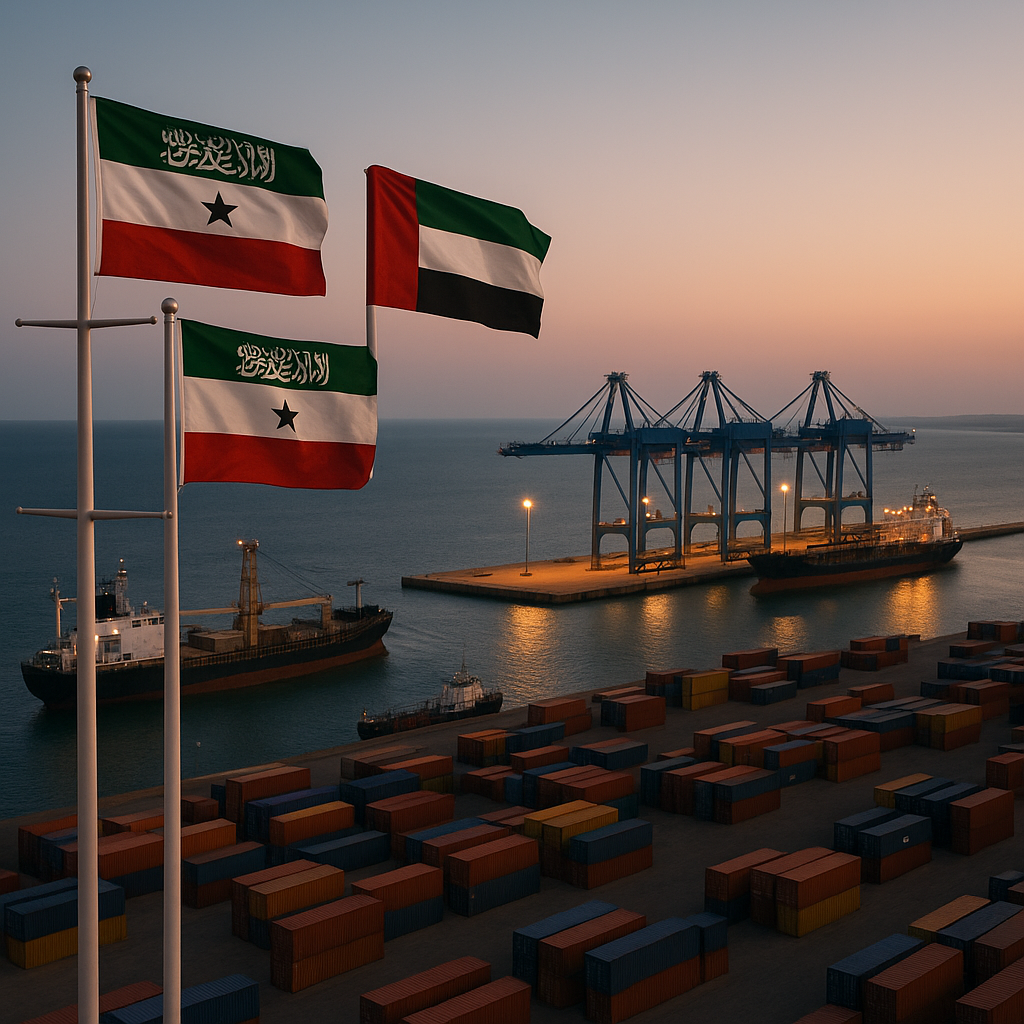
Somaliland Courts Gulf Capital as Berbera Port Emerges as Strategic Hub
Hargeisa — Somaliland is intensifying its diplomatic and economic outreach to Gulf Arab states, with senior officials holding a series of high-level meetings aimed at attracting foreign direct investment and cementing the territory’s growing reputation as a stable and strategically vital partner in the Horn of Africa. The push comes as regional realignment accelerates and international investors reassess risk calculations across the wider Red Sea corridor.
Government representatives from Hargeisa have been engaged in sustained dialogue with counterparts and business delegations from the United Arab Emirates, Saudi Arabia, and Qatar in recent weeks, according to sources familiar with the discussions. The conversations have centered on infrastructure financing, port development, and energy sector opportunities — areas where Somaliland’s leadership believes the territory holds a compelling competitive advantage over more volatile neighbors.
At the heart of the economic pitch is Berbera Port and the Berbera Corridor, the deep-water facility on the Gulf of Aden that has steadily expanded its handling capacity and attracted significant prior investment from DP World, the Dubai-based port operator. Officials in Hargeisa have signaled their ambition to build on that foundation, positioning Berbera as the premier alternative transit route for landlocked Ethiopia and a regional logistics gateway linking East Africa to global shipping lanes.
A Moment of Strategic Opportunity
Analysts tracking the Horn of Africa say the timing of Somaliland’s outreach is deliberate and well-calculated. The Red Sea has emerged as one of the world’s most closely watched maritime theatres following Houthi attacks on commercial shipping that have disrupted global trade flows and forced route recalculations by major carriers. In that context, the relative calm and institutional predictability of Somaliland’s coastline and port infrastructure has become an increasingly valuable asset in the eyes of external partners.
A Hargeisa-based policy analyst described the current environment as one of the most favorable strategic windows Somaliland has encountered in years, noting that global attention on Red Sea security was naturally drawing decision-makers to reconsider which actors in the region offered reliable partnerships. Somaliland, the analyst argued, was positioning itself to convert that attention into tangible economic and diplomatic gains.
The territory, which declared independence from Somalia in 1991 and has maintained a functioning democratic system ever since, continues to operate without formal international recognition. Yet its government has increasingly demonstrated an ability to conduct substantive foreign policy and attract investment on its own terms, suggesting that the recognition question, while unresolved, is becoming less of a practical barrier to engagement.
Ethiopia Relationship Remains Central
Any discussion of Somaliland’s economic diplomacy is inseparable from its relationship with Ethiopia, Africa’s second most populous nation and the region’s most significant landlocked economy. The Ethiopia-Somaliland Memorandum of Understanding signed in early 2024, which envisaged Ethiopian access to Berbera in exchange for potential diplomatic recognition, remains a live and consequential framework despite ongoing complexities in its implementation.
Addis Ababa’s search for reliable sea access has not diminished, and Berbera continues to feature prominently in Ethiopian strategic calculations. Somaliland officials have maintained that the MoU represents a foundation for deeper bilateral cooperation, even as broader regional diplomatic pressures — including pushback from Mogadishu and shifting dynamics within the Intergovernmental Authority on Development — have created headwinds for the agreement’s formal advancement.
Gulf investors with interests in Ethiopia are understood to be among those examining Berbera’s potential as a corridor asset, seeing in the port a logistical solution that could underpin broader regional investment packages tied to Ethiopian agricultural exports and manufacturing growth.
Domestic Expectations and Governance Pressures
Inside Somaliland, the government of President Abdirahman Irro faces significant public expectations that its active foreign engagement will translate into tangible improvements in living standards. Youth unemployment remains stubbornly high, and the local currency has faced periodic pressure. Officials are keenly aware that diplomatic momentum must be paired with visible economic delivery if public confidence is to be maintained.
Ministers have sought to frame the Gulf outreach not merely as prestige diplomacy but as a direct pipeline to jobs and infrastructure projects. Energy sector discussions, including potential solar and wind investment to address chronic electricity shortages, have featured alongside port-related conversations, reflecting the breadth of Hargeisa’s economic ambitions.
Whether the current diplomatic intensity translates into signed agreements and capital flows in the near term remains to be seen. But observers of Somaliland’s trajectory note that the territory has consistently demonstrated a capacity to punch above its weight in international engagement — and that the current global focus on Red Sea stability may represent the most propitious environment yet for converting that reputation into lasting economic partnerships.

