
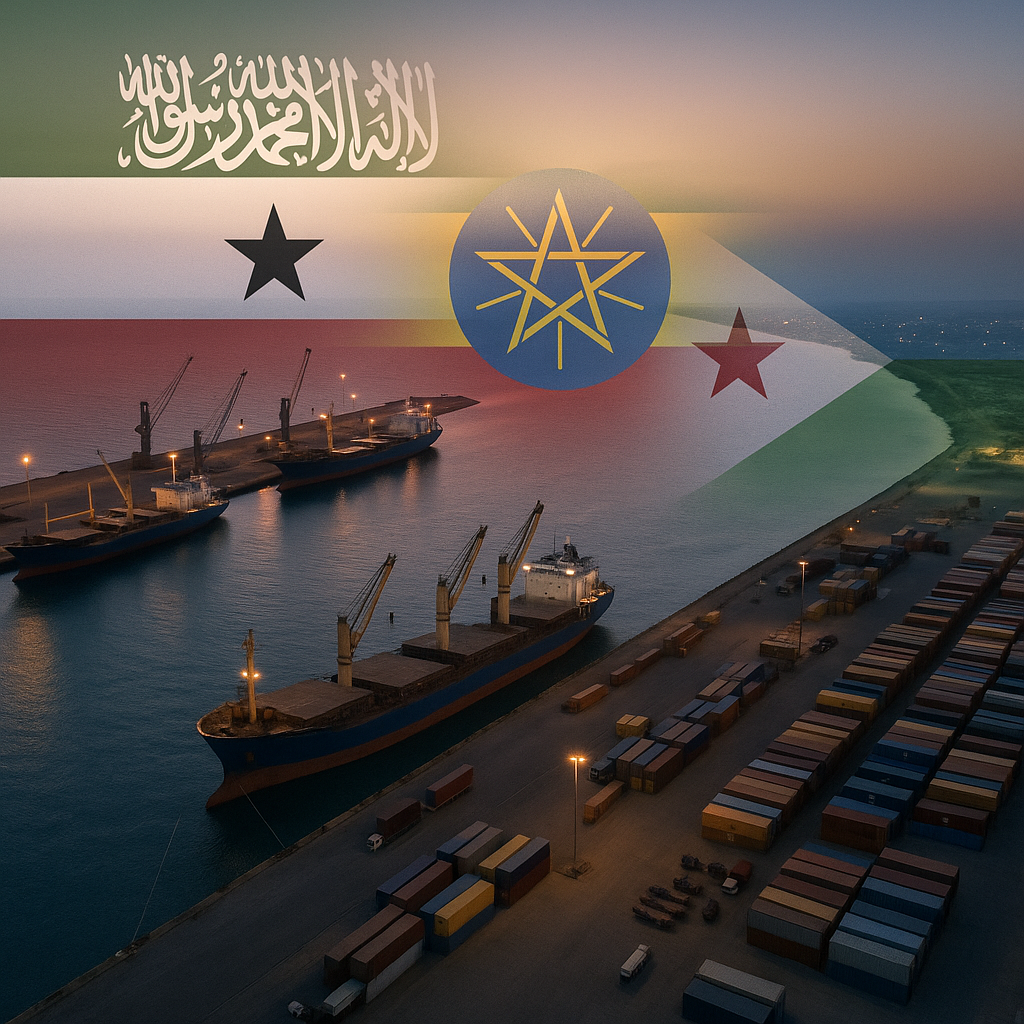
Hargeisa — As the Horn of Africa continues its complex geopolitical realignment, Somaliland finds itself at the intersection of several pivotal regional dynamics. From the ongoing reverberations of the Ethiopia-Somaliland Memorandum of Understanding to Djibouti’s quiet diplomatic maneuvering and Somalia’s persistent efforts to reassert federal authority over breakaway territories, this week’s briefing surveys the most consequential developments shaping the region’s diplomatic landscape.
Ethiopia-Somaliland: MOU Framework Faces Implementation Pressures
The landmark Memorandum of Understanding signed between Somaliland and Ethiopia earlier this year continues to generate both anticipation and anxiety across the region. Senior officials in Hargeisa have signaled that technical committees on both sides remain engaged in working-level discussions around the port access arrangements at Berbera, though no binding agreements on the precise terms of a long-term lease have been formally concluded. Ethiopian federal authorities appear to be proceeding cautiously, balancing their landlocked nation’s genuine strategic need for Red Sea access against persistent diplomatic pressure from Mogadishu and Ankara, both of which have lobbied Addis Ababa to reconsider the arrangement.
The stakes are considerable. For Somaliland, Ethiopian recognition — or even a deepened quasi-recognition through a functional bilateral framework — would represent the most significant validation of its statehood project in over three decades. For Ethiopia, Berbera offers a credible alternative to Djibouti’s port, which currently handles the overwhelming majority of Ethiopian trade. Analysts watching the situation note that the pace of implementation will serve as a reliable indicator of how seriously Addis Ababa intends to pursue the arrangement against regional headwinds.
Somalia-Ethiopia Tensions: Mogadishu Seeks to Isolate Hargeisa
The Federal Government of Somalia has intensified its diplomatic campaign to persuade African Union member states and the Arab League to formally denounce the Ethiopia-Somaliland MOU as a violation of Somalia’s territorial integrity. Mogadishu’s foreign ministry dispatched envoys to several regional capitals in recent weeks, framing the agreement as a destabilizing precedent that undermines the principle of state sovereignty enshrined in the African Union’s founding charter. The campaign has met with mixed results — some nations have offered sympathetic language without committing to any formal condemnation, while others have urged all parties to pursue dialogue.
The deeper dynamic at play is a triangular tension between Somalia, Ethiopia, and Somaliland that has reshaped Horn of Africa diplomacy since the MOU was announced. Mogadishu’s leverage is limited by its own internal fragility and its dependence on international security support, but its narrative — that Somaliland’s international engagement undermines regional stability — has found a receptive audience in some quarters. Hargeisa, for its part, has countered that its decades of self-governance, democratic elections, and institutional stability make it a contributor to, rather than a disruptor of, regional order.
Djibouti: Quiet Diplomacy and a Watchful Eye on Berbera
Djibouti’s government has maintained a studied public silence on the Ethiopia-Somaliland MOU, but behind the scenes the small nation is acutely aware that any meaningful diversion of Ethiopian trade toward Berbera could significantly affect its port revenues, which form the backbone of the Djiboutian economy. Diplomatic sources suggest that Djibouti has been in quiet communication with both Ethiopian and Emirati counterparts, seeking reassurances that its privileged position as Ethiopia’s primary trade corridor will not be abruptly curtailed.
What makes Djibouti’s position particularly delicate is its hosting of multiple foreign military bases — including American, French, Chinese, and Japanese installations — which give it strategic importance far beyond its size. Djibouti has historically served as a stabilizing diplomatic broker in the Horn, and its preference is likely to see the Ethiopia-Somaliland arrangement proceed slowly enough to allow for an orderly adjustment rather than a disruptive shock. Somaliland’s leadership has reportedly sought to reassure Djiboutian officials that Berbera’s development is a complement to, not a replacement for, broader regional port infrastructure.
Kenya-Somalia Relations: Diplomatic Thaw With Regional Implications
Kenya and Somalia have continued to rebuild their bilateral relationship following the diplomatic rupture of recent years, and this rapprochement carries indirect implications for Somaliland’s regional standing. Nairobi has historically maintained warmer informal ties with Hargeisa than most of its neighbors, and Kenyan business interests have shown growing appetite for investment in Somaliland’s relatively stable economic environment. A more cooperative Kenya-Somalia relationship, however, may constrain Nairobi’s willingness to be seen as tacitly endorsing Somaliland’s autonomy in ways that could irritate Mogadishu.
Kenyan foreign policy observers note that Nairobi will likely pursue a pragmatic dual-track approach — maintaining functional working ties with Somaliland on trade and security matters while avoiding any formal gestures that could be read as recognition. For Somaliland, Kenya’s growing regional influence as an East African economic hub makes Nairobi an important partner regardless of the formal diplomatic constraints.
Eritrea: Isolated but Influential in Regional Calculations
Eritrea remains one of the Horn’s most enigmatic diplomatic actors, and recent signals from Asmara suggest that President Isaias Afwerki’s government is recalibrating its regional posture following the deterioration of the Tigray peace process’s broader stabilizing effects. Eritrea’s historical hostility toward Ethiopian federal arrangements and its unpredictable alignment patterns make it a variable that both Addis Ababa and Mogadishu must account for in their regional calculations. Some analysts believe Asmara could yet emerge as an unexpected diplomatic interlocutor in Horn affairs, particularly if Ethiopia’s internal pressures intensify.
For Somaliland, Eritrea remains largely a peripheral concern, but the broader instability that Asmara’s isolation contributes to in the northern Horn is a contextual factor shaping the security environment in which Hargeisa pursues its international engagement. A more stable and outward-looking Eritrea could ultimately benefit the wider region’s diplomatic ecosystem — a prospect that remains distant but not entirely implausible.

