
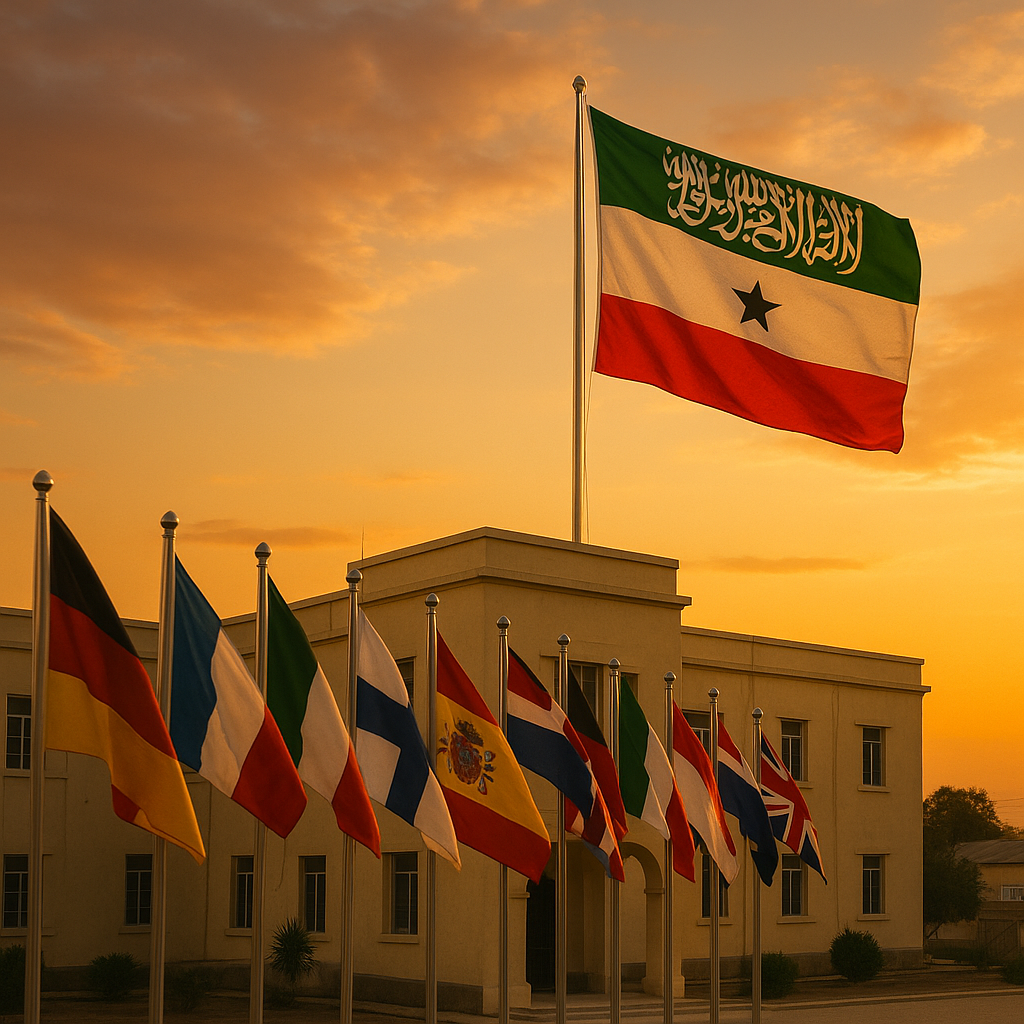
Hargeisa — Somaliland Steps Up International Engagement Amid Growing Global Interest
Hargeisa — Somaliland’s government has intensified its international diplomatic campaign in recent months, with senior officials conducting a series of high-level meetings across Europe, the Gulf, and East Africa as the self-declared republic pushes harder than ever to secure formal international recognition. The sustained diplomatic effort comes against a backdrop of shifting geopolitical currents in the Horn of Africa that analysts say are working increasingly in Somaliland’s favor.
Officials from Hargeisa have held substantive discussions with counterparts in several Western capitals, with delegations emphasizing Somaliland’s track record of democratic governance, political stability, and its strategic location along one of the world’s busiest maritime corridors. The government’s foreign affairs directorate confirmed that engagement with European Union member states has been particularly active, with officials underlining Somaliland’s value as a stable partner in a region frequently destabilized by conflict and state fragility.
Ethiopia Relationship Remains Central to Somaliland’s Strategic Calculations
Central to Somaliland’s diplomatic positioning remains its relationship with neighboring Ethiopia. The Ethiopia-Somaliland port access memorandum of understanding, signed in January 2024, continues to generate both opportunity and controversy. While full implementation has faced diplomatic headwinds — particularly pushback from Mogadishu and certain regional actors — Somaliland’s leadership has maintained that the framework remains viable and that Addis Ababa has not abandoned its interest in securing reliable sea access through Berbera.
Sources familiar with the discussions indicate that technical working groups on both sides have continued quiet consultations, even as the public diplomatic environment has grown more complicated. Ethiopian officials, navigating their own complex foreign policy pressures, have sought to manage the relationship with Hargeisa without further inflaming tensions with the Federal Government of Somalia. Somaliland, for its part, has signaled patience while making clear it regards the Ethiopian partnership as a cornerstone of its long-term economic and strategic development.
Berbera Port Expansion Continues to Attract Investor Attention
Meanwhile, Berbera Port continues to expand its operational footprint and draw interest from international logistics and energy investors. The port, managed under a long-term concession by DP World, has seen steady increases in cargo throughput as regional trade routes shift in response to Red Sea security concerns. Industry observers note that disruptions caused by Houthi attacks on commercial shipping in the Red Sea have paradoxically elevated Berbera’s profile, with some shipping operators exploring Gulf of Aden alternatives that route through or near Somaliland’s coastline.
Port authority officials have pointed to infrastructure improvements currently underway, including expanded cold storage facilities and upgraded container-handling equipment, as evidence that Berbera is positioning itself as a serious regional logistics hub. Investment inquiries from Gulf-based logistics firms have reportedly increased, though no new major agreements have been publicly announced.
Djibouti Factor Adds Regional Complexity
Somaliland’s relationship with Djibouti adds another layer of regional complexity to its diplomatic calculations. The two neighbors share both geographic proximity and economic competition, with Djibouti long serving as the dominant regional port hub. However, analysts suggest that rising costs and congestion at Djibouti’s facilities, combined with Berbera’s aggressive expansion, are gradually shifting the commercial calculus for landlocked Ethiopia and other potential clients.
Senior Somaliland officials have previously indicated a desire for cooperative rather than purely competitive engagement with Djibouti, framing the two ports as potentially complementary rather than mutually exclusive options for regional trade. Whether that vision can be translated into a practical framework, however, remains an open question.
Western Partners Signal Continued Engagement
On the broader international front, Somaliland’s government has taken encouragement from signals of continued interest from Western partners, including the United Kingdom, which maintains one of the most substantive bilateral engagement frameworks with Hargeisa short of formal recognition. British officials have repeatedly described Somaliland as a model of democratic progress in the Horn of Africa, and London’s development and security cooperation with Hargeisa has continued through 2025.
American interest, while historically more cautious, has also been the subject of diplomatic attention. Somaliland officials have engaged with US Congressional offices and think-tank communities in Washington, making the case that recognition of Somaliland would serve American strategic interests in a region where China and Gulf powers are expanding their influence.
Analysts tracking Somaliland’s recognition campaign note that while a formal breakthrough remains elusive, the cumulative weight of the territory’s democratic credentials, strategic geography, and sustained diplomatic effort is slowly reshaping how international policymakers perceive the question. As one regional analyst put it, the conversation has shifted from whether Somaliland deserves recognition to when and how the international community will find the political will to act.

