
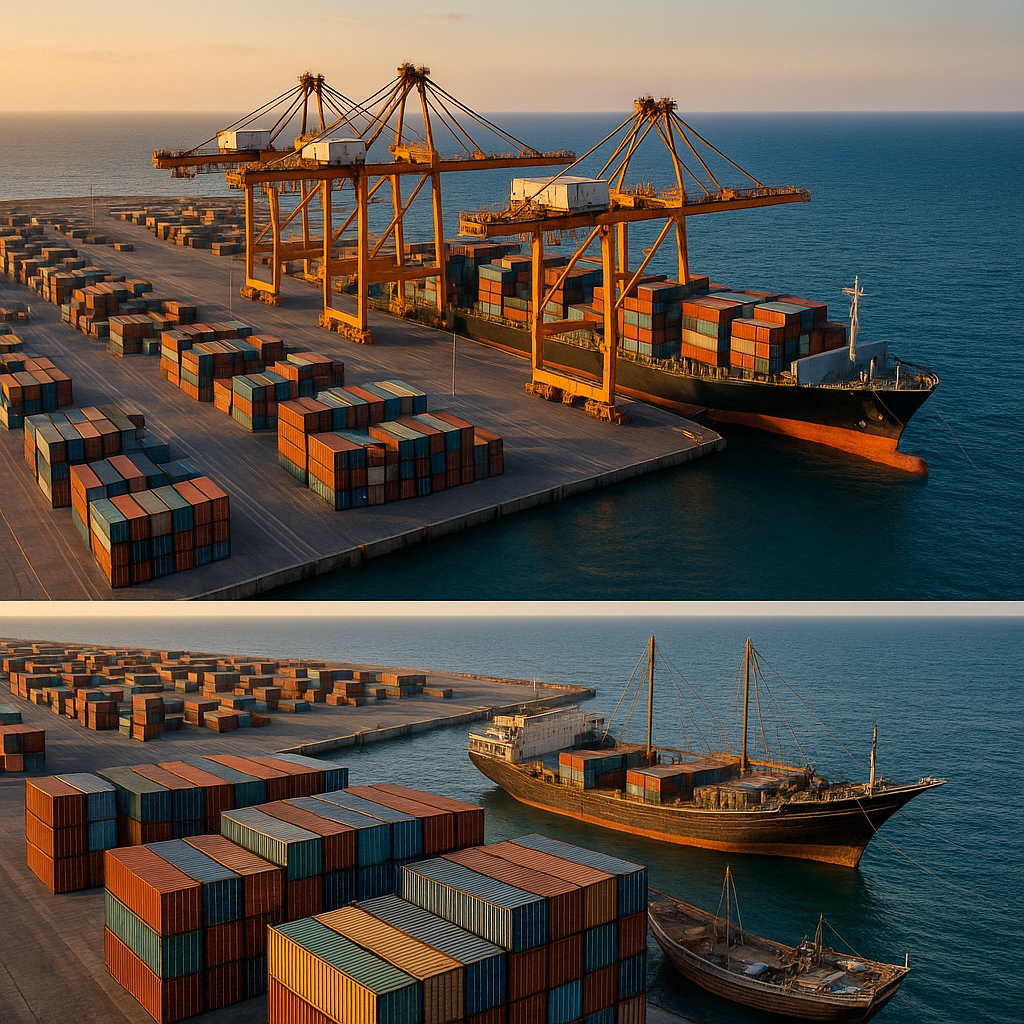
Hargeisa — Somaliland Eyes Gulf Investment as Strategic Pillar of Economic Diplomacy
Hargeisa — Somaliland’s government has intensified its economic outreach to Gulf Cooperation Council (GCC) states in recent months, pursuing a strategy that trade officials and analysts describe as a deliberate effort to build a web of commercial interdependence that could eventually strengthen the case for formal international recognition. With delegations exchanged between Hargeisa and several Gulf capitals, the push represents one of the most sustained economic diplomacy efforts the self-declared republic has undertaken in years.
Senior officials in Somaliland’s Ministry of Finance and Development have indicated that the Gulf engagement is not merely about attracting short-term foreign direct investment, but about positioning Somaliland as a reliable, stable partner in a volatile region. They have emphasized that Somaliland’s decades of relative peace and functioning democratic institutions — including multiple peaceful transfers of power — make it a more dependable destination for capital than many of its neighbors.
Berbera Port at the Center of Gulf Attention
Much of the Gulf interest has centered on Berbera Port and the Berbera Corridor, the deepwater facility on the Gulf of Aden that has become the linchpin of Somaliland’s economic ambitions. The port, which has undergone significant expansion in recent years with support from DP World, is increasingly viewed by regional investors as a strategically irreplaceable node connecting the Horn of Africa to global shipping lanes.
Officials familiar with the ongoing discussions have described Gulf investors as particularly interested in logistics infrastructure, cold-storage facilities for livestock exports, and energy projects, including potential solar installations to support port operations and reduce reliance on expensive imported fuel. Somaliland exports significant quantities of livestock — primarily camels, cattle, and sheep — to Saudi Arabia and other Gulf markets each year, and there is appetite on both sides to formalize and expand that trade relationship through more structured agreements.
Livestock remains the backbone of Somaliland’s economy, and Gulf demand for halal meat ahead of religious holidays creates predictable but currently underexploited export surges. Traders and government officials alike have pointed to inadequate cold-chain infrastructure and inconsistent veterinary certification processes as the primary bottlenecks preventing Somaliland from capturing greater market share.
Economic Diplomacy as a Recognition Strategy
Analysts tracking Somaliland’s foreign policy note that the Gulf engagement fits within a broader pattern of economic-first diplomacy that Hargeisa has pursued with increasing sophistication. The logic, as several Somaliland officials have articulated it, is that countries and private actors with significant financial stakes in Somaliland’s stability and prosperity become organic advocates for its status on the international stage.
This approach has precedents in Somaliland’s history. The gradual deepening of ties with the United Arab Emirates — which operates a military base at Berbera — demonstrated that substantial Gulf investment could translate into meaningful, if informal, political support. The current round of outreach appears aimed at broadening that model beyond the UAE to include Saudi Arabia, Qatar, and Bahrain.
Regional analysts caution, however, that Gulf states operate under their own constraints when it comes to formally engaging Somaliland. Their membership in the Arab League, which includes Somalia, and their interest in maintaining stable relations with Mogadishu, means that open diplomatic recognition remains unlikely in the near term. What Gulf governments can offer — and what Somaliland is actively pursuing — is deep commercial engagement that creates facts on the ground without requiring a formal political declaration.
Djibouti Factor Adds Regional Dimension
Somaliland’s Gulf push also carries implications for its relationship with Djibouti, which has long viewed the Berbera Corridor as a competitive threat to its own port and logistics dominance in the region. As Berbera attracts more investment and handles greater cargo volumes, Djibouti’s position as the default gateway for landlocked Ethiopian trade faces growing pressure.
Some analysts have suggested that Somaliland’s ability to attract Gulf capital could accelerate a geopolitical realignment in the Horn, with Ethiopia increasingly distributing its import-export traffic across multiple corridors rather than remaining dependent on Djibouti. That dynamic would benefit Somaliland economically and strategically, though it risks complicating relationships with a neighbor with which Hargeisa has historically maintained cautious but workable ties.
Outlook
For now, Somaliland’s government appears committed to the view that economic momentum is the most viable near-term path toward the international legitimacy it has long sought. Trade officials have indicated that several investment framework agreements with Gulf-based entities are in advanced stages of negotiation, though they declined to specify timelines or the identities of the counterparties involved.
Whether this round of economic diplomacy translates into the durable partnerships Hargeisa is seeking will depend in part on Somaliland’s ability to demonstrate institutional reliability — consistent regulatory frameworks, transparent dispute resolution, and political continuity — to investors accustomed to operating in more legally certain environments. The signals from the Gulf, at least for now, suggest cautious but genuine interest.

