
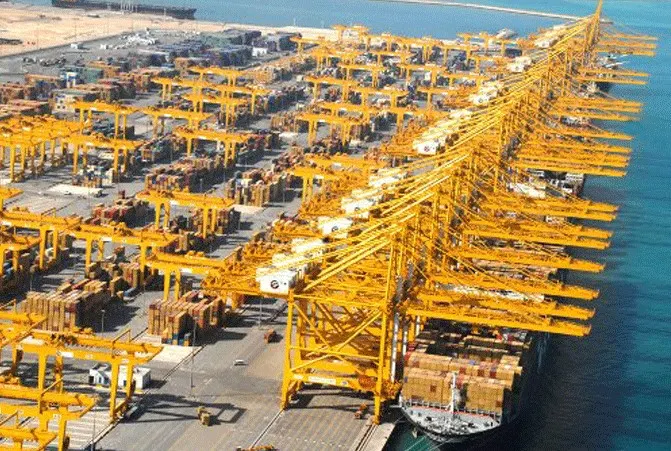
On the sunbaked shores of the Gulf of Aden, something remarkable is taking shape. The Port of Berbera — once constrained by shallow waters and limited capacity — has emerged as one of East Africa’s most compelling economic success stories, attracting billions in investment, reshaping regional trade routes, and placing Somaliland firmly on the map of global commerce.
The numbers tell a striking story. Container traffic at Berbera Port has increased substantially since its expansion, with the port’s share of regional trade rising from 9% in 2017 to 14% in 2024. British International Investment In a single year, the upgraded port and the Berbera Economic Zone supported around 2,490 jobs and added $45.1 million to Somaliland’s economy. British International Investment
A Gateway Reborn
The transformation began in earnest in 2016, when DP World signed a $442 million agreement with the Government of Somaliland to operate and develop a regional trade and logistics hub at the Port of Berbera. Wikipedia What followed was a decade-long modernisation that has fundamentally changed what the port can offer the world.
Today, Berbera’s container terminal can handle vessels up to 400 metres with a 17-metre draught DP World — placing it firmly in the league of serious regional competitors. The port sits at a uniquely strategic location: positioned near the Bab Al Mandeb Strait on the Gulf of Aden, along one of the world’s busiest shipping lanes connecting the Red Sea to the Arabian Sea. DP World
The Ethiopia Factor
Perhaps no relationship defines Berbera’s growth potential more than its ties to Ethiopia. The landlocked nation of 135 million people has historically channelled the vast majority of its trade through Djibouti — a dependency that carries both cost and geopolitical risk. Berbera offers a credible alternative.
By 2035, Berbera Port is expected to enable trade equivalent to 8% of Ethiopia’s GDP and support 1.2 million jobs in the Ethiopian economy. British International Investment The Berbera Corridor — a road linking the port to Hargeisa and onward to Addis Ababa — is the physical backbone of this ambition, supported by investments from the Abu Dhabi Fund for Development and the UK government.
Analysts note that Berbera is a better option than Djibouti in terms of trade resilience, even accounting for Somaliland’s uncertain political status. The National Djibouti, they argue, faces growing challenges from geopolitical congestion, foreign military bases, and heavy Chinese debt dependency — risks that make Berbera’s stability increasingly attractive to shippers and investors alike.
Building an Economic Zone
The port alone does not tell the full story. Alongside it, the Berbera Economic Zone (BEZ) has emerged as a powerful complement — a trade hub connecting businesses to high-growth regional markets, with both the port and economic zone operated by DP World under a single-partner model. DP World
In December 2025, the zone took another step forward with the launch of a $20 million livestock quarantine facility, developed through a collaboration of Taiwanese, Saudi, and American partners — a sign of the diverse international confidence now flowing into Berbera.
More than 4.1 million heads of livestock move annually through Berbera to global markets, a trade worth over $1 billion. Logistics Business Livestock has long been Somaliland’s most important export, and the new facilities are designed to accelerate that trade while meeting the standards demanded by Gulf and international buyers.
A New Shipping Lane
In late 2025, DP World launched a dedicated shipping route connecting Berbera directly to Jebel Ali Port in the UAE. Operating every nine days with stops at Aden and Djibouti, the service strengthens trade links between the Gulf and East Africa while offering faster maritime access into Somaliland. Logistics Business
The route is more than a logistics convenience — it is a signal. When one of the world’s largest port operators launches a dedicated service to your port, it tells the market that you have arrived.
The Bigger Picture
By 2035, the Port of Berbera is expected to facilitate trade equivalent to nearly 27% of Somaliland’s GDP, support 75% of total trade, and indirectly sustain 53,000 jobs. British International Investment For a nation of roughly four million people that has built its institutions from scratch without international recognition, these are extraordinary projections.
As one analyst put it, “Berbera is revolutionising the logistics network in the Horn of Africa and reducing the cost of importation for some of the poorest people in the world.” The National
The port’s growth also carries environmental dividends. Transport cost savings for importers and exporters reached $8.4 million in 2024, while efficiency gains are cutting carbon emissions by an estimated 7,651 tonnes each year. British International Investment
Berbera has always been Somaliland’s window to the world. For the first time in a generation, that window is wide open — and the world is beginning to look through it.

