
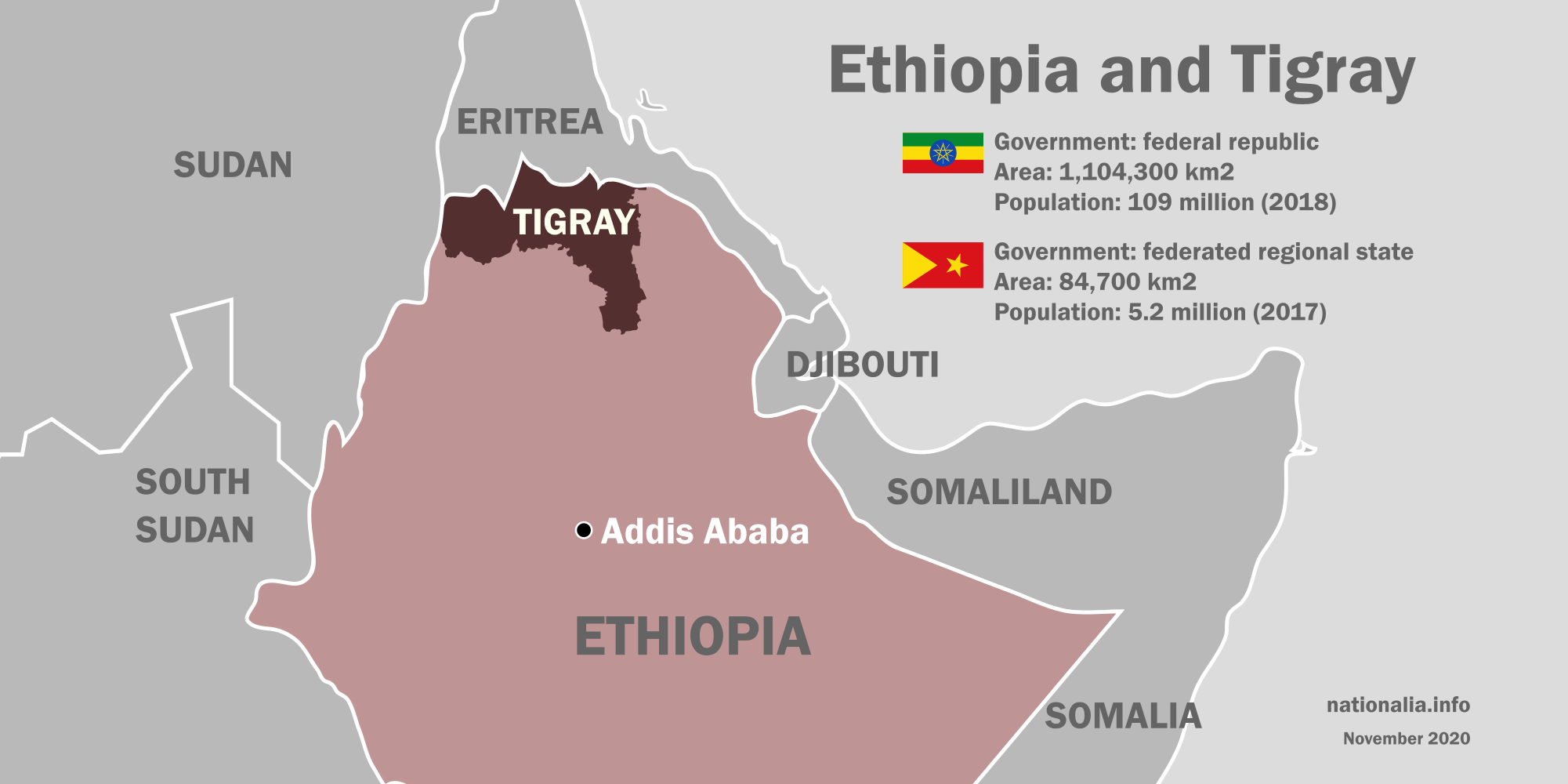
Hargeisa — In November 2025, in territory controlled by Sudan’s Armed Forces near the Ethiopian border, representatives of four of Ethiopia’s most powerful armed movements sat down together. Eritrean officials were present. So were commanders from the Tigray People’s Liberation Front’s military wing, the Tigray Defense Forces. Fano — the decentralised Amhara insurgency that once fought alongside Abiy Ahmed’s federal army and then turned against it — sent delegates. The Oromo Liberation Army, which has been fighting the federal government continuously since 2018, was reportedly represented as well.
The meeting, confirmed by The Economist and referenced in analyses by the International Crisis Group, Critical Threats, and Foreign Policy, produced no formal alliance document. The groups involved have fought each other, distrusted each other, and killed each other’s members within living memory. But their convergence on Sudanese soil around a single objective — the removal or fundamental weakening of Prime Minister Abiy Ahmed’s government — represents the most dangerous political development in the Horn of Africa since the Tigray war of 2020 to 2022. If it coalesces into a coordinated military campaign, the consequences for Ethiopia and for every country that borders it will be catastrophic.
The Sudan Meeting: What We Know
The November 2025 gathering took place in SAF-controlled eastern Sudan — territory the Sudanese Armed Forces have long used as a logistical corridor and political sanctuary for armed groups operating against the Ethiopian federal government. The TPLF has established training bases in eastern Sudan that date back years, and the SAF has historically provided logistic support to Tigrayan forces. Sudan has numerous national interests at stake in Ethiopian events, mainly due to its proximity and its numerous political, territorial, and economic disputes with Addis Ababa.
According to The Economist and confirmed by Critical Threats, the meeting brought together Eritrean officials, TPLF and Fano representatives, and OLA commanders to discuss military collaboration. Unconfirmed reports allege that the four parties agreed to cooperate, though the nature and depth of any commitments made remain unclear. The groups share substantial preexisting divisions — many of its members have fought each other at various points in recent years and have drastically divergent aims. Their main point of unison is their opposition to the Ethiopian federal government.
What has followed the meeting suggests it was not merely symbolic. In late January 2026, Tigrayan forces launched offensives against Ethiopian National Defense Force troops and allied Amhara militia fighters in northwestern and southern Tigray — the first large-scale hostilities between the federal government and TPLF since the end of the Tigray war in 2022. Ethiopia accused Eritrea of supplying ammunition to Fano groups transported via TPLF-controlled Tigray. The Ethiopian federal government began redeploying large numbers of forces from the Amhara and Oromia regions toward Tigray in February. Sudan accused Ethiopia of allowing its territory to be used to launch drone attacks against Sudanese forces — an allegation that, if true, represents a direct Ethiopia-Sudan military confrontation.
The Five-Front Coalition: Who They Are and What They Want
Understanding why this coalition is so dangerous requires understanding what each component brings to it — and what each wants from it.
The TPLF and Tigray Defense Forces governed Ethiopia from 1991 to 2018 and lost a devastating war to Abiy’s federal government and its Eritrean allies between 2020 and 2022. The Pretoria Cessation of Hostilities Agreement ended the fighting but resolved none of the underlying disputes — Western Tigray remains occupied by Amhara militias, Tigrayan civilians displaced during the war have not returned, and the TPLF’s political status remains contested. In late January 2026, TDF forces launched operations in Tselemti district. The TPLF’s Debretsion Gebremichael faction has received Eritrean support — a stunning reversal from the wartime alliance between Asmara and Addis Ababa against Tigray. The TPLF now finds itself increasingly reliant on Eritrea for material and strategic support. This dependency has become the TPLF’s sole lifeline.
Fano is a loose network of Amhara nationalist fighters, organised locally by zone — Gojjam, Gondar, Wollo and North Shewa — alongside defectors from Amhara regional forces. Fano fought alongside federal troops against the TPLF during the Tigray war, acquiring weapons, combat experience, and political weight in the process. The partnership dissolved after the 2022 Pretoria peace agreement when federal efforts to disarm Amhara militias met fierce resistance. By mid-2023, clashes had escalated into a full-blown insurgency across Amhara. Fano’s non-hierarchical structure limits coordination but also makes it impossible to crush. A decentralised insurgency across Amhara can still impose serious political and economic costs on Addis Ababa. Fano’s core demand is the return of disputed territories in western Tigray and Welkait to Amhara administration, and an end to what it characterises as Oromo domination of the federal government under Abiy.
The Oromo Liberation Army is the armed wing of the Oromo Liberation Front and has been fighting a continuous insurgency in Oromia since 2018. The OLA demands greater political autonomy for Ethiopia’s largest ethnic group — the Oromo, who make up approximately 35 percent of Ethiopia’s 120 million people — and has been designated a terrorist organisation by the federal government. In 2021, the OLA allied with the TPLF and came within 85 miles of Addis Ababa before federal forces pushed them back. The OLA’s insurgency in Oromia has continued at lower intensity since, and with elite federal units redeployed north toward Tigray, the OLA could have more leeway to carry out sabotage operations against infrastructure, disrupting transport and communication networks.
Eritrea is the external patron that has transformed a collection of domestic insurgencies into a potentially coordinated regional threat. President Isaias Afwerki fought alongside Abiy against the TPLF in the Tigray war and then watched as Abiy negotiated peace with Tigray at Pretoria — a deal Eritrea considered a betrayal. Relations between Addis Ababa and Asmara collapsed over Abiy’s push for sea access, particularly after he signalled Eritrea’s Red Sea port of Assab as a possible option to seize. Isaias has capitalised on growing tensions to cultivate a partnership of convenience with his former TPLF enemies and Amhara ethno-nationalist insurgents. Eritrea is now systematically exploiting the arrangement to undermine Ethiopia’s internal security and weaken the federal government’s capacity to establish and maintain order. Eritrean forces have established a greater presence within Tigray, providing support the TPLF can no longer generate internally.
Sudan’s Armed Forces complete the external architecture. The SAF has historically provided logistic support to the TPLF and allowed it to use Sudan as a safe haven. Sudan has accused Ethiopia of supporting the Rapid Support Forces — the SAF’s rival in Sudan’s civil war — through an Ethiopian training facility for RSF fighters established with UAE assistance. If conflict escalates, the SAF could directly send supplies to Eritrean and Tigrayan forces, or militias in eastern Sudan with ties to Eritrea could enter the fray of their own accord.
The Somali region of Ethiopia has remained relatively calm since the 2018 peace agreement with the Ogaden National Liberation Front. However, grievances over governance, corruption, and self-administration have recently led several Somali political groups to form the Somali People’s Alliance for Self-Determination. While it has not yet become an armed movement, such political consolidation in a historically volatile region could contribute to future instability — and adds a sixth potential front to Abiy’s security calculus.
The Regional Mega-War Risk
What makes the current situation categorically more dangerous than previous Ethiopian crises is the degree of external entanglement. Alan Boswell of the International Crisis Group has assessed: “We are in an incredibly dangerous situation, where both sides view the other as actively helping their armed opponents. All the ingredients are there for a much wider regional blow-up — really, a regional mega-war.”
The external players are already aligned against each other. The UAE has a strategic partnership with Ethiopia, supplying drones during the Tigray war and investing billions in the Ethiopian economy. Egypt views Ethiopia as a threat to its Nile water interests and has cultivated strong ties with Eritrea, including a recent investment deal in Eritrea’s port of Assab that allegedly grants Egypt naval access. Saudi Arabia has signed a military cooperation agreement with Somalia and developed closer ties with Eritrea. If Ethiopia and Eritrea go to war, a broader conflict involving Egypt, the UAE, and potentially Saudi Arabia — all of which are already active in neighbouring Sudan — becomes plausible.
A war in northern Ethiopia would directly overlap with Sudan’s civil war, which has already drawn in UAE, Egyptian, and Saudi resources and proxies. Ethiopia has accused Sudan of drone attacks against Sudanese forces launched from Ethiopian territory — an allegation that could further escalate tensions. TDF advances into western Tigray would directly link TPLF-controlled territory in Tigray with rear bases in eastern Sudan. Sudan has numerous national interests at stake and the SAF would likely leverage its long-standing relationship with the TPLF to counter Ethiopian involvement.
What This Means for the June 2026 Election
Against this security backdrop, Ethiopia’s scheduled general election on June 1, 2026 is not merely logistically challenging. It is structurally impossible in large parts of the country.
In the Amhara region, federal forces have been fighting Fano militia since April 2023. The UN Human Rights Office has documented at least 183 civilian deaths in clashes since July 2025 alone. Drone strikes on civilian areas continued into 2026. In Oromia, the OLA insurgency will cross its eighth year in June and several zones remain effectively outside government control. In Tigray, the National Election Board formally stripped the TPLF of its party status in May 2025, meaning the movement that governed Tigray for three decades cannot appear on the ballot. In January 2026, Ethiopia’s House of Federation ordered that federal parliamentary elections in five contested districts be conducted outside the oversight of the Tigray regional administration — a move denounced as unconstitutional across the Tigrayan political spectrum.
If the November Sudan meeting has produced even a loose coordination agreement between the OLA, Fano, and TPLF-aligned forces, the security environment could deteriorate significantly between now and June 1. A coordinated OLA infrastructure attack in Oromia, a Fano offensive in Amhara, and a TDF operation in western Tigray — even if loosely synchronised rather than jointly commanded — would overwhelm federal military capacity, displace millions of voters, and make credible elections in those regions mechanically impossible.
The most dangerous election scenario is not that Abiy loses. The Prosperity Party faces no serious national challenger. The most dangerous scenario is that Abiy wins an election held in conditions that make the result inherently contested — governing large territories with a parliament that claims to represent their populations but was elected over their objections or without their participation. That outcome — a technically valid election producing a substantively illegitimate result — is exactly the scenario the Sudan coalition is designed to engineer.
What This Means for Somaliland
For Somaliland, a destabilised Ethiopia is not an abstraction. The January 2024 MoU in which Abiy offered Somaliland formal recognition in exchange for sea access — the closest Somaliland has come to the recognition it has sought for 34 years — was signed by an Ethiopian prime minister with the political capital to make transformative commitments. A politically weakened Abiy, fighting insurgencies on multiple fronts with an election mandate contested by large portions of the country, is a prime minister whose bandwidth for delivering on that commitment narrows by the day.
Ethiopia is also Berbera Port’s most important economic partner. The 250-kilometre Berbera-Hargeisa highway, financed by the UAE’s Abu Dhabi Fund for Development, was built specifically to channel Ethiopian trade through Berbera rather than Djibouti. If Ethiopia’s internal security deteriorates and its trade routes are disrupted by insurgencies in Oromia and Amhara, Berbera’s throughput falls. Somaliland’s most important economic relationship is directly exposed to the consequences of Ethiopian instability.
The Horn of Africa is not a collection of separate crises. It is a single interconnected system in which every conflict amplifies every other. The opposition coalition meeting in Sudan, the TDF offensive in Tigray, the Fano insurgency in Amhara, the OLA’s continuous presence in Oromia, and Eritrea’s shifting alliances are not separate stories. They are chapters of the same story — and the chapter being written now is the most dangerous since the Tigray war reached the gates of Addis Ababa in November 2021.
Whether that story ends in a negotiated national dialogue or a regional mega-war depends on decisions being made right now by actors in Addis Ababa, Asmara, Khartoum, Cairo, Abu Dhabi, and Riyadh. The international community’s attention is elsewhere. The Horn of Africa cannot afford for that to remain the case.

