
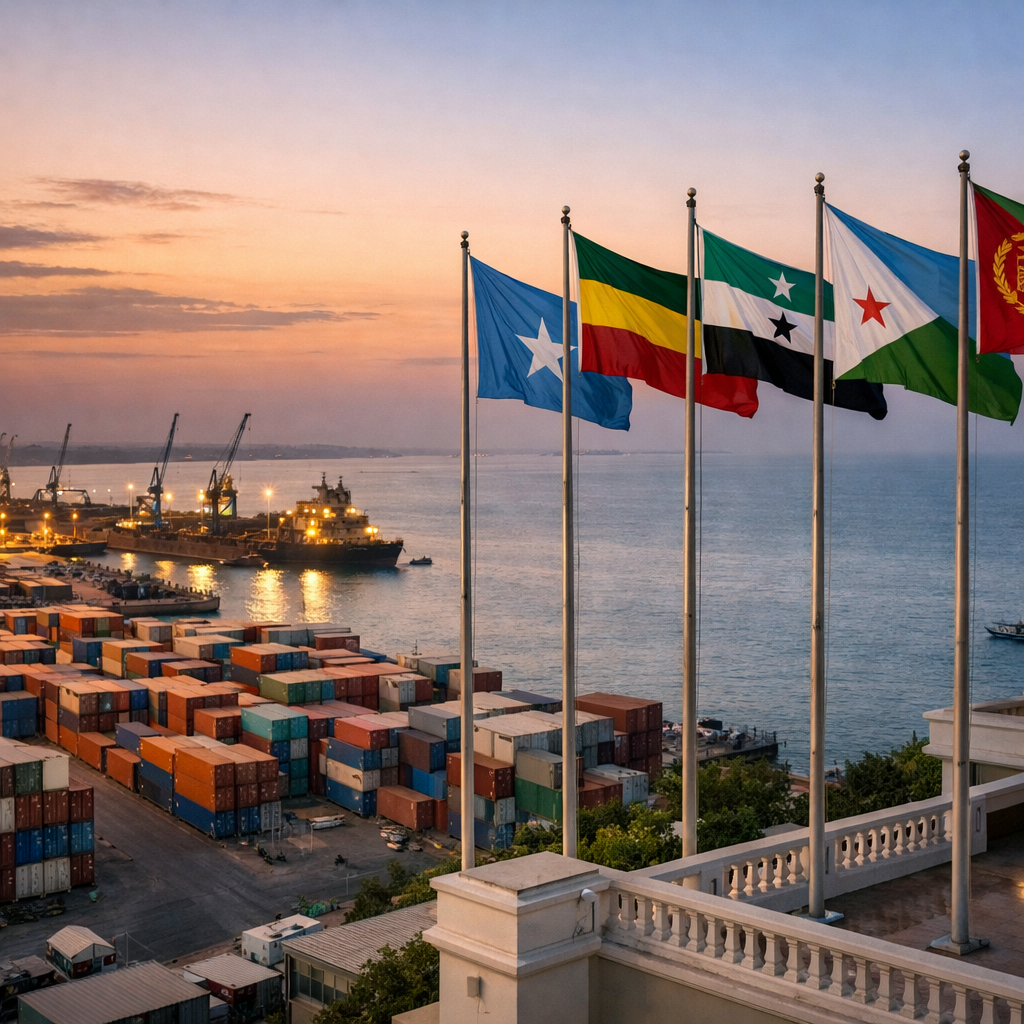
Hargeisa — A week of active diplomacy and shifting regional alignments has kept Somaliland’s foreign policy apparatus busy, as officials in Hargeisa navigate a complex web of bilateral relationships across the Horn of Africa. From the evolving port access debate with Ethiopia to renewed engagement with Djibouti and fresh signals from Mogadishu, the region’s diplomatic temperature remained elevated. The following is a roundup of the most consequential developments of the past seven days.
Ethiopia–Somaliland: Port Access Talks Gain New Momentum
The long-running conversation between Hargeisa and Addis Ababa over Ethiopia’s access to the Berbera port corridor continued to generate diplomatic activity this week, with sources close to the negotiations indicating that technical working groups from both sides have resumed structured discussions. Ethiopia’s landlocked status remains a powerful driver of its interest in Berbera, and Somaliland officials have signalled a willingness to deepen infrastructure cooperation, provided that any arrangement formally acknowledges Somaliland’s administrative authority over the corridor. The port’s strategic value — already bolstered by DP World’s multi-year investment — gives Hargeisa considerable leverage in these conversations.
The significance of any deal cannot be overstated. For Somaliland, securing a formalized agreement with Africa’s second-most populous nation would represent a powerful de facto step toward the international recognition it has long sought. For Ethiopia, reduced dependence on Djibouti’s port monopoly would provide critical economic breathing room. Analysts in Hargeisa note that the pace of discussions has visibly accelerated in recent months, though both governments are treating the process with deliberate caution ahead of any public announcement.
Djibouti–Somaliland: Quiet Competition, Cautious Dialogue
Relations between Somaliland and Djibouti carry an inherent tension rooted in commercial rivalry — the two territories compete directly for the same Ethiopian transit trade. Yet diplomatic channels between Hargeisa and Djibouti City have remained open, with low-level official contacts continuing even as Djibouti quietly lobbies international partners to resist any arrangement that would divert significant cargo volumes from its own ports. This week, regional trade analysts flagged a Djiboutian diplomatic note circulated among Gulf investment partners, urging caution over new Horn of Africa port infrastructure commitments — a move widely read as aimed at slowing Berbera’s rise.
Despite this commercial friction, officials on both sides have reportedly expressed interest in establishing a framework for managed coexistence rather than outright economic confrontation. The logic is straightforward: both ports can serve Ethiopia’s enormous and growing import-export needs, provided the political will exists to treat the corridor as a regional asset rather than a zero-sum contest. Whether that pragmatic instinct survives the pressure of competing national interests remains to be seen.
Somalia–Somaliland: Federal Government Signals Renewed Dialogue Interest
In Mogadishu, the Federal Government of Somalia indicated through senior ministerial channels this week that it remains open to a fresh round of dialogue with Hargeisa, framing the proposal around economic integration and shared security interests rather than the constitutional status question that has historically deadlocked talks. The overture was met with measured scepticism by Somaliland’s presidency, which has consistently maintained that any meaningful negotiation must place the issue of recognition squarely on the table rather than treating it as a matter to be deferred indefinitely.
The timing of Mogadishu’s outreach is notable. Somalia is currently navigating its own domestic political pressures, including parliamentary tensions and ongoing counterterrorism operations in the south, and some observers suggest the dialogue signal is partly intended to demonstrate statesmanship to international donors. Nonetheless, Somaliland’s foreign ministry did not close the door entirely, with a spokesperson indicating that the government would study the proposal carefully before formulating a formal response.
Kenya–Horn of Africa: Nairobi Deepens Regional Security Role
Kenya this week reaffirmed its commitment to an expanded security role in the Horn of Africa, with senior defence officials in Nairobi outlining plans to strengthen bilateral security cooperation frameworks with several regional partners. While the announcements were broadly framed, diplomatic sources indicated that Somaliland’s coastline and the Gulf of Aden maritime corridor featured prominently in background discussions, reflecting growing concern among East African security planners about both piracy risks and the proliferation of armed non-state actors along the region’s coastal zones.
For Somaliland, Nairobi’s growing strategic interest in the wider Horn presents a potential avenue for deepening an already warm bilateral relationship. Kenya has historically been among the more sympathetic African Union member states toward Somaliland’s aspirations, and any formalized security cooperation arrangement — even one falling short of recognition — would add another layer of practical legitimacy to Hargeisa’s international standing. Somaliland defence officials declined to comment specifically on the Nairobi discussions but did not dispute their general substance.
Eritrea–Ethiopia: Asmara Tensions Cast Shadow on Regional Stability
The fragile relationship between Eritrea and Ethiopia continued to generate concern among regional analysts this week, with renewed reports of military posturing along border zones raising questions about the durability of the 2018 peace framework. While a return to open conflict is not considered imminent by most Horn of Africa specialists, the underlying disputes over border demarcation and economic access remain unresolved, and the political atmospherics between Asmara and Addis Ababa have visibly cooled. For Somaliland, any destabilisation of the Ethiopia–Eritrea dynamic carries indirect consequences, particularly if it diverts Addis Ababa’s diplomatic bandwidth away from the Berbera corridor negotiations.
Regional bodies including the Intergovernmental Authority on Development have been urged by member state diplomats to play a more active mediation role, though IGAD’s capacity and impartiality on Eritrea-related matters have historically been questioned by Asmara. The coming weeks are likely to test whether quiet diplomacy can keep the Ethiopia–Eritrea relationship from sliding into a more dangerous phase.

