
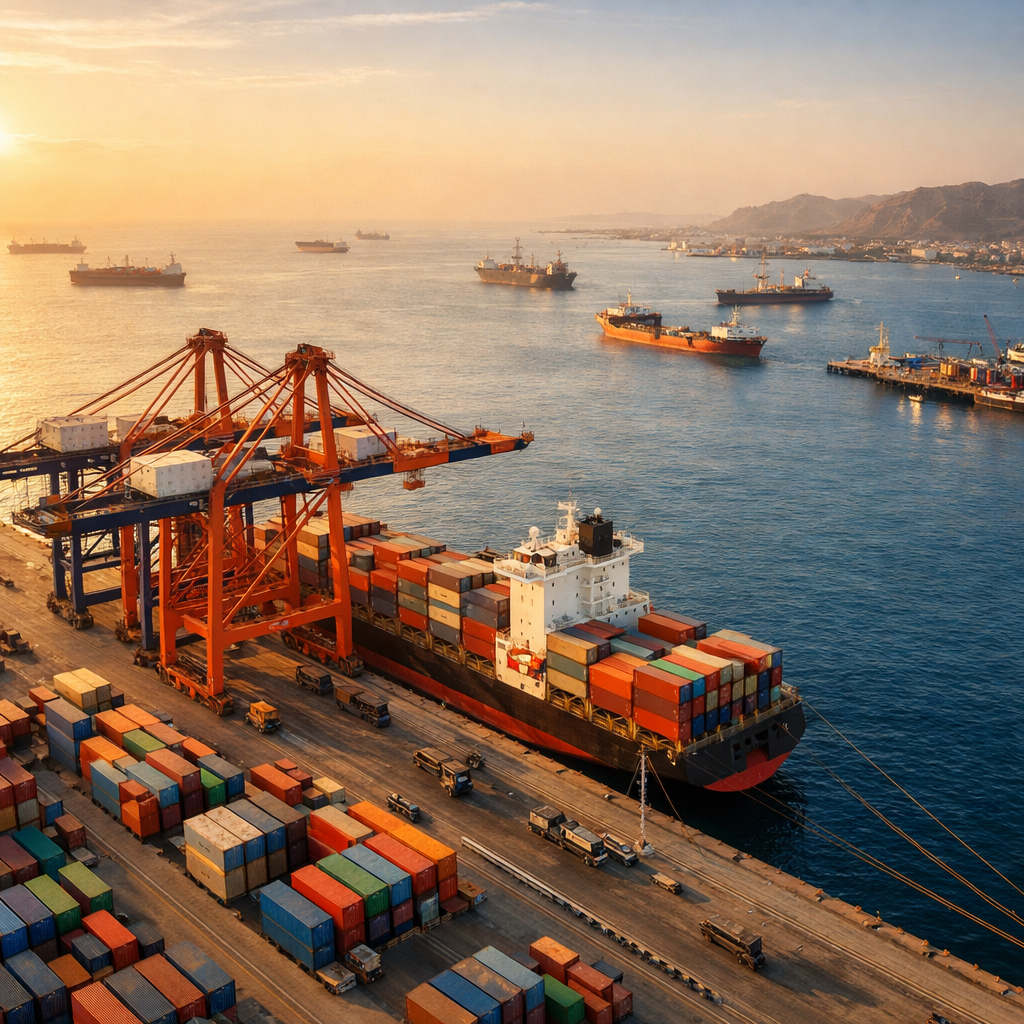
Hargeisa — Somaliland Doubles Down on Port Development Amid Growing Regional Interest
Hargeisa — Somaliland’s government has intensified efforts to position Berbera Port and the Berbera Corridor as the premier trade and logistics gateway for landlocked nations across the Horn of Africa, with officials announcing renewed investment discussions with Gulf-based operators and regional development partners as infrastructure upgrades at the port enter a critical new phase.
The push comes at a moment of heightened strategic interest in Somaliland’s coastline, which stretches along the Gulf of Aden — one of the world’s most heavily trafficked maritime routes. Senior trade officials in Hargeisa have been engaged in a series of meetings with prospective investors and bilateral partners, signaling that Somaliland’s leadership views port-led economic development as the cornerstone of its broader nation-building strategy.
Infrastructure Upgrades Signal Long-Term Ambitions
Work continues on expanding Berbera’s container terminal capacity, with port authorities indicating that throughput volumes have grown steadily over the past two years. Officials have described the expansion as essential to meeting projected increases in cargo traffic, particularly as Ethiopia — one of the continent’s most populous and fastest-growing economies — seeks reliable and cost-effective access to the sea following decades of landlocked trade constraints.
The Ethiopia-Somaliland MoU on port access, which drew significant regional and international attention when it was announced, continues to frame much of the commercial and diplomatic conversation around Berbera. Although formal implementation of the agreement remains a work in progress amid shifting political dynamics in Addis Ababa, logistics firms and regional traders are already treating Berbera as a viable alternative to Djibouti’s heavily congested and comparatively expensive port facilities.
Industry analysts note that Djibouti’s dominance as a transit hub has long rested on its monopoly over Ethiopian trade, a position increasingly vulnerable to competition from Berbera if the corridor’s road and rail links are sufficiently developed. A newly surfaced set of feasibility studies reportedly being reviewed by the African Development Bank suggests that upgrades to the Berbera Corridor road connecting the port to the Ethiopian border could dramatically reduce transit times and transportation costs for Ethiopian importers and exporters.
Somaliland’s Diplomatic Play
Somaliland’s leadership has framed the port’s development not merely as an economic project but as a diplomatic instrument — a demonstration to the international community that the self-declared republic, which has maintained stability and democratic governance for over three decades without formal international recognition, is a credible and capable partner for trade and investment.
Government officials have argued that Berbera’s strategic value speaks for itself, and that tangible economic partnerships with regional governments and multinational corporations effectively perform a form of de facto recognition — incrementally integrating Somaliland into global trade networks even as its formal diplomatic status remains unresolved.
Officials in Hargeisa have also been quietly engaging representatives from Gulf Cooperation Council states, several of which already maintain commercial interests in the region and have shown appetite for deeper involvement in Horn of Africa logistics infrastructure. The United Arab Emirates, which operates a military base and commercial port facilities elsewhere in the region, has long been regarded as a key potential partner in Berbera’s continued development.
Challenges Remain
Despite the optimism, significant challenges persist. Road infrastructure linking Berbera to inland markets remains underdeveloped in stretches, and the port’s full potential is contingent on sustained capital investment and a stable political environment both within Somaliland and across the wider Horn of Africa region. Regulatory frameworks for foreign investment are still maturing, and some prospective partners have privately cited uncertainty over Somaliland’s legal status as a barrier to large-scale capital commitments.
There are also competitive pressures beyond Djibouti. The port of Lamu in Kenya, backed by substantial Chinese and Kenyan government investment, has been developed with partially overlapping ambitions to serve landlocked East African markets. Regional observers caution that Somaliland must move swiftly to convert current momentum into binding, long-term commercial agreements before rival corridors consolidate their positions.
A Defining Moment for Somaliland’s Economic Future
For Somaliland, the stakes could scarcely be higher. A thriving Berbera Port would generate customs revenues, create employment, and underpin the government’s fiscal capacity at a time when public finances remain stretched. More broadly, economic success would strengthen Somaliland’s case on the world stage — demonstrating that recognition is not merely a moral or political question, but a pragmatic necessity for unlocking the full potential of a stable, strategically positioned partner in one of the world’s most consequential maritime neighborhoods.
As regional leaders and international investors continue to weigh their options across the Horn of Africa, Somaliland’s window of opportunity at Berbera appears open — but officials and analysts alike agree it will not remain so indefinitely.

