
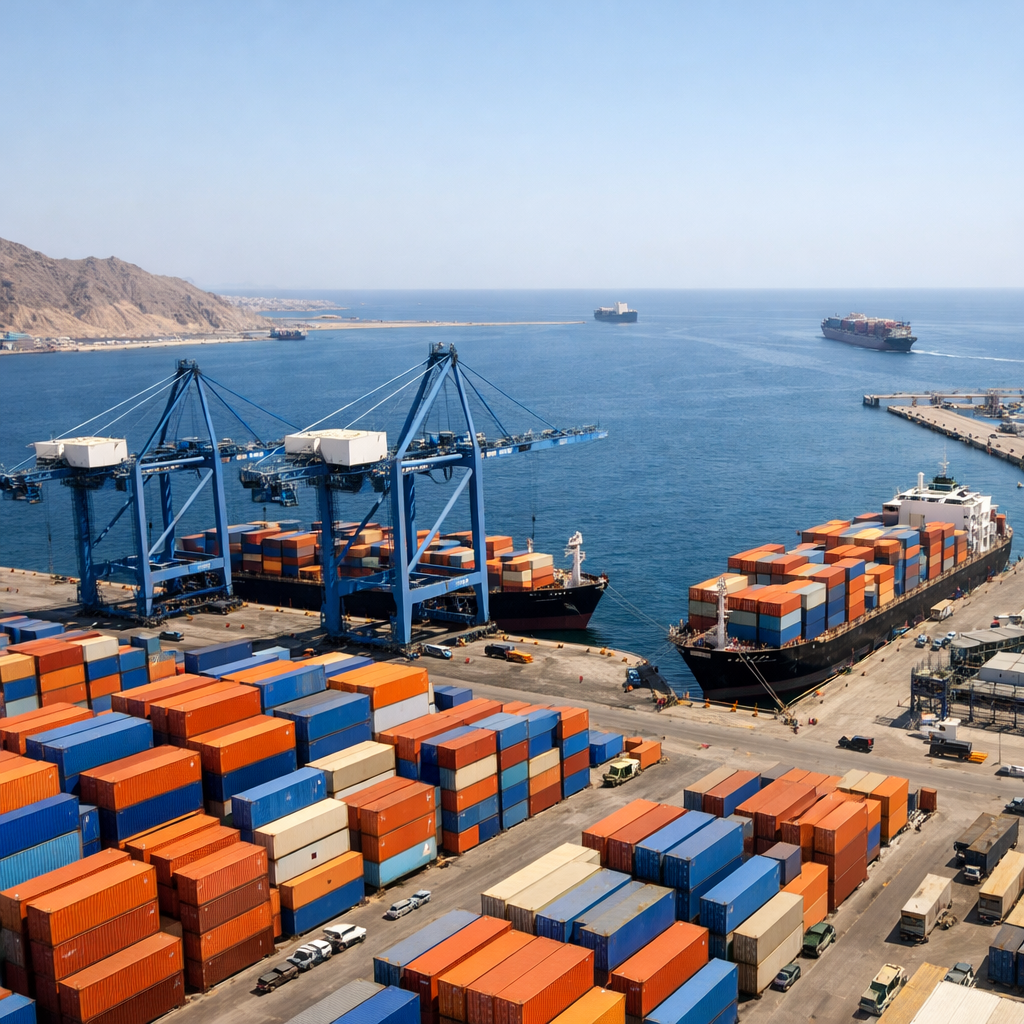
Somaliland’s Strategic Port Attracts Fresh Foreign Capital Amid Growing Red Sea Shipping Disruptions
Hargeisa — Berbera Port is emerging as a focal point for renewed international investment interest, as global shipping companies and regional governments reassess Red Sea trade routes in the wake of prolonged disruptions caused by Houthi attacks on commercial vessels. Somaliland officials and port authorities have reported a significant uptick in inquiries from logistics firms, development finance institutions, and foreign governments seeking to diversify supply chain infrastructure across the Horn of Africa.
The port, operated in partnership with DP World under a long-term concession agreement, has seen steady growth in container throughput over the past year. Industry observers note that the strategic location of Berbera — sitting along one of the world’s most important maritime corridors — has never been more relevant. With major shipping lines rerouting cargo around the Cape of Good Hope to avoid Red Sea threats, alternative port infrastructure along the Gulf of Aden coastline is attracting heightened attention from both private investors and state-backed development funds.
Ethiopian Trade Dependency Driving Infrastructure Urgency
A key driver of the renewed focus on Berbera is Ethiopia’s continuing search for reliable sea access following its loss of coastal territory in 1993. The Ethiopia-Somaliland port access memorandum of understanding, signed in early 2024, placed Berbera at the center of a potential framework that would give landlocked Ethiopia commercial and possibly naval access to the sea. While diplomatic complexities have slowed formal implementation, trade volumes moving through the Berbera Corridor connecting Ethiopia’s Somali Regional State to the coast have continued to climb.
Somaliland’s Minister of Trade and Tourism indicated in recent remarks that his government was actively in discussions with multiple international partners to accelerate phase two of Berbera Port’s expansion, which is intended to more than double the facility’s annual handling capacity. He described the current period as a defining window of opportunity, suggesting that geopolitical circumstances were aligning in ways that rarely occur simultaneously for a developing port economy.
The Berbera Corridor itself — the road and logistics network linking the port to Ethiopia’s interior — remains a critical piece of the puzzle. Sections of the corridor have benefited from investment through the Abu Dhabi Fund for Development, and Somaliland authorities have signaled interest in attracting additional Gulf and European development finance to upgrade remaining stretches of road infrastructure and build out cold-chain and dry goods storage facilities near the port.
Djibouti’s Dominance Being Quietly Challenged
For decades, Djibouti has served as the dominant gateway for Ethiopian and regional trade, commanding premium pricing for port services backed by its established infrastructure and international military presence. But port officials and trade analysts in Hargeisa argue that Berbera is increasingly competitive, particularly as Ethiopia seeks to avoid over-dependence on a single trade corridor.
A regional logistics consultant based in Addis Ababa, speaking on background, described the mood among Ethiopian importers as increasingly open to Berbera as a credible alternative, particularly for bulk agricultural inputs and manufacturing components. He noted that transit time savings through the Berbera route compared to Djibouti were meaningful for time-sensitive cargo, and that the cost differential was narrowing as Berbera’s handling efficiency improved.
Somaliland’s government has quietly positioned this competitive dynamic not as a zero-sum confrontation with Djibouti, but as a natural evolution toward a multi-corridor approach for the region — one that reduces systemic risk for all Horn economies and creates redundancy in trade infrastructure.
International Recognition Remains the Central Obstacle
Despite the commercial momentum, Somaliland’s path to becoming a fully integrated node in the global trading system is constrained by its unresolved international recognition status. Major shipping insurers, multilateral development banks, and global logistics firms still treat Somaliland’s legal and regulatory framework with caution, given the absence of formal statehood recognition from the international community.
Somaliland officials argue, however, that practical economic cooperation is slowly building the foundations that formal recognition would eventually follow. Investment commitments by DP World, interest from Gulf development funds, and the Ethiopia MoU are each cited by Hargeisa as evidence that the global community is engaging with Somaliland’s economic reality, even where it has not yet caught up politically.
As Red Sea instability shows no sign of imminent resolution, pressure to develop and certify alternative maritime infrastructure in the Horn of Africa is only likely to grow. For Somaliland, Berbera’s moment may be arriving faster than many anticipated — the question is whether the country’s diplomatic and governance frameworks can move quickly enough to fully capitalize on it.

