
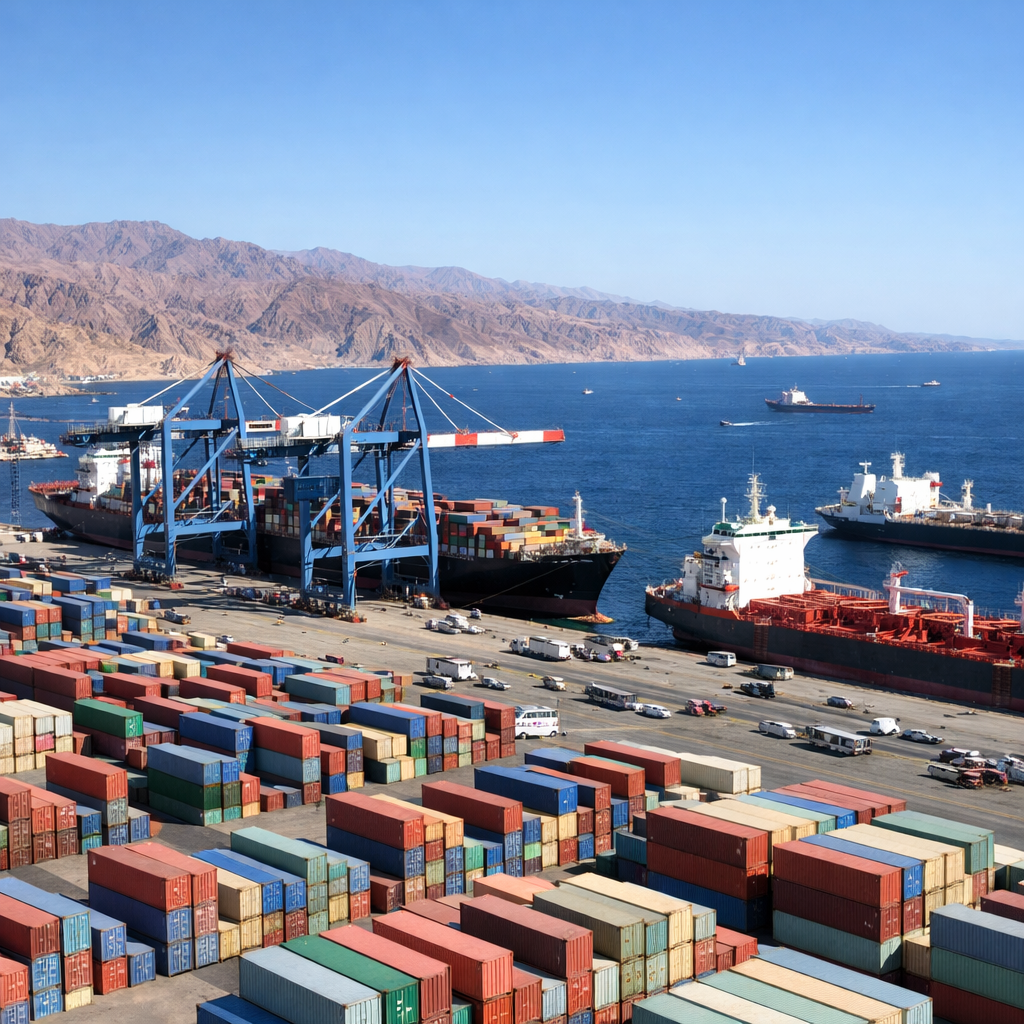
Berbera Port Positions Itself as a Regional Trade Hub Amid Growing Gulf Investment Interest
Hargeisa — Somaliland’s flagship infrastructure project, Berbera Port and the Berbera Corridor, is drawing renewed attention from Gulf investors and regional trade partners, with officials in Hargeisa signaling that several new economic agreements are at an advanced stage of negotiation. The developments come as Somaliland’s government intensifies efforts to transform the port into a world-class logistics hub capable of serving landlocked Ethiopia and broader East African markets.
Senior officials from Somaliland’s Ministry of Finance and Development have indicated in recent weeks that delegations from the United Arab Emirates and Saudi Arabia have held multiple rounds of talks with Somaliland counterparts, focusing on expanding existing investment frameworks beyond DP World’s current operational mandate at Berbera. Sources familiar with the discussions described the conversations as substantive, covering new free-zone development, cold-storage and agro-processing facilities, and enhanced fuel bunkering infrastructure along the Red Sea corridor.
Strategic Location Fuels Investor Interest
Somaliland’s geographic position on the Gulf of Aden has long made Berbera Port a strategically attractive asset, but officials say the combination of regional instability elsewhere and improved governance standards in Somaliland is now translating interest into concrete commitments. The port handles millions of tonnes of cargo annually and has seen consistent growth in livestock exports — a cornerstone of the Somaliland economy — alongside general containerized freight.
A senior Hargeisa-based trade analyst noted that the geopolitical reshaping of Red Sea trade routes, partly driven by Houthi disruption of shipping lanes further north, has paradoxically elevated Berbera’s profile as a secure and reliable transit point. Shippers and logistics firms are increasingly evaluating alternative routing options, and Berbera’s combination of deep-water capacity, relative stability, and proximity to the Ethiopian hinterland places it favorably in those assessments.
The Berbera Corridor itself — the road and rail development project linking the port to the Ethiopian border at Tog Wajaale — remains a priority infrastructure axis. Officials confirmed that road rehabilitation along key stretches of the corridor is ongoing, with funding contributions from the European Union and development partners supplementing Somaliland’s own budget allocations.
Ethiopia Relationship Remains Central
No discussion of Berbera’s commercial future is complete without reference to Ethiopia, Somaliland’s most critical potential customer. The Ethiopia-Somaliland MoU signed in January 2024, which outlined a framework for Ethiopian port access and broader bilateral cooperation including potential equity arrangements, continues to shape the strategic logic behind much of the investment interest in Berbera. While implementation details remain under active negotiation between the two governments, officials on both sides have publicly reaffirmed their commitment to making the arrangement work.
Ethiopian importers and exporters are increasingly factoring Berbera into their logistics calculations. Industry representatives in Addis Ababa have pointed to shorter transit times and lower handling costs compared with Djibouti’s Doraleh terminal as compelling operational arguments, independent of any formal government-to-government deal. If a durable commercial and political framework can be finalized, analysts say Berbera could realistically capture a meaningful share of Ethiopian trade volumes within the next five years.
Somaliland’s Broader Diplomatic Push
The economic momentum at Berbera is unfolding alongside a broader diplomatic push by Somaliland’s government to deepen its international partnerships and advance its long-standing bid for formal international recognition. President Abdirahman Irro, who took office following elections late last year, has prioritized economic diplomacy as a vehicle for raising Somaliland’s international profile, operating on the premise that demonstrable economic viability strengthens the case for statehood recognition.
Officials in Hargeisa have been careful to frame Berbera’s development not merely as a commercial opportunity but as proof of concept — evidence that Somaliland has the institutional capacity, the security environment, and the governing structures to be a responsible, bankable partner for foreign investors and regional governments alike.
Challenges Remain
Challenges persist. Access to international banking and correspondent finance remains constrained by Somaliland’s unrecognized status, complicating large-scale capital flows and project financing. Infrastructure gaps along secondary feeder roads and within the port’s immediate catchment area require sustained investment. And the broader regional environment, while improved, is never fully insulated from the political turbulence that periodically affects the Horn of Africa.
Nevertheless, the trajectory at Berbera is upward. With Gulf capital showing renewed appetite, Ethiopian trade volumes representing a transformational prize, and a Somaliland government that has staked significant political capital on economic delivery, the port’s next chapter may prove its most consequential yet.

