
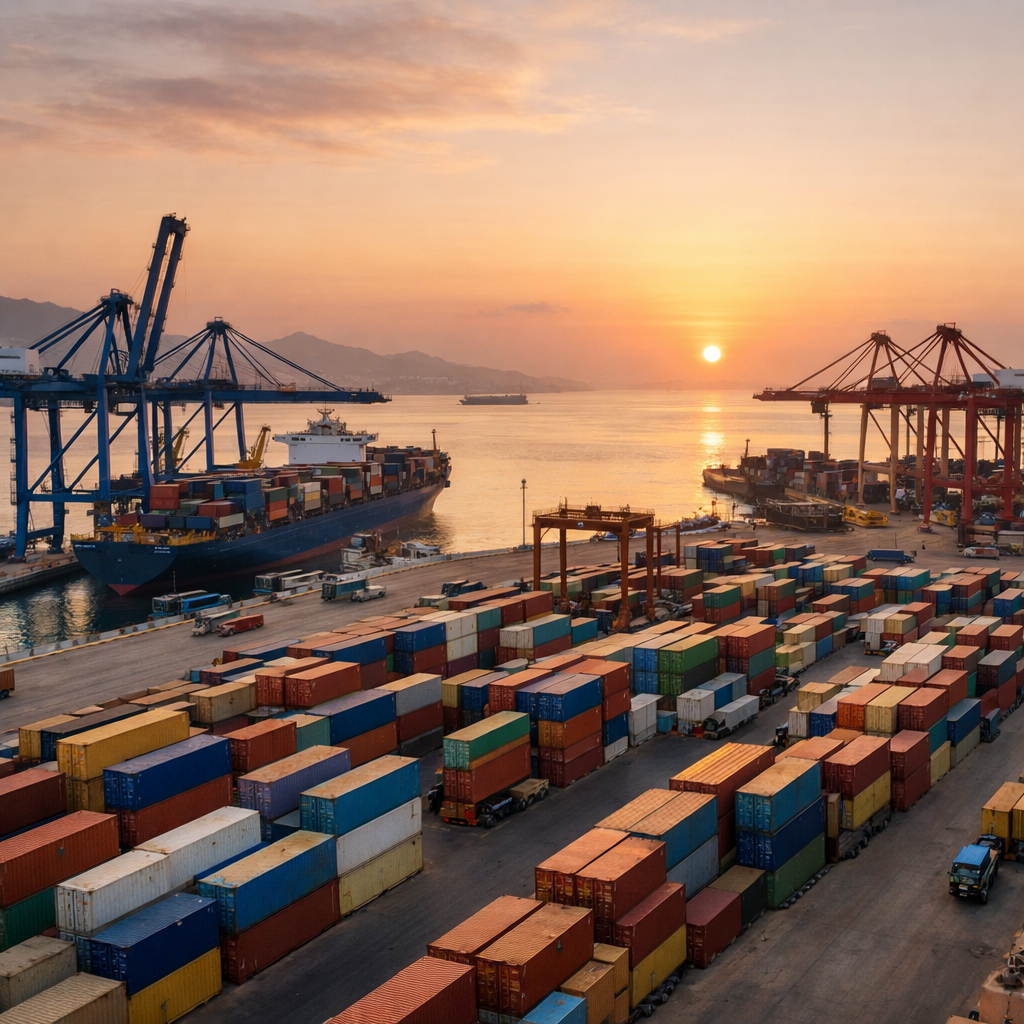
Berbera Port Emerges as Regional Trade Hub Amid Growing Gulf Investment Interest
Hargeisa — Somaliland’s flagship infrastructure asset is drawing renewed attention from Gulf investors and regional trade partners, as expansion works at Berbera Port continue to reshape the Horn of Africa’s logistics landscape and position the self-declared republic as a vital gateway for landlocked economies in the region.
Officials in Hargeisa have confirmed a series of high-level engagements with representatives from the United Arab Emirates and Saudi Arabia in recent weeks, with discussions centering on expanding commercial shipping capacity, cold storage facilities, and the broader Berbera Economic Free Zone. The consultations form part of Somaliland’s accelerating push to transform Berbera from a mid-tier regional port into a fully integrated trade and logistics corridor capable of servicing Ethiopia, parts of South Sudan, and the wider East African interior.
Free Zone Attracting Renewed Attention from Foreign Firms
The Berbera Economic Free Zone, managed in partnership with DP World, has seen a marked uptick in inquiries from manufacturing and logistics companies seeking alternative supply chain routes in the wake of ongoing disruptions in the Red Sea corridor. Officials indicated that several Gulf-based firms have expressed preliminary interest in establishing bonded warehouse operations and light manufacturing facilities within the zone, drawn by Somaliland’s comparatively stable security environment and its strategic position near the Bab-el-Mandeb strait.
Somaliland’s Minister of Finance recently addressed a business forum in the capital, underscoring that the government viewed the free zone as the cornerstone of its medium-term economic strategy. He conveyed that Hargeisa was committed to streamlining customs procedures and offering competitive incentive packages to attract anchor tenants whose presence would stimulate ancillary investment and local employment. The minister further noted that revenue from port operations had already contributed meaningfully to the national budget, reducing the government’s dependence on diaspora remittances and donor support.
Ethiopia Corridor Remains Central to Berbera’s Growth Thesis
The commercial logic underpinning much of the investment excitement hinges on Ethiopia’s appetite for alternative maritime access. Following the high-profile Ethiopia-Somaliland MoU signed at the start of 2024, which envisaged granting Addis Ababa preferential port access and potentially a naval facility in exchange for a package of diplomatic and economic concessions, the Berbera Corridor has taken on strategic weight far beyond ordinary commercial infrastructure.
Although implementation of the broader MoU framework has proceeded cautiously — complicated by regional diplomatic sensitivities and Somalia’s vocal objections — cargo volumes transiting through Berbera destined for the Ethiopian market have continued their upward trajectory. Ethiopian traders and logistics operators have increasingly incorporated the Berbera route into their supply chains as an alternative to the heavily congested Djibouti corridor, citing shorter dwell times and competitive handling fees as key advantages.
Transport economists tracking the corridor note that even a modest diversion of Ethiopian import-export volumes away from Djibouti would represent a transformational revenue stream for Somaliland, potentially dwarfing current port receipts within a five-year horizon if infrastructure investments keep pace with demand.
Djibouti’s Shadow and Regional Competition
Djibouti’s established dominance in the Horn of Africa’s maritime trade has not gone unchallenged by Berbera’s rise, and relations between the two neighbors carry an undercurrent of quiet competition. Djibouti handles the overwhelming majority of Ethiopia’s seaborne trade and hosts a constellation of foreign military bases that give it outsized geopolitical influence. Hargeisa’s officials have been careful to frame Berbera not as a rival to Djibouti but as a complementary node in a diversified regional logistics network — a diplomatic posture designed to avoid unnecessary friction while still positioning Somaliland favorably in investor conversations.
Regional analysts, however, observe that the competitive dynamic is real and that Gulf states in particular are weighing their port investment portfolios with an eye toward diversification across both facilities. Abu Dhabi’s DP World, which operates in both Berbera and Djibouti, is itself navigating the balance between its commitments at each location.
Governance Reforms Seen as Critical to Sustaining Momentum
Investors and development finance institutions consulted by Berbera Times have consistently flagged governance and regulatory transparency as the chief variables that will determine whether Somaliland can convert current interest into binding, long-term capital commitments. While Somaliland’s record of internal stability relative to neighboring territories has been a persistent selling point for its aspirations for international recognition, interlocutors note that clearer legal frameworks around property rights, arbitration mechanisms, and anti-corruption enforcement remain works in progress.
Hargeisa’s planning ministry has signaled that legislative reforms targeting the investment climate are anticipated in the coming parliamentary session, with technical assistance from international partners expected to support the drafting process. For now, the port’s cranes keep turning, the free zone’s footprint keeps expanding, and Somaliland’s quiet economic diplomacy continues to open doors that formal recognition has thus far kept closed.

