
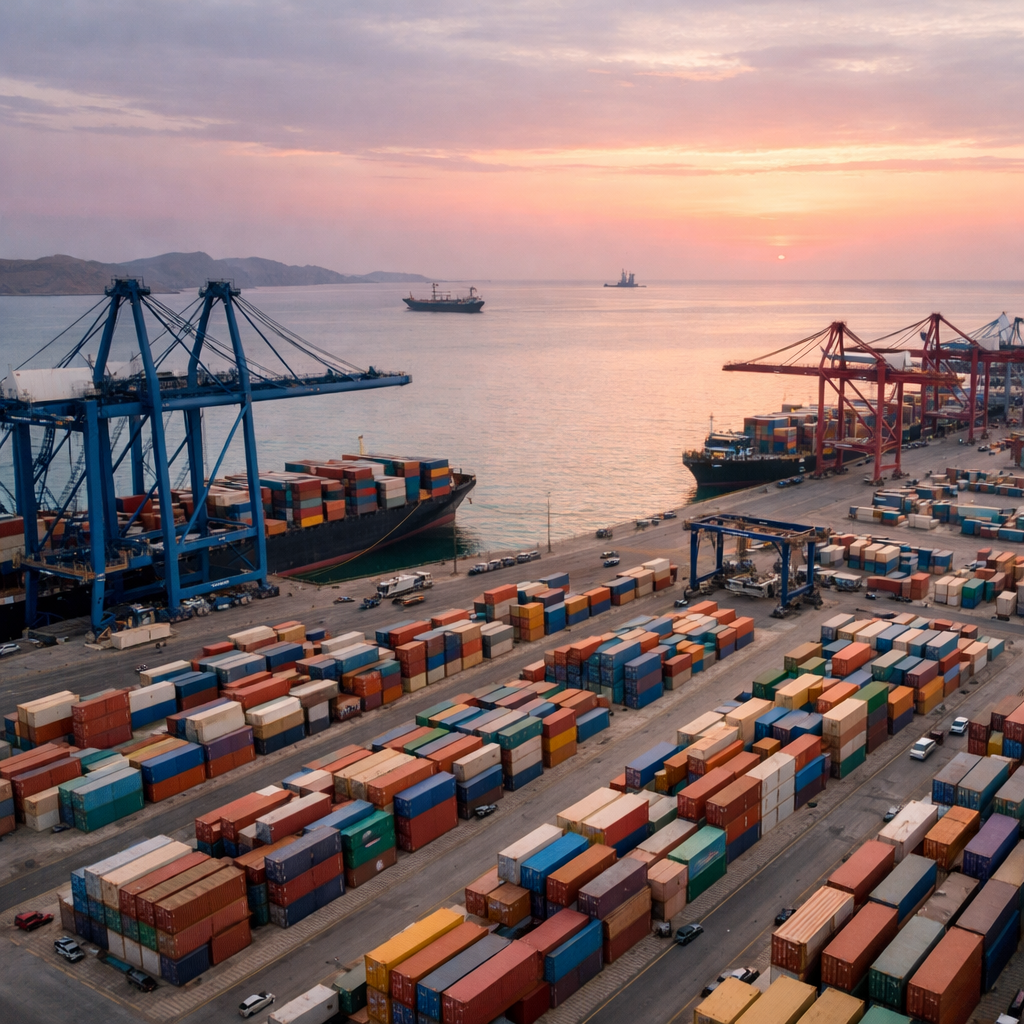
Hargeisa — Somaliland’s flagship infrastructure project moves closer to its full potential as new cargo volumes and regional partnerships signal a turning point for the Horn of Africa’s most strategically significant port.
Hargeisa — The expansion of Berbera Port and the Berbera Corridor is entering what officials and analysts describe as a defining phase, with fresh cargo throughput figures, deepening logistics partnerships, and renewed investor interest converging to push Somaliland’s economic centerpiece toward its long-promised regional role. Port authorities and government representatives have pointed to rising container volumes and an expanding network of transit agreements as evidence that Berbera is edging closer to becoming a credible alternative gateway for landlocked Ethiopia and beyond.
Somaliland’s Ministry of Finance and Development has indicated that port revenues have shown consistent quarter-on-quarter growth over the past year, buoyed by increased activity from importers seeking to diversify away from the congestion and geopolitical uncertainty that has at times plagued other Horn of Africa ports, including Djibouti’s Doraleh terminal. Officials have framed this momentum not merely as an economic milestone but as a strategic signal to the broader international community that Somaliland possesses the institutional capacity to manage and develop critical infrastructure.
Corridor Investment and Infrastructure Progress
The road corridor linking Berbera to the Ethiopian border town of Tog Wajaale — a project anchored by significant financing from the European Union and the UAE-based DP World, which holds a long-term concession at the port — has seen continued construction progress. Contractors working on the remaining road segments have reported accelerated timelines, with completion of key stretches anticipated in the coming months. Once fully operational, the corridor is expected to slash transit times and costs for Ethiopian importers currently reliant on longer routes through Djibouti.
DP World, which signed its concession agreement with Somaliland in 2016 and has since invested heavily in upgrading the port’s container terminal, quay infrastructure, and logistics zones, has signaled ongoing commitment to the project. Industry observers note that DP World’s continued presence lends Berbera a degree of commercial credibility that few other ports in the sub-region can match at this stage of their development. The company has expressed interest in expanding the free trade zone adjacent to the port, which is designed to attract light manufacturing and warehousing businesses targeting the Ethiopian and regional market.
Ethiopia’s Demand and the MoU Framework
The commercial logic underpinning Berbera’s expansion remains closely tied to Ethiopia’s enormous import and export needs. As Africa’s second-most populous nation and a rapidly growing economy with no coastline, Ethiopia requires reliable, affordable port access — a dependency that has long been dominated by Djibouti. The Ethiopia-Somaliland MoU signed in January 2024, which included provisions for Ethiopian commercial and potentially naval access in exchange for formal Ethiopian engagement with Somaliland’s status, injected fresh political energy into what had previously been a largely commercial relationship.
While the broader diplomatic dimensions of that memorandum have faced complications — including strong objections from Mogadishu and regional diplomatic turbulence — the underlying commercial interest on the Ethiopian side has not dissipated. Ethiopian logistics firms and freight forwarders continue to explore Berbera routing options, and Somaliland officials have indicated that technical working groups between the two sides have maintained their exchanges despite the broader diplomatic noise.
Regional Competition and Djibouti’s Shadow
Berbera’s rise does not occur in a vacuum. Djibouti, which has historically handled the overwhelming majority of Ethiopia’s trade, remains a formidable competitor with established infrastructure, deeper diplomatic ties, and a larger port ecosystem. However, analysts tracking the region note that Djibouti’s reliance on a near-monopoly over Ethiopian trade carries its own vulnerabilities, and that Addis Ababa has an inherent strategic interest in diversifying its port options to gain leverage in tariff negotiations and reduce supply chain risk.
For Somaliland, every container that transits through Berbera carries significance beyond its commercial value. Port revenues fund government services in a territory that has maintained its own governance, currency, and security forces since declaring independence from Somalia in 1991 without receiving formal international recognition. A thriving port economy strengthens the case Hargeisa makes to foreign governments and investors: that Somaliland is a stable, functional, and economically viable partner worthy of deeper engagement.
Looking Ahead
Port officials and government ministers have indicated that the coming year will be pivotal. Completion of corridor road works, decisions around free trade zone tenancies, and the outcome of ongoing conversations with Ethiopian counterparts are all expected to crystallize in ways that will either cement Berbera’s trajectory or reveal the limits of its current momentum. Regional analysts say the port’s fate will serve as one of the clearest barometers of Somaliland’s broader fortunes — commercially, diplomatically, and politically — in the years ahead.

