
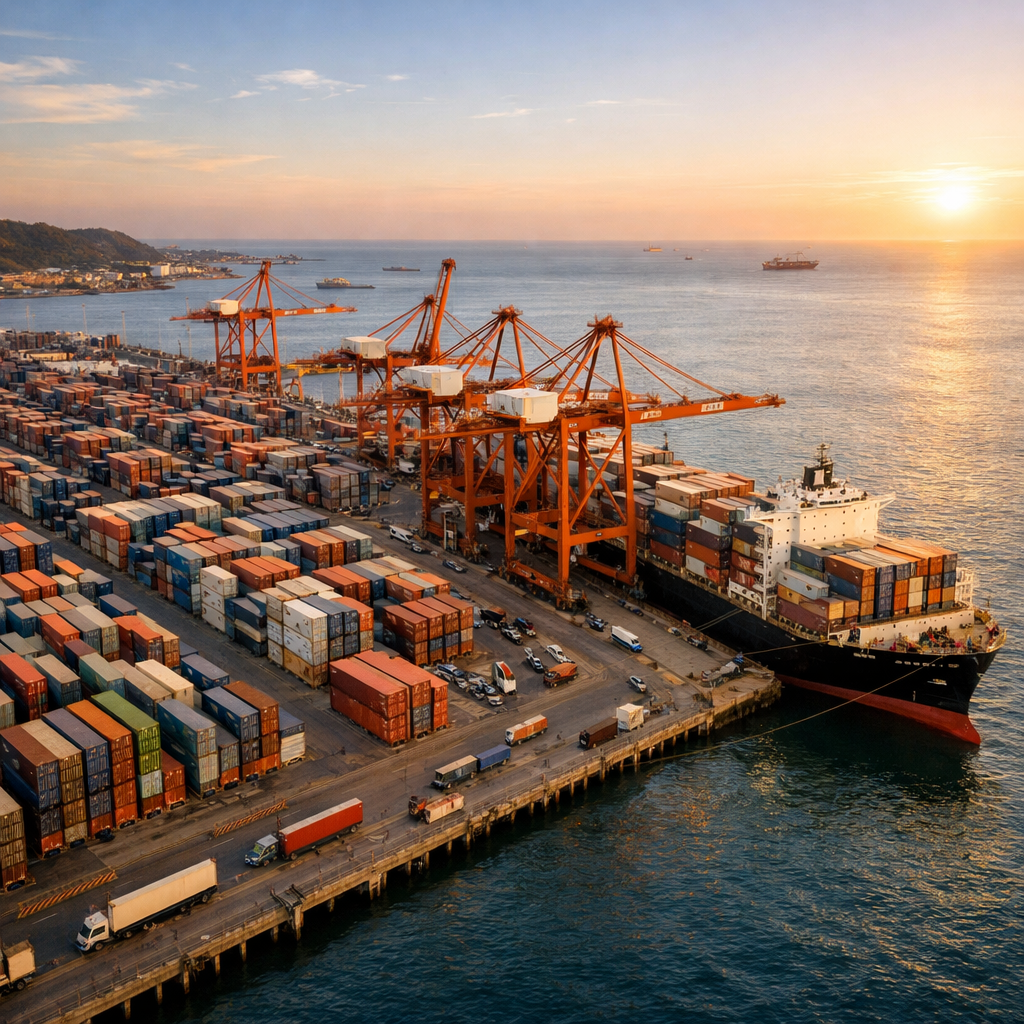
Berbera Emerges as Key Regional Hub Amid Growing Investor Interest
Hargeisa — Berbera Port is recording its strongest trade volumes in years, with port authorities and regional analysts pointing to accelerating infrastructure investment, expanding corridor traffic, and renewed interest from regional and international partners as the primary drivers behind the surge. The momentum is reshaping Somaliland’s economic outlook and positioning Berbera as one of the most strategically consequential ports on the Horn of Africa coastline.
Port administrators reported earlier this month that cargo throughput has climbed significantly compared to the same period last year, with container handling, livestock exports, and transit goods all posting gains. Officials attributed the increase to completed upgrades at the terminal, improved logistics along the Berbera Corridor connecting the port to Ethiopia’s landlocked interior, and a gradual broadening of the port’s client base beyond its traditional trading partners.
Ethiopian Transit Trade Continues to Anchor Growth
Ethiopian transit cargo remains the backbone of Berbera’s commercial expansion. The Ethiopia-Somaliland port access arrangement has steadily translated into measurable increases in freight movement, with Ethiopian importers and exporters increasingly treating the Berbera route as a viable and competitive alternative to Djibouti’s congested facilities. Logistics operators working the corridor have described growing confidence in Berbera’s reliability and turnaround times, factors that are influencing routing decisions across the region.
The corridor itself — stretching from Berbera through Tog Wajaale and into the Ethiopian highlands — has benefited from road improvements funded partly through the Somaliland government’s development budget and partly through international development finance. Trucking volumes have risen accordingly, and new cold-chain facilities near the port are enabling higher-value perishable exports, particularly in the livestock and agricultural sectors, to move more efficiently through the terminal.
Djibouti Competition and Regional Dynamics
The growth at Berbera is not occurring in a vacuum. Djibouti’s dominant position as the primary gateway for Ethiopian trade has long been a function of infrastructure maturity, political relationships, and deeply embedded logistics networks. However, regional analysts note that Ethiopian policymakers have shown increasing interest in diversifying their port dependencies, reducing vulnerability to any single access corridor. This strategic calculus has worked in Berbera’s favor, lending commercial momentum to what was already a geopolitically significant arrangement.
Somaliland’s government has sought to frame Berbera’s expansion not as a zero-sum competition with Djibouti but as a natural expression of regional market diversification. Senior officials in Hargeisa have argued that a more balanced distribution of Ethiopian transit trade across multiple corridors serves the broader interests of regional stability and economic resilience — a message increasingly finding receptive audiences among development finance institutions and bilateral partners.
International Investment Interest Intensifies
Beyond the Ethiopian corridor, Berbera is attracting attention from a widening circle of investors and development partners. Gulf-based logistics firms, East African infrastructure funds, and development finance institutions from Europe have all been reported to be in various stages of exploratory dialogue with Somaliland’s Port Authority and the Ministry of Finance. The existing partnership with DP World, which has operated a concession at Berbera since 2017, continues to provide operational expertise and international credibility that facilitates further investment conversations.
Somaliland’s broader pitch to potential partners rests on a combination of geographic advantage — the port sits at the mouth of the Gulf of Aden, one of the world’s busiest shipping lanes — and a governance record that officials argue compares favorably to many formally recognized states in the region. The territory’s decades of de facto self-governance and relative internal stability are frequently cited in investment prospectuses and diplomatic briefings as differentiating factors for a region not short on political risk.
Challenges Remain on the Path to Full Potential
Despite the positive trajectory, significant challenges persist. Infrastructure financing gaps, customs modernization requirements, and the broader question of Somaliland’s international recognition status continue to complicate the territory’s ability to access sovereign lending facilities, sign binding bilateral trade agreements, and participate fully in multilateral trade frameworks. Port officials and government representatives have been candid that realizing Berbera’s full potential will require political progress on the recognition front alongside continued infrastructure development.
Nevertheless, the current momentum is tangible. Cargo volumes are rising, investor interest is broadening, and the Berbera Corridor is functioning with a regularity and reliability that would have seemed optimistic just five years ago. For a territory that has long argued its strategic value deserves wider acknowledgment, the port’s expanding ledger may be making that case more persuasively than any diplomatic communiqué.

