
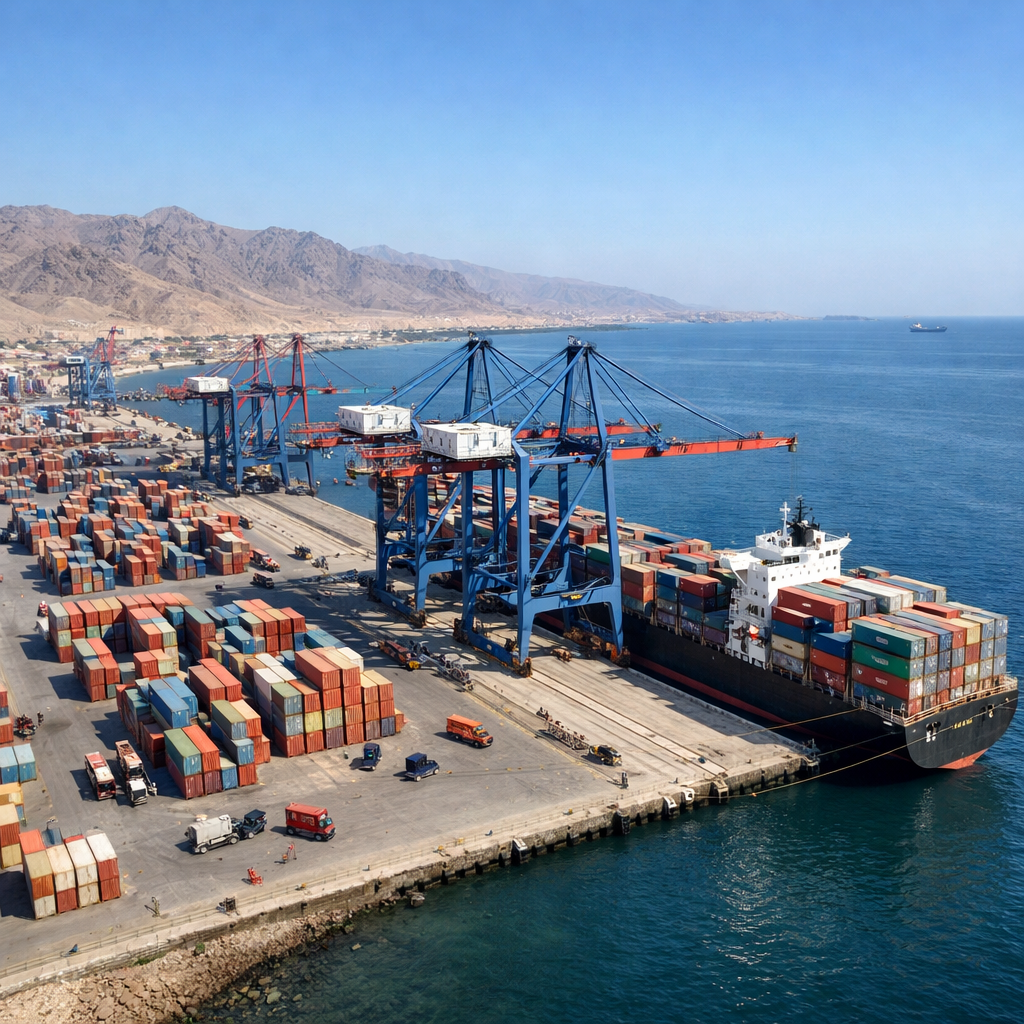
Somaliland’s Strategic Corridor Draws Renewed Investor Attention Amid Shifting Horn of Africa Dynamics
Hargeisa — Berbera Port is entering a critical new phase of its long-term expansion program, with infrastructure upgrades and logistical improvements drawing fresh attention from regional investors and international development partners seeking reliable alternatives to increasingly congested Red Sea shipping lanes.
Officials in Hargeisa have signaled growing confidence that the port’s second-phase development — encompassing expanded container handling capacity, upgraded cold-storage facilities, and improved road connectivity along the Berbera Corridor — is on track to transform the facility into one of the Horn of Africa’s most competitive commercial gateways. The corridor, stretching from the Gulf of Aden coast deep into the Ethiopian interior, sits at the heart of Somaliland’s economic strategy and its ambitions for broader regional integration.
Infrastructure Investment Accelerates
DP World, the Dubai-based ports operator that has held a long-term concession at Berbera since 2016, has reaffirmed its commitment to the facility, with sources familiar with the project indicating that capital deployment for the second phase of terminal expansion is proceeding in line with original projections. Planned improvements include the installation of additional ship-to-shore cranes, expanded container yard acreage, and an upgraded truck marshalling area designed to dramatically cut cargo dwell times.
Somaliland’s Ministry of Finance and Development has described the port’s transformation as the single most important driver of the country’s medium-term economic prospects, noting that revenues from Berbera are increasingly central to the government’s fiscal planning. Officials have expressed optimism that enhanced throughput capacity will allow Somaliland to absorb significantly larger volumes of Ethiopian transit trade once infrastructure along the inland corridor reaches a commensurate standard.
Ethiopia Remains the Critical Variable
The commercial logic underpinning Berbera’s expansion rests substantially on Ethiopian demand. Ethiopia, landlocked since Eritrean independence in 1993, relies heavily on the Djiboutian port network for the vast majority of its import and export trade. Diversifying that dependence has long been an Ethiopian strategic priority, and Berbera — closer to Addis Ababa than Djibouti City along certain routing options — represents a compelling alternative.
The Ethiopia-Somaliland port access memorandum of understanding signed in January 2024 raised the prospect of a formalized and deepened economic relationship between the two neighbors, though the full implementation of that agreement has been subject to diplomatic turbulence in the months since. Analysts tracking the situation say that while the geopolitical dimensions of that deal remain sensitive, the underlying commercial interest in Berbera as a transit hub has not diminished. Ethiopian importers and logistics companies continue to explore routing options through the port, particularly for goods originating from Gulf markets.
A transport economist familiar with regional freight flows noted that Ethiopian traders are increasingly pragmatic about corridor choices, selecting routes based on cost and speed rather than political considerations alone. Berbera’s ability to compete, he suggested, will ultimately depend on the reliability and cost-efficiency it can offer end-to-end, from vessel arrival to warehouse delivery in Addis Ababa or beyond.
Red Sea Disruption Provides Unexpected Opportunity
The prolonged disruption to Red Sea shipping caused by Houthi attacks on commercial vessels in the Bab el-Mandeb strait has paradoxically boosted interest in Horn of Africa port infrastructure. With numerous shipping lines rerouting around the Cape of Good Hope, regional ports capable of handling transshipment and offering onward connectivity have seen elevated inquiry volumes from freight forwarders and cargo owners seeking flexibility.
Industry observers note that while Berbera’s direct exposure to transshipment volumes from rerouted vessels remains limited compared to major regional hubs, the heightened attention on alternative logistics architectures in the Horn has lifted Somaliland’s profile among supply chain planners who might previously have overlooked the facility. Several European and Asian logistics firms have reportedly dispatched representatives to conduct operational assessments of the port in recent months.
Djibouti Rivalry and Regional Context
Berbera’s rise is inevitably viewed through the lens of its competition with Djibouti, which has long dominated Horn of Africa maritime trade. Djibouti’s stranglehold on Ethiopian transit traffic — which accounts for the overwhelming bulk of its port revenues — has been a source of strategic anxiety in Djibouti City, and the prospect of Berbera successfully capturing a meaningful share of that trade has added a competitive dimension to relations between Djibouti and Somaliland.
For Somaliland, the port is far more than a commercial asset. It represents a tangible demonstration of the territory’s capacity to function as a credible, well-governed state capable of managing complex international economic relationships — a living argument for the international recognition that Hargeisa has long sought and not yet fully secured.
As the expansion program advances and regional trade patterns continue to shift, the coming eighteen months are likely to prove decisive in determining whether Berbera can consolidate its position as a genuinely transformative node in Horn of Africa commerce — or whether infrastructure bottlenecks and diplomatic uncertainties will constrain its potential.

