
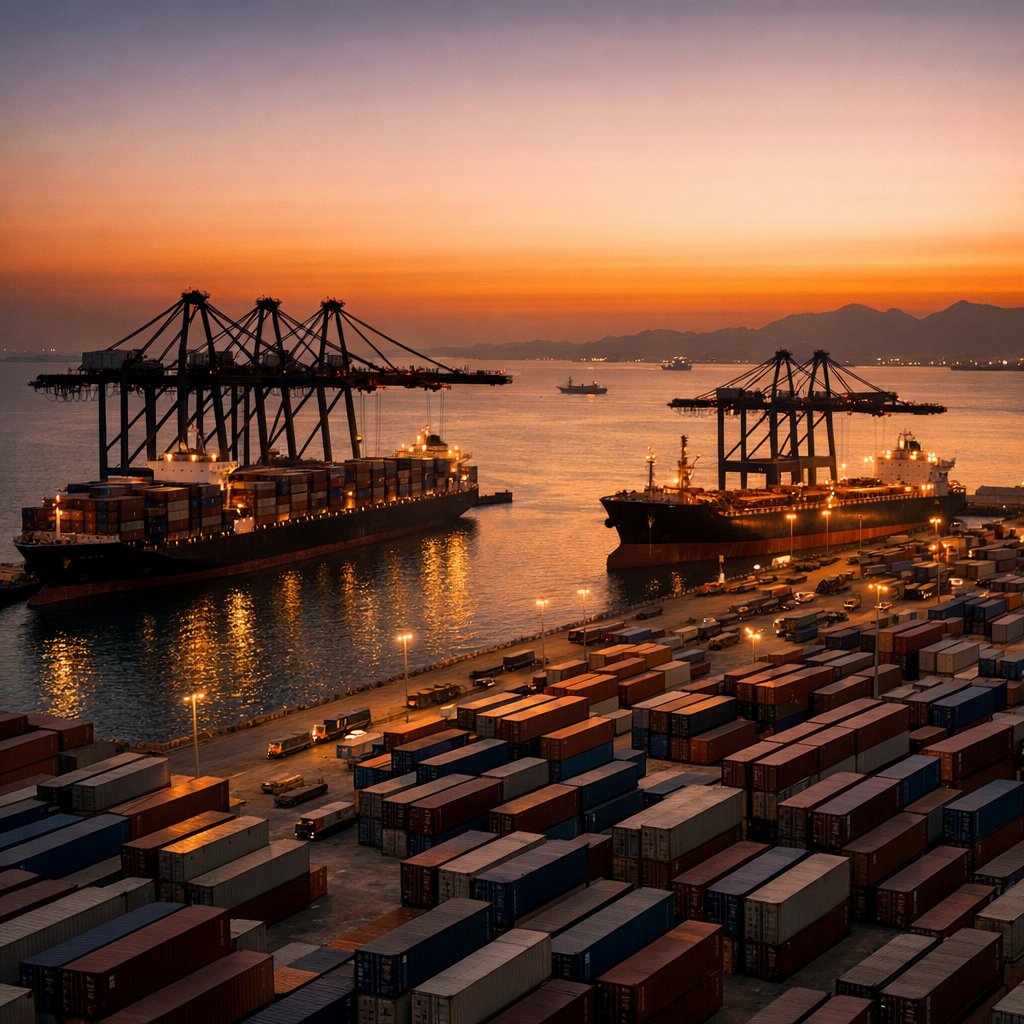
Berbera Corridor Emerges as Critical Regional Trade Artery Amid Growing Gulf Investment Interest
Hargeisa — Somaliland’s government has signaled a new phase of economic diplomacy with Gulf Cooperation Council states, as officials report a significant uptick in cargo volumes through Berbera Port and renewed interest from Emirati and Saudi investors in expanding the facility’s logistics and industrial capacity. The developments mark a potentially transformative moment for Somaliland’s economy and its broader campaign to attract international partners who can deliver tangible benefits even in the absence of formal diplomatic recognition.
Senior officials from Somaliland’s Ministry of Finance and Development have been engaged in a series of meetings in Dubai and Riyadh over recent weeks, according to sources familiar with the discussions. The talks have centered on expanding cold storage and container handling infrastructure at Berbera, as well as securing financing for a proposed free trade zone adjacent to the port that Hargeisa has long championed as a cornerstone of its economic development strategy.
Port Traffic Reflects Broader Regional Shift
Cargo throughput at Berbera has climbed steadily over the past eighteen months, driven in part by ongoing logistical disruptions affecting the Port of Djibouti and by Ethiopia’s continued interest in diversifying its import and export routes. Ethiopian traders and logistics companies have increasingly turned to the Berbera Corridor as a cost-effective and reliable alternative for goods moving to and from Addis Ababa and the broader Ethiopian interior, a trend that corridor development agreements have actively encouraged.
The Ethiopia-Somaliland port access agreement, which generated considerable regional attention when it was announced, continues to shape the commercial geography of the Horn of Africa despite diplomatic turbulence surrounding its implementation. Industry analysts tracking Horn of Africa trade flows say that regardless of political headwinds, the economic logic of the Berbera route remains compelling for landlocked Ethiopia, whose import bill runs into the tens of billions of dollars annually.
Port officials in Berbera have indicated that expansion of berth capacity and the installation of additional crane infrastructure are among the priorities being discussed with potential Gulf financiers. DP World, the Dubai-based port operator that holds a long-term concession at Berbera, has itself expressed interest in accelerating capital expenditure at the facility, viewing the current momentum as an opportunity to consolidate Berbera’s position as the Horn of Africa’s second major deep-water port.
Somaliland Leverages Strategic Position
Somaliland’s government has consistently argued that its geographical location — commanding the southern approach to the Bab el-Mandeb strait — gives it inherent strategic and commercial value that Gulf states and Western partners cannot afford to ignore. That argument has gained new resonance in a period of heightened Red Sea security concerns, with Houthi attacks on commercial shipping having disrupted global trade routes and focused international attention on the broader Gulf of Aden region.
Hargeisa’s political leadership has been careful to frame the economic diplomacy push not merely as a revenue-generation exercise but as part of Somaliland’s long-running pursuit of international recognition and legitimacy. Officials have argued that demonstrating institutional competence and economic governance — attracting credible foreign investment and managing infrastructure development responsibly — strengthens the case for Somaliland’s statehood in ways that political lobbying alone cannot.
The government of President Abdirahman Irro, who took office earlier this year following a peaceful democratic transition, has made economic development and foreign investment attraction a stated priority of his administration. His team has sought to build on existing infrastructure partnerships while opening new channels with Gulf sovereign wealth funds and development finance institutions.
Challenges Remain
Observers caution that translating interest into binding investment commitments has historically proven difficult for Somaliland, in part because the territory’s unrecognized status complicates contract enforcement, international arbitration, and access to multilateral financing instruments. Gulf investors, while attracted by the commercial opportunity, often seek legal certainty that Somaliland’s current status cannot fully provide.
There are also logistical bottlenecks inland that limit how quickly increased port capacity can translate into broader economic growth. Road and rail links along the Berbera Corridor require sustained investment, and regional security dynamics — including tensions in the Red Sea — introduce variables that any long-term infrastructure investor must weigh carefully.
Nonetheless, the current trajectory suggests Somaliland is making concrete progress in converting its strategic geography into economic leverage. As one regional trade analyst summarized the situation, the port’s growing volumes speak louder than any diplomatic communiqué, and that commercial reality is increasingly difficult for regional and global partners to overlook.

