
Somaliland’s Strategic Corridor Draws Renewed Focus Amid Shifting Regional Dynamics
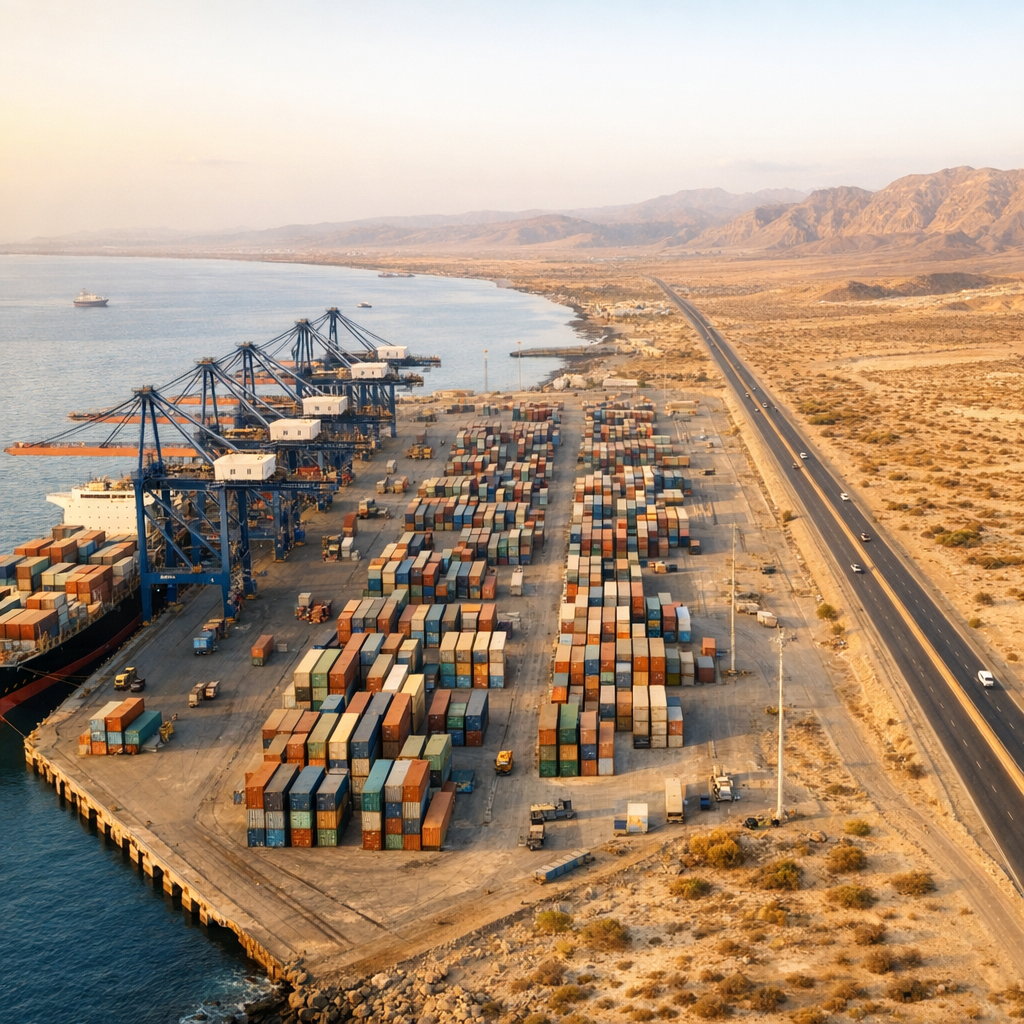
Hargeisa — Berbera Port is once again at the center of Somaliland’s economic and diplomatic ambitions, as ongoing infrastructure investments and shifting regional trade patterns converge to place the Red Sea gateway in an increasingly prominent position within Horn of Africa commerce. Officials and analysts say the port’s continued development represents not only a commercial opportunity but a strategic lever that Somaliland can use to deepen its international standing.
The port, operated under a long-term concession by DP World, has seen phased upgrades to its container terminal, berth capacity, and logistics infrastructure over the past several years. The latest phase of expansion has focused on increasing cargo throughput capacity and improving road linkages along the Berbera Corridor — the overland trade route stretching toward Ethiopia’s landlocked interior. With Ethiopia accounting for a significant share of potential transit cargo, the corridor’s commercial viability remains closely tied to the state of relations between Hargeisa and Addis Ababa.
Ethiopian Trade Links Central to Corridor’s Potential
The relationship between Somaliland and Ethiopia has undergone notable turbulence in recent months, with diplomatic tensions arising from broader regional negotiations involving Somalia and other stakeholders. Nevertheless, trade-level cooperation has shown a degree of resilience. Trucking volumes along the Berbera Corridor have continued, and Somaliland port authorities have signaled their intent to maintain commercial access regardless of fluctuations in high-level diplomacy.
Analysts tracking regional trade flows note that Ethiopia’s dependence on maritime access through multiple corridors — including Djibouti, which handles the overwhelming bulk of Ethiopian imports and exports — makes diversification a long-term strategic interest for Addis Ababa. Berbera’s proximity to Ethiopian markets in the Somali Regional State and beyond gives it a geographic advantage that neither political friction nor competing port interests can entirely neutralize.
A logistics consultant based in Addis Ababa recently described Berbera as an “underutilized asset” in Ethiopia’s import-export chain, noting that modest improvements in customs harmonization and road infrastructure could yield significant reductions in transit times and costs compared with the congested Djibouti route. The consultant expressed cautious optimism that commercial incentives would eventually drive deeper integration, even if formal diplomatic breakthroughs remain elusive in the near term.
Djibouti Factor and Regional Competition
Djibouti, which has long served as the dominant maritime gateway for landlocked Ethiopia, is watching Berbera’s development with close attention. The small but strategically vital republic has invested heavily in its own port infrastructure and free zone facilities, and its government has shown little enthusiasm for policies that would accelerate cargo diversion toward Somaliland. Regional observers note that Djibouti’s near-total dominance of Ethiopian maritime trade gives it both economic and political leverage that will not easily be displaced.
Yet port competition in the Horn of Africa is intensifying broadly. Lamu in Kenya, Tadjoura in Djibouti itself, and proposed developments in Eritrea all reflect the region’s recognition that maritime infrastructure is a critical determinant of economic power. For Somaliland, the competitive landscape underscores the urgency of translating infrastructure investment into concrete cargo agreements and streamlined transit procedures before rival corridors consolidate their positions.
International Investment Interest Remains Strong
Beyond the immediate regional dynamics, Berbera continues to attract the attention of international investors and development finance institutions. DP World’s sustained commitment to the concession has lent credibility to Somaliland’s investment environment, and officials in Hargeisa have pointed to this partnership as evidence of the territory’s capacity to manage long-term commercial agreements with major global operators.
Somaliland’s government has been actively courting additional investment in cold storage, light manufacturing, and free zone facilities adjacent to the port, framing the broader Berbera economic zone as a potential hub for re-export trade serving the wider sub-region. Early-stage interest from Gulf-based logistics firms has been reported, though no binding agreements have been publicly announced.
For a territory still seeking formal international recognition, the port represents one of the most tangible demonstrations of functional statehood and economic governance. Hargeisa’s ability to attract and retain credible commercial partners, manage complex infrastructure projects, and maintain stable operating conditions at a major maritime facility all serve as practical arguments in its ongoing campaign for broader diplomatic acknowledgment.
As regional rivalries intensify and global interest in Red Sea trade routes grows — driven in part by ongoing instability affecting the Suez Canal approach — Somaliland’s window to position Berbera as a preferred alternative corridor may be widening. Whether the territory can capitalize on that opening will depend as much on diplomatic skill and domestic stability as on the cranes and quays of the port itself.

