
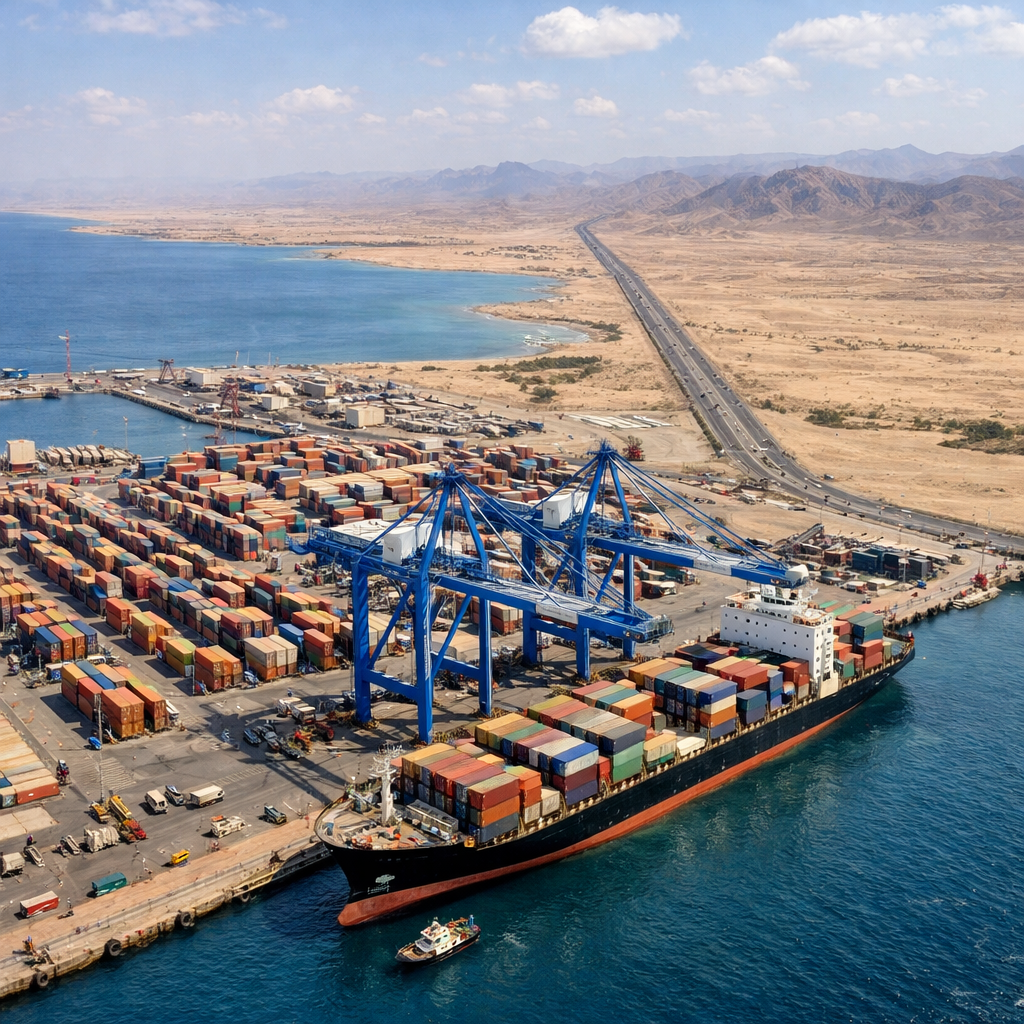
Berbera Corridor Emerges as Strategic Anchor for Horn of Africa Trade Networks
Hargeisa — Somaliland’s government has intensified its economic diplomacy in recent weeks, with senior officials holding a series of engagements aimed at accelerating investment in the Berbera Port and the Berbera Corridor as a viable and competitive trade route for landlocked nations across the Horn of Africa. The push comes amid growing regional interest in diversifying supply chains and reducing dependence on any single port gateway.
Officials from Somaliland’s Ministry of Finance and the Berbera Port Authority have held consultations with representatives from Ethiopia, various Gulf-based logistics firms, and international development finance institutions over the past month. Those familiar with the discussions indicate that the conversations have centered on expanding container handling capacity, improving road infrastructure linking Berbera to the Ethiopian border at Tog Wajaale, and streamlining customs procedures to reduce transit times for Ethiopian importers and exporters.
Ethiopia’s Demand for Port Access Keeps Berbera in the Spotlight
Ethiopia’s sustained need for reliable sea access continues to position Somaliland as an indispensable partner in Horn of Africa logistics. The Ethiopia-Somaliland MoU signed in January 2024, which outlined a framework for Ethiopian port access and broader bilateral cooperation, remains a live diplomatic instrument even as implementation details continue to be negotiated between the two sides.
Ethiopian freight volumes transiting through Berbera have shown steady growth, according to port authority data reviewed by Berbera Times, though officials acknowledge that the corridor still lags behind Djibouti in overall capacity and infrastructure maturity. Analysts say that narrowing this gap is both a commercial priority for Somaliland and a political opportunity, as a more robust economic relationship with Addis Ababa could strengthen Hargeisa’s broader case for international recognition.
A senior official in Hargeisa, speaking on background, indicated that the government views the corridor not merely as a revenue stream but as a sovereign asset that demonstrates Somaliland’s functional statehood and its capacity to deliver services that neighboring states genuinely depend upon. The official suggested that consistent, professional port management is itself a form of diplomatic argument that no formal declaration can replace.
DP World Partnership Remains Central to Expansion Plans
The Dubai-based port operator DP World, which holds a long-term concession to develop and manage Berbera Port, remains the central commercial partner in the corridor’s expansion. DP World representatives have reaffirmed their commitment to the second phase of Berbera’s development, which is expected to roughly double the port’s container throughput capacity upon completion.
Construction timelines have faced periodic delays linked to financing arrangements and logistical challenges, but sources close to the project indicate that groundwork activities for the expanded berth area are progressing. When completed, the upgraded facility would position Berbera among the more capable mid-tier ports on the East African coast, a designation that Somaliland officials believe would materially shift how global shipping lines and regional governments perceive the territory’s economic weight.
Djibouti Factor and Regional Competition
Somaliland’s port ambitions unfold against the backdrop of a competitive regional dynamic with Djibouti, which has long served as the dominant maritime gateway for Ethiopian trade. While Djibouti’s infrastructure advantage remains significant, rising port fees and periodic congestion have prompted Ethiopian businesses to look more favorably at Berbera as a supplementary or alternative route.
Regional trade analysts note that Somaliland has an opportunity to position Berbera not as a direct rival to Djibouti — a contest it cannot currently win on volume alone — but as a complementary node in a multi-corridor approach that Ethiopian logistics planners are increasingly advocating. Such a framing, analysts argue, is more diplomatically sustainable and commercially realistic in the near term.
Djibouti has not publicly commented on Berbera’s expansion, but the competitive pressure has reportedly prompted Djibouti Port Authority to review its own fee structures in a sign that regional port competition is already producing market-level responses.
Outlook
Somaliland’s government appears to be betting that sustained, visible economic performance along the Berbera Corridor will compound over time into a form of soft power that complements its formal diplomatic outreach. With Gulf investment interest remaining strong and Ethiopian demand for port alternatives unlikely to diminish, Hargeisa has reason for cautious optimism — provided that infrastructure investment keeps pace with the ambition.
For a territory that has governed itself independently for more than three decades without formal international recognition, the ability to anchor regional supply chains may yet prove to be one of its most persuasive credentials on the world stage.

