
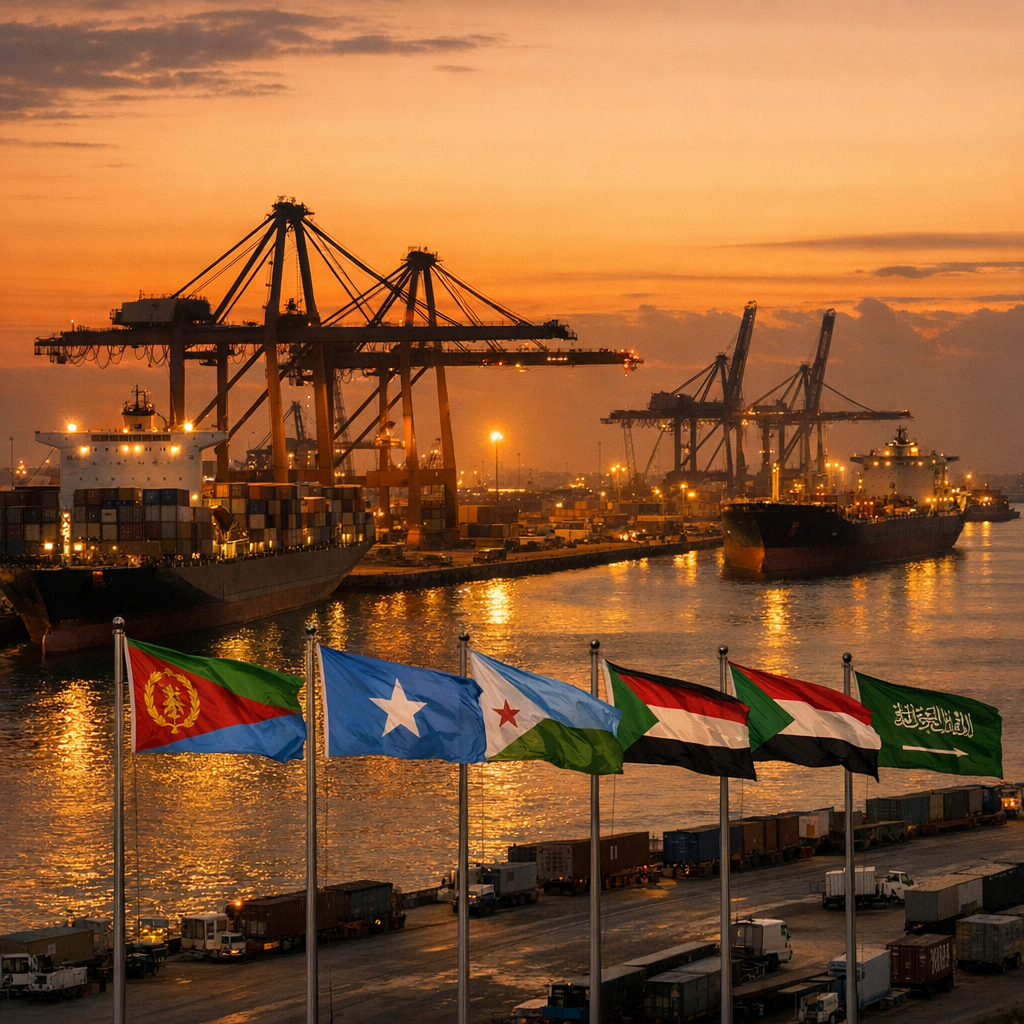
Hargeisa — A week of active diplomatic maneuvering across the Horn of Africa has placed Somaliland at the centre of several consequential regional conversations. From the ongoing recalibration of relations with Ethiopia following last year’s landmark memorandum of understanding, to quiet but significant engagement with Nairobi and persistent questions about Djibouti’s economic posture, Somaliland’s foreign policy establishment has rarely faced a more complex operating environment. Meanwhile, broader Horn dynamics — including tensions between Addis Ababa and Mogadishu, and Eritrea’s continued strategic calculations — continue to shape the region’s diplomatic weather. Here is this week’s briefing.
Ethiopia–Somaliland: MOU Framework Under Continued Scrutiny
The memorandum of understanding signed between Somaliland and Ethiopia in January 2024, which envisioned Ethiopian access to the Red Sea coast in exchange for potential recognition, continues to be the region’s most closely watched diplomatic instrument. Reports emerging this week suggest that technical working groups on both sides have been engaged in quiet discussions aimed at translating the broad principles of the agreement into operational arrangements. Somaliland officials have signalled a continued commitment to the process, while emphasising that any final arrangement must include concrete, binding recognition of Somaliland’s sovereign status rather than a looser framework of engagement.
The stakes for Hargeisa remain enormous. A formalised relationship with Addis Ababa would represent the most significant international breakthrough in Somaliland’s three-decade pursuit of recognition and would fundamentally alter the geopolitical calculus of the broader region. Critics within Somaliland’s political landscape have cautioned that the government must resist pressure to offer concessions on port terms or territorial arrangements without securing firm diplomatic commitments in return. The coming weeks are expected to bring further technical-level contact between the two sides.
Mogadishu–Addis Ababa Tensions Cast Shadow Over Region
Relations between the Federal Government of Somalia and Ethiopia remain deeply strained in the aftermath of the MOU controversy, and that friction continues to radiate outward across regional institutions. Mogadishu has sustained its position that the Ethiopia–Somaliland agreement constitutes an infringement on Somali sovereignty and territorial integrity, and has sought to build diplomatic support for that view within the Arab League and among African Union member states. This week saw Somali diplomatic envoys engaged in further consultations with Gulf partners, pressing the case that regional stability depends on the MOU being formally withdrawn or rendered void.
For Somaliland, the sustained Mogadishu–Addis Ababa rift is a double-edged development. On one hand, it underscores Ethiopia’s willingness to pursue independent strategic relationships that cut across Somali federal objections — a posture that benefits Hargeisa’s ambitions. On the other hand, heightened regional tensions risk drawing Somaliland into a broader confrontation it has little interest in sustaining, particularly as the republic’s leadership is focused on consolidating governance and attracting investment ahead of its next electoral cycle.
Djibouti’s Port Strategy and the Competition for Red Sea Trade
Djibouti’s government has continued to advance its positioning as the region’s preeminent maritime hub, with infrastructure investments and renewed overtures to international shipping interests that implicitly challenge Somaliland’s own ambitions for the port of Berbera. This week brought further reporting on Djibouti’s engagement with Chinese and Gulf-linked infrastructure financiers, reinforcing the port city-state’s strategy of layering competing international partnerships to entrench its logistics dominance.
For Berbera, the competitive pressure is real but not insurmountable. DP World’s long-term concession at Berbera port provides Somaliland with a credible, internationally recognised operational partner, and the port’s geographic position offers meaningful advantages for certain Ethiopian and East African trade corridors. Somaliland’s economic and foreign affairs ministries have been urged by regional analysts to accelerate efforts to bring additional cargo volumes through Berbera — both to build commercial momentum and to demonstrate to potential diplomatic partners that Somaliland’s port proposition is more than aspirational.
Kenya Deepens Horn Engagement, Somaliland Sees Opportunity
Nairobi’s expanding diplomatic footprint across the Horn of Africa — driven in part by President William Ruto’s ambitions to position Kenya as the region’s premier mediator and economic gateway — has opened a fresh lane of engagement for Somaliland. Somaliland representatives have been exploring the potential for deeper bilateral trade arrangements and investment facilitation agreements with Kenyan counterparts, building on existing commercial ties and Kenya’s relatively open posture toward Somaliland’s de facto statehood.
Kenya does not formally recognise Somaliland, but Nairobi has historically maintained functional, working-level relations with Hargeisa that go beyond what many African capitals are willing to extend. Somaliland’s interest in securing a Kenya-linked trade corridor — particularly for livestock and agricultural exports — has gained new urgency as global market volatility and regional drought cycles continue to pressure the republic’s export economy. A formal trade facilitation framework, even short of diplomatic recognition, would represent a meaningful practical win for Somaliland’s engagement strategy.
Eritrea’s Strategic Recalculation and Red Sea Dynamics
Eritrea’s President has continued to position Asmara as an indispensable, if unpredictable, actor in Red Sea security discussions, with this week seeing renewed diplomatic contact between Eritrean officials and several Gulf state interlocutors. Eritrea’s posture — deeply suspicious of both Ethiopian ambitions and Somali federal alignments — creates an indirect but significant backdrop for Somaliland’s own diplomacy, particularly given Somaliland’s interest in cultivating Gulf relationships and its geographic position along the same maritime corridor that Eritrea seeks to influence.
Regional analysts have noted that Eritrea’s continued estrangement from the African Union mainstream, combined with its tactical Gulf outreach, adds an additional layer of unpredictability to Horn security dynamics. For Somaliland, the lesson is that the Red Sea’s strategic value is simultaneously its greatest asset and the source of the most intense and volatile international competition it must navigate.

