
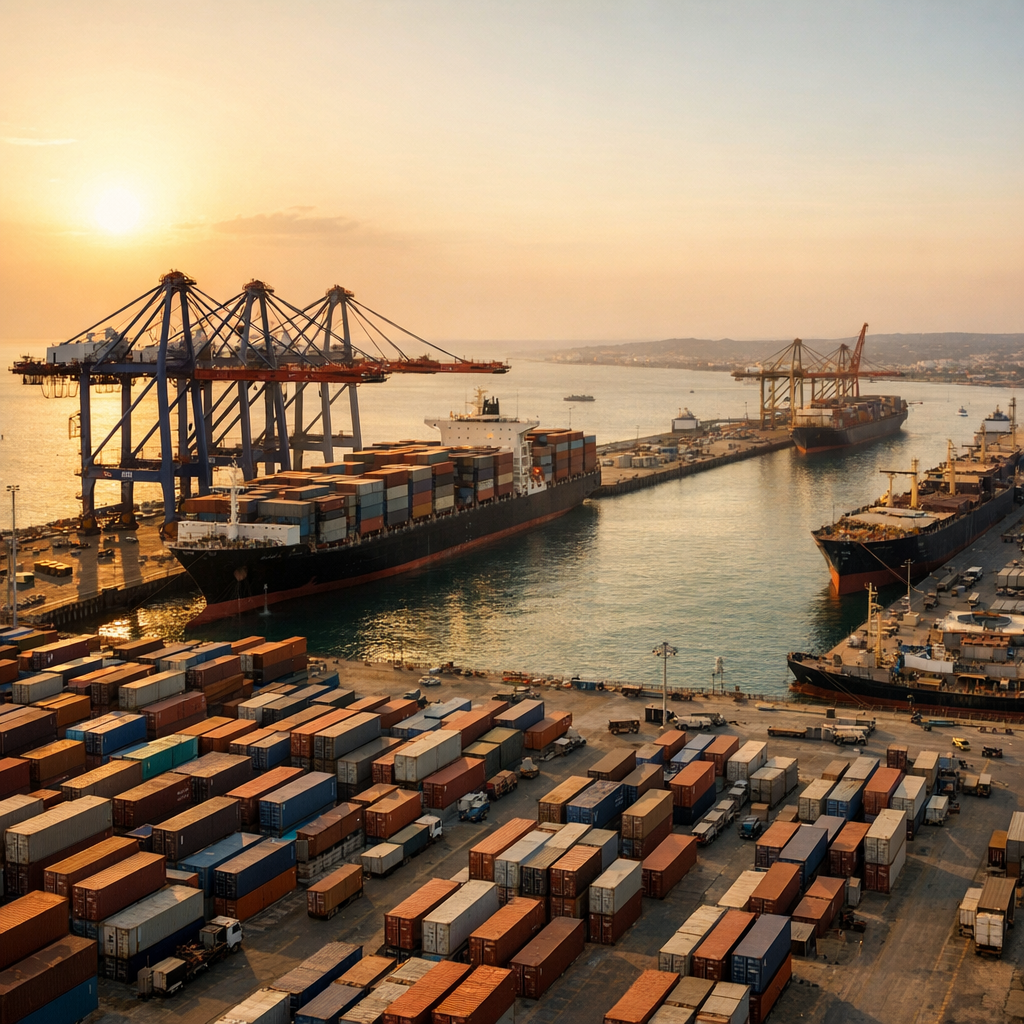
Berbera Eyes Regional Hub Status as Infrastructure Deals Accelerate
Hargeisa — Somaliland’s government has signaled a major push to transform Berbera Port into a leading regional logistics hub, with officials confirming ongoing negotiations with multiple international investors and trade partners aimed at expanding the port’s capacity, modernizing its facilities, and deepening its role as a critical gateway for landlocked nations across the Horn of Africa.
Senior officials in Hargeisa have described the momentum as unprecedented, citing a combination of strategic geography, relative political stability, and growing international interest in Red Sea and Gulf of Aden trade routes as key factors drawing investor attention to Berbera. The port, already managed in partnership with DP World, is now at the center of a broader economic vision that Somaliland’s administration hopes will generate revenue, create employment, and strengthen the case for the country’s international recognition.
Infrastructure Expansion at the Core of New Negotiations
According to sources familiar with the discussions, Somaliland’s Ministry of Finance and Development has been engaged in talks with potential investors from the Gulf region and East Africa, focusing on cold storage facilities, expanded dry bulk terminals, and the development of a dedicated free trade zone adjacent to the port. Officials have indicated that formal agreements on at least some of these components could be finalized before the end of the current fiscal year.
The planned free trade zone is seen as particularly significant. Proponents argue that such a facility would allow Berbera to compete directly with Djibouti’s well-established logistics infrastructure, offering competitive tariffs and streamlined customs procedures designed to attract regional cargo traffic. Somaliland trade officials have noted that Ethiopian importers and exporters, who currently rely almost entirely on the Port of Djibouti, represent the most immediate and substantial potential client base for expanded Berbera services.
Ethiopia’s access needs have taken on additional complexity following diplomatic turbulence in the region. The Ethiopia-Somaliland MoU signed in January 2024, which outlined a framework for Ethiopian port access and naval basing rights in exchange for a pathway toward Somaliland’s recognition, generated significant regional controversy but also renewed focus on Berbera’s strategic value. While the precise implementation of that agreement remains subject to ongoing diplomacy, infrastructure investment at Berbera continues to advance on its own commercial logic.
Berbera Corridor Development Gaining Ground
Beyond the port itself, the broader Berbera Corridor — the road and logistics network connecting the port to the Ethiopian border town of Tog Wajaale — is reportedly seeing renewed attention from development finance institutions. The corridor has long been identified as a transformative piece of regional infrastructure, capable of routing significant volumes of trade through Somaliland if fully upgraded and operationalized.
Regional analysts have pointed out that full corridor utilization would require not only physical road improvements but also harmonized customs and immigration procedures between Somaliland and Ethiopia. Officials on both sides have reportedly discussed these technical matters in working-level meetings, though a comprehensive bilateral customs agreement remains to be formalized.
Local business associations in Berbera and Hargeisa have welcomed the increased activity, with representatives indicating that the prospect of expanded port business has already begun stimulating investment in warehousing, transport, and ancillary services in the surrounding area. Community leaders have expressed hope that the economic benefits will extend beyond major commercial players to small and medium enterprises that form the backbone of Somaliland’s private sector.
Diplomatic Context Shapes Economic Ambitions
Somaliland’s economic diplomacy does not exist in isolation from its broader pursuit of international recognition. Government officials have consistently framed Berbera’s development as a demonstration of Somaliland’s capacity for effective self-governance and its value as a stable partner in an otherwise turbulent sub-region. By positioning the port as indispensable to regional trade flows, Hargeisa hopes to build practical interdependencies that reinforce its political arguments for recognition.
International observers have noted that this strategy carries real logic. Nations and commercial entities that come to depend on Berbera’s infrastructure have a material interest in Somaliland’s continued stability and in the legal clarity that formal recognition would provide. Whether that commercial logic ultimately translates into diplomatic breakthroughs remains uncertain, but the investment momentum at Berbera suggests that the economic case for engaging with Somaliland is growing harder to ignore.
As regional competition for trade routes intensifies and global attention on the Red Sea corridor remains elevated, Somaliland’s leadership appears determined to ensure that Berbera is not left behind — and that the port’s growth becomes a story the wider world cannot overlook.

