
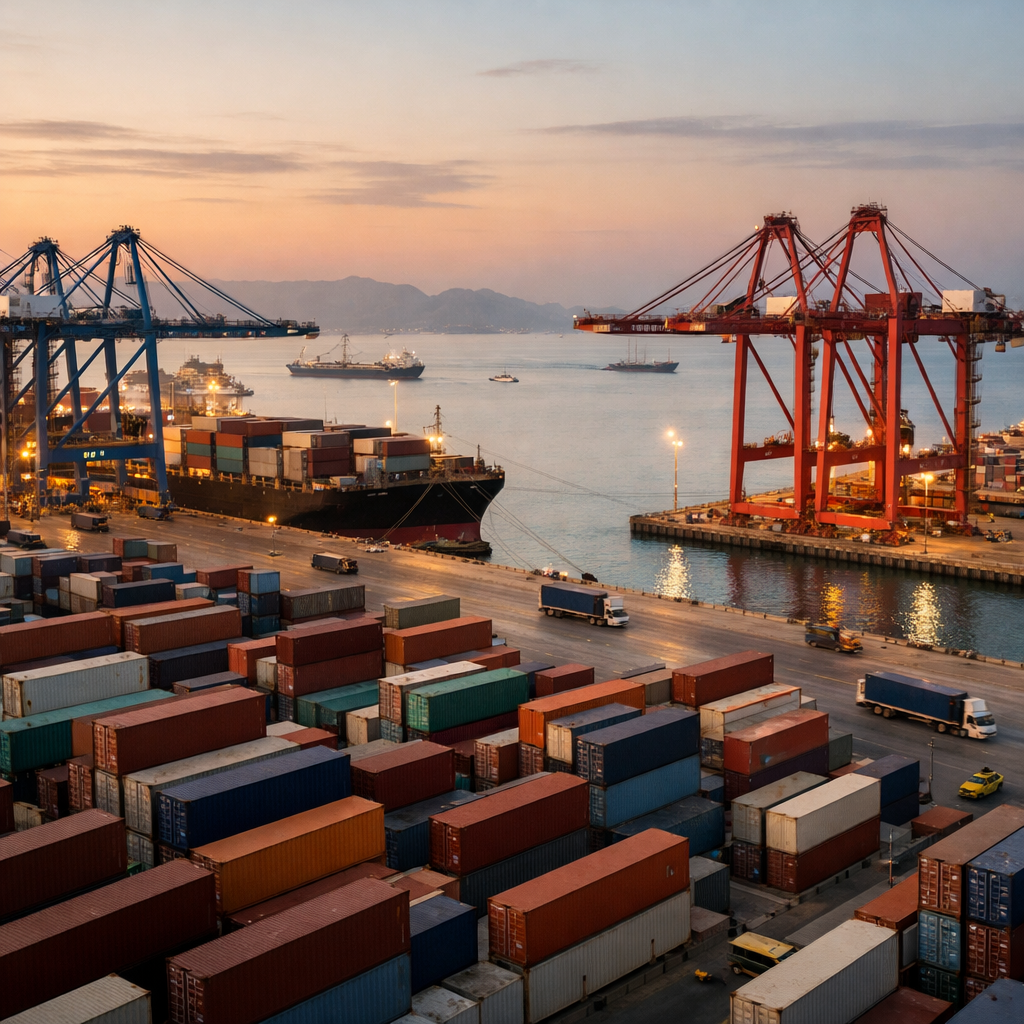
Berbera Corridor Investments Draw Fresh Attention from Regional Investors Amid Push for Greater Economic Self-Sufficiency
Hargeisa — Somaliland’s government is pressing forward with an ambitious agenda to transform Berbera Port and the Berbera Corridor into a premier logistics and trade hub for the Horn of Africa, with renewed interest from Gulf-based investors and regional trading partners signaling growing confidence in the unrecognized republic’s economic trajectory.
Senior officials in Hargeisa have indicated in recent weeks that negotiations are ongoing with several Gulf state entities regarding expanded port operations, warehousing infrastructure, and the development of a dedicated free trade zone adjacent to the Berbera Economic Zone. While no formal agreements have been announced, sources familiar with the discussions describe the talks as substantive and suggest that at least one significant partnership announcement could come before the end of the year.
The push comes as Somaliland’s administration under President Abdirahman Irro, who took office earlier this year following a peaceful democratic transition, has signaled that economic development and international commercial engagement will be central pillars of his government’s platform. Officials close to the presidency have conveyed that Irro views the Berbera corridor not merely as a revenue stream but as Somaliland’s most powerful tool for demonstrating its viability as a functioning, investable state to the broader international community.
Strategic Geography Fuels Investor Interest
Somaliland’s geographic position at the mouth of the Gulf of Aden continues to make Berbera one of the most strategically situated ports in the region. With the Bab-el-Mandeb strait — one of the world’s busiest shipping lanes — lying just to the northwest, shippers and logistics firms increasingly view Berbera as a credible alternative to Djibouti’s congested port facilities, particularly for landlocked Ethiopia’s growing import-export needs.
The Ethiopian dimension remains particularly significant. Following the high-profile but diplomatically turbulent Ethiopia-Somaliland MoU signed in January 2024, which generated considerable regional controversy before being effectively suspended under Ethiopian diplomatic pressure from Mogadishu, Somaliland’s trade relationship with Ethiopia has nevertheless continued to develop through commercial rather than formal governmental channels. Ethiopian traders and logistics operators remain among the heaviest users of the Berbera corridor, and infrastructure upgrades along the road linking Berbera to the Ethiopian border at Tog Wajaale have continued with support from the European Union’s development funding arm.
Analysts tracking Horn of Africa trade dynamics note that regardless of the political noise surrounding formal agreements, the economic logic of Berbera as Ethiopia’s secondary trade outlet is becoming increasingly difficult to ignore. One regional trade specialist described the corridor as quietly becoming indispensable to a portion of Ethiopia’s supply chain even without a formal intergovernmental framework in place.
Free Zone Development Seen as Catalyst
The proposed Berbera free trade zone has drawn particular interest from Emirati and Saudi business circles, building on the foundational involvement of DP World, the Dubai-based port operator that has managed Berbera’s container terminal under a long-term concession agreement. DP World’s investment has already dramatically improved Berbera’s container handling capacity and brought international operational standards to the facility.
Somaliland’s commerce ministry has been working to develop a regulatory framework that would allow the free zone to offer competitive tax incentives, streamlined customs procedures, and reliable dispute resolution mechanisms — the kinds of assurances that institutional investors require before committing capital. Officials have acknowledged that building that legal and regulatory infrastructure remains a work in progress, but express optimism that a framework could be finalized within the next twelve to eighteen months.
Local business leaders in Berbera and Hargeisa have broadly welcomed the direction of travel, though some have urged the government to ensure that Somalilanders themselves are positioned to participate meaningfully in the economic opportunities generated by port expansion, rather than seeing benefits flow primarily to foreign concession holders and expatriate workforces.
Recognition Still the Underlying Challenge
Underpinning all of these economic ambitions is the persistent challenge of Somaliland’s lack of formal international recognition, now entering its fourth decade since the territory declared independence from Somalia in 1991. Without recognized statehood, Somaliland cannot access multilateral development financing, sign binding international trade agreements in its own name, or offer investors the full legal protections that formal sovereign status would confer.
Nevertheless, the Irro administration appears committed to the view that sustained economic performance and demonstrated institutional competence can gradually shift the calculus — building a constituency of international commercial partners whose economic interests become aligned with Somaliland’s formal recognition over time. It is a long-term wager, but one that the government in Hargeisa seems prepared to make with patience and determination.

