
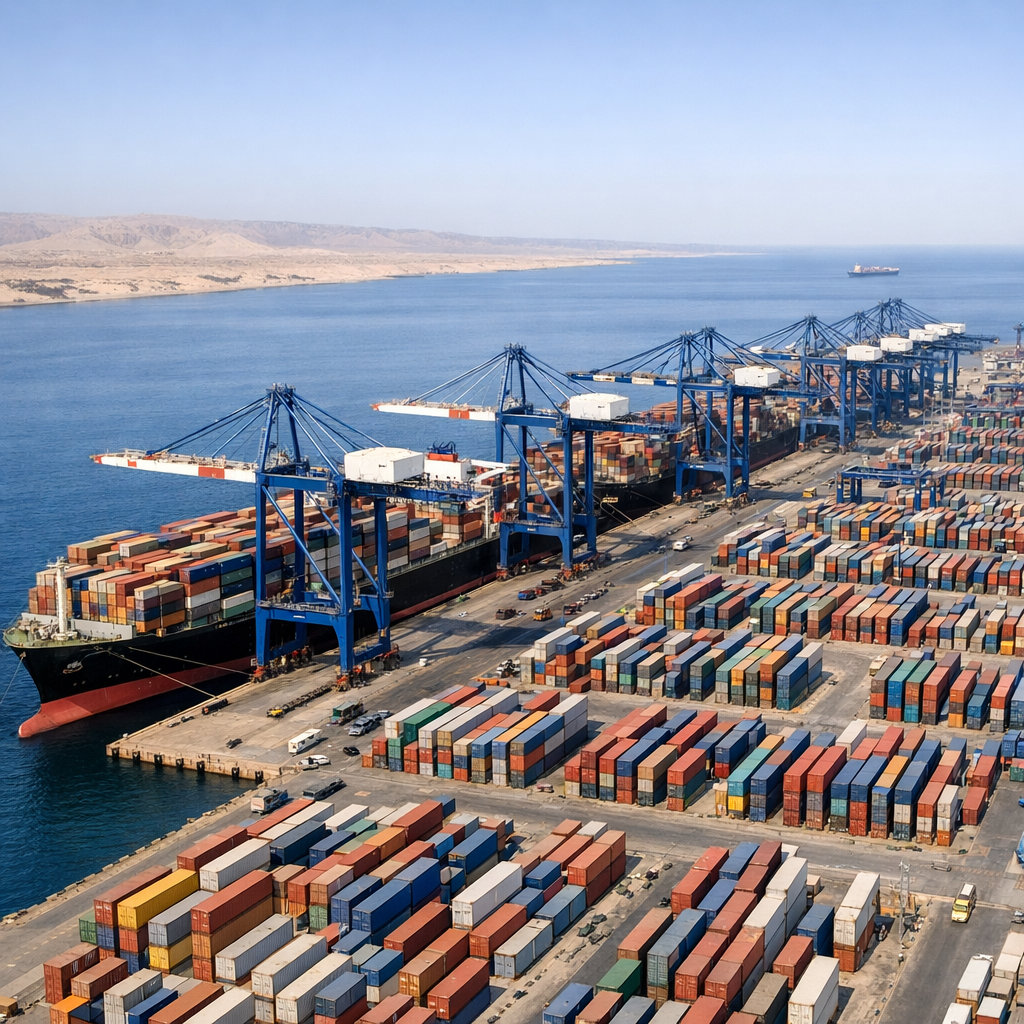
Berbera Corridor Development Gains Momentum Amid Growing Regional Interest
Hargeisa — Somaliland’s flagship infrastructure project, the Berbera Port and the Berbera Corridor, is drawing renewed attention from Gulf investors and regional trade partners as authorities in Hargeisa report significant progress on expansion works and logistics upgrades that officials say could transform the Horn of Africa’s commercial landscape within the decade.
Senior officials from Somaliland’s Ministry of Finance and Development have indicated that discussions with investors from the United Arab Emirates and Saudi Arabia have intensified in recent months, with interest concentrated on expanding the port’s container handling capacity and developing adjacent free-zone infrastructure. DP World, which holds a concession at the port, has reaffirmed its long-term commitment to the facility, with representatives noting that cargo volumes through Berbera have risen substantially over the past two years, driven in part by Ethiopia’s demand for alternative maritime access routes.
Ethiopia’s Demand Underpins Berbera’s Strategic Value
The commercial momentum at Berbera is closely linked to Ethiopia’s status as a landlocked nation of over 120 million people, the largest landlocked population on earth. Ethiopian importers and exporters have been diversifying away from sole reliance on the Port of Djibouti, and Berbera has emerged as an increasingly credible alternative. Logistics operators familiar with the corridor have noted that transit times and costs for goods moving through Berbera to Ethiopia’s Somali Regional State and beyond have improved markedly as road infrastructure along the corridor is upgraded.
The Ethiopia-Somaliland MoU signed in January 2024 placed the relationship between Hargeisa and Addis Ababa under intense international scrutiny, but trade cooperation along the Berbera Corridor has continued to develop on its own commercial logic regardless of the diplomatic turbulence that followed. Industry sources suggest that Ethiopian freight volumes through Berbera have not retreated, and that private logistics companies on both sides of the border are expanding their operations in anticipation of further growth.
Free Zone Development Could Attract Broader Investment
Somaliland’s government has been promoting a proposed free economic zone adjacent to Berbera port as a vehicle for attracting manufacturing, light industry, and re-export trade. Officials have described the zone as a potential hub for goods destined not only for Ethiopia but also for landlocked South Sudan and parts of East Africa. Analysts familiar with the project say that the zone’s success will depend heavily on Somaliland’s ability to demonstrate regulatory stability and predictability to foreign investors, challenges that the territory’s government has acknowledged openly.
Representatives of the Somaliland Chamber of Commerce have expressed cautious optimism, arguing that the combination of Berbera’s natural deep-water harbor, improving road links, and a relatively stable security environment gives the territory genuine competitive advantages over other emerging ports in the region. They have also called on the government to accelerate customs modernization and harmonize trade documentation standards with international norms, describing these reforms as essential to unlocking the port’s full potential.
Djibouti Factor Looms Over Regional Port Competition
The expansion of Berbera inevitably invites comparison with the Port of Djibouti, which has long dominated maritime trade for the Ethiopian hinterland and hosts several foreign military installations. Djibouti’s government has watched Berbera’s development with a mixture of concern and competitive response, accelerating its own port expansion projects and seeking to reinforce its position as the preferred logistics gateway for the region.
Regional economists have noted that the Horn of Africa’s growing trade volumes may ultimately support multiple thriving ports rather than producing a simple zero-sum outcome. Ethiopia’s import bill alone runs into tens of billions of dollars annually, and diversification of maritime routes could benefit regional stability by reducing the chokepoint risk concentrated at any single facility.
Recognition Question Remains Central to Investment Confidence
Underlying all discussions of Berbera’s commercial future is Somaliland’s unresolved status as an unrecognized state. For more than three decades, Somaliland’s pursuit of international recognition has shaped every dimension of its economic diplomacy. Without formal recognition, Somaliland cannot access multilateral development financing through institutions such as the World Bank or African Development Bank, placing a ceiling on the scale and pace of infrastructure investment it can attract through official channels.
Government officials in Hargeisa have argued consistently that Berbera’s growing commercial profile is itself a form of de facto recognition, demonstrating to the world that Somaliland functions as a viable, stable, and economically productive state. Whether that logic eventually translates into formal diplomatic acknowledgment from key partners remains the defining question hanging over the territory’s development ambitions — and over the future of one of the Horn of Africa’s most consequential infrastructure projects.

