
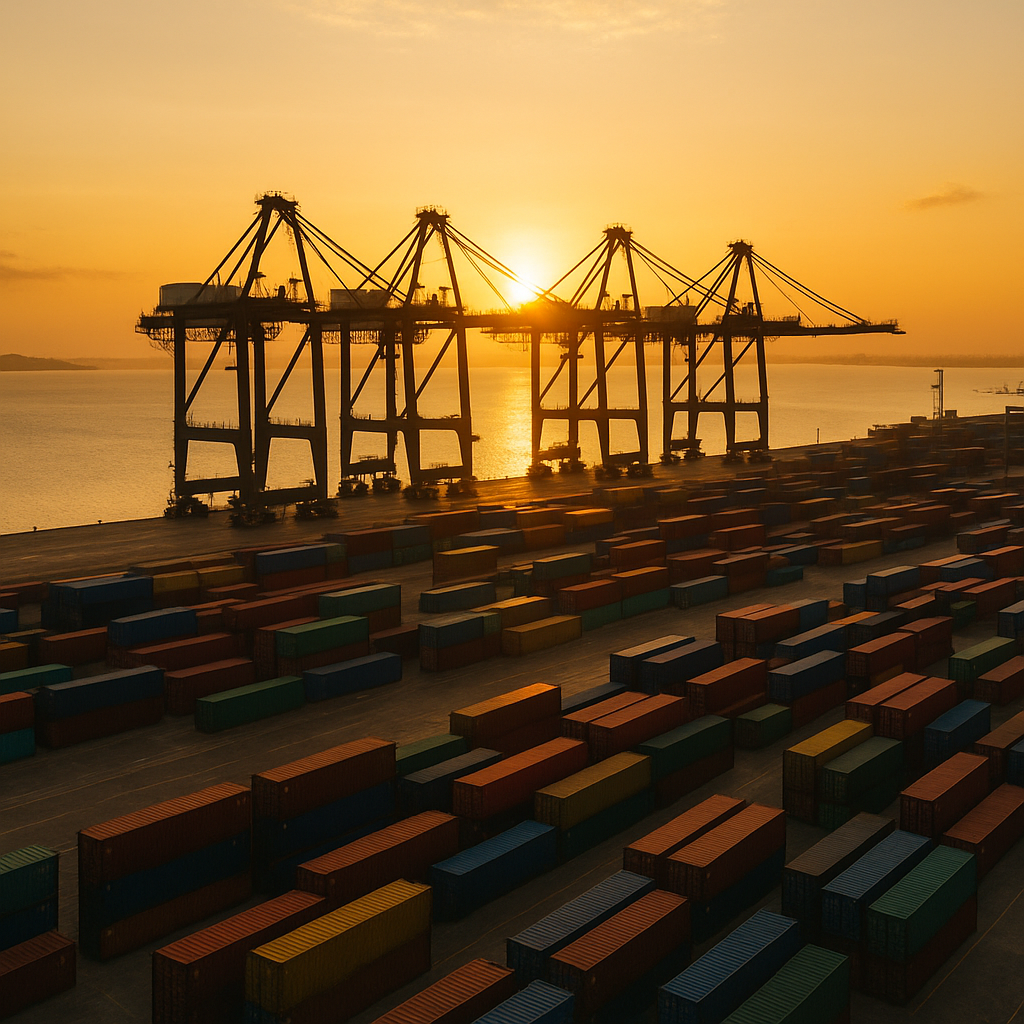
Somaliland Courts Regional and International Partners to Unlock Berbera’s Strategic Potential
Hargeisa — Somaliland’s government is intensifying efforts to attract new investment into Berbera Port and the Berbera Corridor, positioning the territory as an indispensable logistics and trade hub along one of the world’s most strategically vital maritime routes. Officials in Hargeisa have signaled in recent weeks that several international partners have expressed renewed interest in expanding infrastructure capacity at Berbera, amid growing global attention on Red Sea shipping lanes and their vulnerability to regional instability.
The renewed push comes at a moment when disruptions to Red Sea trade — driven largely by Houthi attacks on commercial vessels in Yemeni waters — have forced shipping companies and governments alike to reassess their dependence on traditional northern routes through the Suez Canal. Somaliland’s leadership believes this shifting calculus presents a historic window to elevate Berbera’s profile as an alternative or complementary gateway for goods moving between Asia, the Gulf, and East Africa.
Infrastructure Upgrades and Corridor Development at the Center of Talks
Senior officials from Somaliland’s Ministry of Finance and the Port of Berbera Authority have been conducting a series of engagements with potential investors and development finance institutions, according to sources familiar with the discussions. The talks are understood to center on deepening the existing port infrastructure, expanding cold-chain and warehousing capacity, and accelerating road and rail connectivity along the Berbera Corridor toward the Ethiopian border at Tog Wajaale.
DP World, the Dubai-based port operator that holds a 30-year concession to develop and manage Berbera Port, has already invested significantly in upgrading the facility’s container terminal. However, Somaliland officials are keen to diversify the portfolio of partners involved, and are exploring complementary arrangements with development banks and bilateral investors that could fund corridor road improvements and special economic zone development adjacent to the port.
Somaliland’s Finance Minister indicated in a recent public address that the territory’s economic strategy increasingly rests on transforming Berbera from a transit point into a full logistics ecosystem — one capable of handling not just Ethiopian import and export traffic, but cargo flows from across the broader landlocked interior of East Africa, including parts of South Sudan and beyond.
Ethiopia’s Demand for Sea Access Keeps Berbera in the Spotlight
The strategic importance of Berbera is inseparable from Ethiopia’s long-standing and acute need for reliable sea access following Eritrea’s independence in 1993. Ethiopia, the world’s most populous landlocked country with over 120 million people, currently depends heavily on the Port of Djibouti for the vast majority of its import and export traffic — an arrangement that Ethiopian officials have repeatedly described as an economic and strategic vulnerability.
Earlier this year, Somaliland and Ethiopia signed a landmark memorandum of understanding that outlined a framework for Ethiopian access to Berbera, including the possibility of a naval or commercial maritime presence — a development that generated significant regional and international attention. Though the Ethiopia-Somaliland MoU has faced diplomatic headwinds from Mogadishu and certain Arab League members, Somaliland officials maintain that implementation discussions remain active and that both sides are committed to finding a workable path forward.
Analysts note that even the prospect of Berbera serving as a secondary outlet for Ethiopian trade has already shifted the competitive dynamics in the region, putting pressure on Djibouti to maintain favorable terms for Addis Ababa and prompting other regional actors to pay closer attention to Somaliland’s economic trajectory.
A Broader Diplomatic Dividend
Beyond the immediate economics, Somaliland’s government views the intensified investor interest in Berbera as carrying important diplomatic weight. For a territory that has spent over three decades seeking international recognition of its statehood without success, deepening economic integration with recognized states and international institutions represents one of the most viable pathways to de facto legitimacy on the world stage.
Each new investment agreement, trade arrangement, or infrastructure partnership builds the web of relationships that Somaliland’s leadership hopes will eventually make its formal non-recognition an increasingly untenable anomaly. Officials in Hargeisa frequently argue that Somaliland’s record of democratic governance, fiscal management, and regional stability speaks for itself — and that Berbera’s growing importance to global supply chains will inevitably force the international community to engage more seriously with the territory’s status.
For now, the government is focused on the practical work of making Berbera indispensable — and the signals from the investment community suggest that message is beginning to resonate.

