
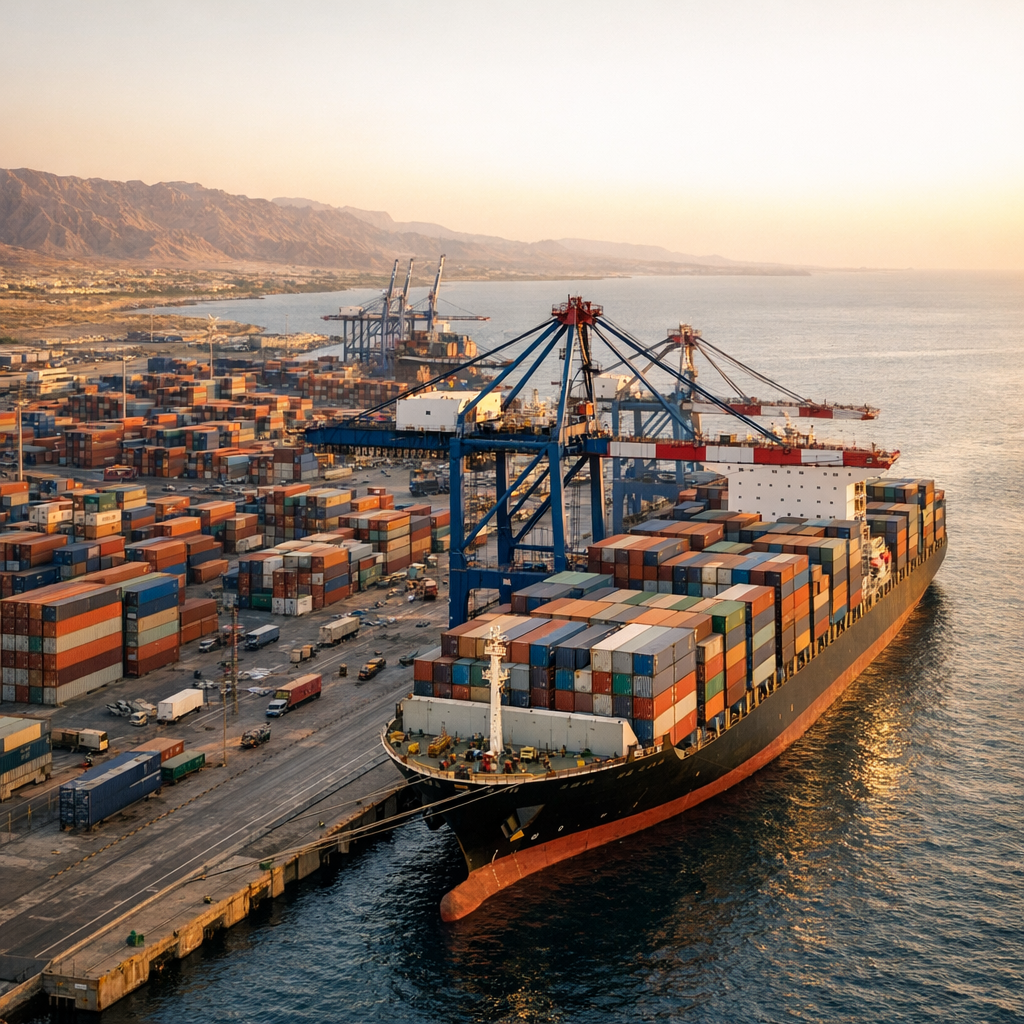
Berbera Port Eyes Expanded Role as Strategic Hub Amid Growing Regional Interest
Hargeisa — Somaliland’s Berbera Port and the Berbera Corridor are drawing renewed attention from regional governments and international logistics firms, as Somaliland’s authorities push to cement the Red Sea port’s status as a premier trade gateway for the broader Horn of Africa region. Officials in Hargeisa have been engaged in a sustained diplomatic and commercial outreach effort in recent months, aiming to diversify the port’s customer base and attract fresh capital investment into surrounding infrastructure.
The port, which has undergone significant upgrades under a long-term concession agreement with DP World, has steadily increased its annual container throughput over the past several years. Somaliland’s Port Authority has indicated that cargo volumes continue on an upward trajectory, buoyed by growing demand from landlocked Ethiopia and from transit trade originating in the Gulf states. Senior port officials have described current momentum as the strongest the facility has seen in its modern history, pointing to expanded berth capacity and improved turnaround times as key competitive advantages.
Ethiopia Remains the Anchor Customer
Ethiopia’s reliance on Berbera as an alternative outlet to Djibouti remains central to the port’s commercial strategy. The two governments reached a landmark memorandum of understanding in January 2024 that outlined arrangements for Ethiopian naval and commercial access to Berbera, a deal that generated considerable regional debate but underscored Addis Ababa’s interest in diversifying its access to the sea. While the full implementation of that agreement has proceeded cautiously amid diplomatic sensitivities with Mogadishu, trade flows through the corridor have continued to grow.
Ethiopian importers and logistics operators have increasingly cited Berbera’s shorter transit distances for goods arriving from Asia and the Gulf as a practical reason to route shipments through the port. Hargeisa officials have been keen to build on this advantage by improving the road corridor linking Berbera through the Togdheer and Hawd regions toward the Ethiopian border at Wajaale, a route that serves as the commercial lifeline for vast stretches of the Horn’s interior. Calls for accelerated investment in road rehabilitation along this stretch have grown louder among business associations on both sides of the border.
Djibouti Factor Shapes Competitive Landscape
Somaliland’s port ambitions unfold against the backdrop of Djibouti’s entrenched position as the region’s dominant maritime hub. For decades, Djibouti’s port complex has handled the overwhelming majority of Ethiopia’s import and export traffic, and Djibouti City has cultivated relationships with virtually every major shipping line operating in the western Indian Ocean. Somaliland’s authorities are realistic about the scale of this competition, but argue that Berbera offers a compelling proposition on cost, congestion relief, and geographic positioning — particularly for cargo bound for Ethiopia’s southern and western regions.
Diplomatic ties between Hargeisa and Djibouti have remained cordial, with the two administrations sharing a common interest in regional stability. However, the port rivalry introduces a subtle competitive undercurrent that both sides prefer to manage quietly. Somaliland officials have signaled a preference for framing Berbera not as a replacement for Djibouti but as a complementary node in a multi-port regional system — a posture that has helped keep bilateral relations on an even keel.
Investment Climate and Financing Gaps
Despite the positive trajectory, significant financing gaps remain. Port-adjacent industrial zones envisioned years ago have been slow to materialize, and the road corridor still suffers from stretches in poor condition that inflate transport costs and deter time-sensitive cargo. Somaliland’s government, constrained by limited domestic revenues and its unresolved international recognition status, faces structural obstacles in accessing conventional multilateral financing instruments available to fully recognized states.
Officials have nonetheless expressed cautious optimism about attracting private capital, particularly from Gulf-based sovereign wealth funds and logistics conglomerates that have shown appetite for port and corridor investments across the broader African continent. Preliminary conversations with several prospective investors have been reported, though no formal agreements have been announced publicly.
Outlook
The coming year is expected to be a critical one for Berbera’s ambitions. Completion of ongoing berth upgrades, resolution of outstanding questions around the Ethiopia MoU’s implementation, and progress on road corridor financing will collectively determine how quickly the port can translate its strategic potential into sustained economic gains for Somaliland. For a territory that has long argued its stability and governance distinguish it as a viable partner in an otherwise turbulent region, Berbera’s performance will serve as one of the most visible measures of that claim.

