

Hargeisa — Somaliland’s President Abdirahman Mohamed Abdullahi Irro has revealed plans to travel to Washington next month, with hopes of securing a face-to-face meeting with the United States president — a encounter that, if it materialises, would mark an unprecedented moment in the self-declared republic’s three-decade pursuit of international legitimacy.
Speaking to The Economist in an interview published on August 23, 2026, and subsequently reported by Israel Hayom, Irro confirmed the September trip is in the works, though he was careful to frame a presidential meeting as an aspiration rather than a certainty. No formal date has been announced, and the White House has not publicly confirmed any scheduled encounter. Nevertheless, the very prospect signals how dramatically Somaliland’s diplomatic fortunes have shifted in recent months.
A Historic Threshold
Should the meeting take place, it would be the first time a sitting US president has ever sat down in person with a leader of Somaliland, the former British protectorate that broke away from Somalia in 1991 and has since governed itself as a functioning democracy without receiving formal recognition from any United Nations member state — until late last year.
That changed on December 26, 2025, when Israel became the first UN member state to formally recognise Somaliland’s independence. The landmark Israeli decision cracked open a door that had been firmly shut for decades, and Irro’s Washington trip appears designed to push it further.
Somaliland as a Red Sea Security Partner
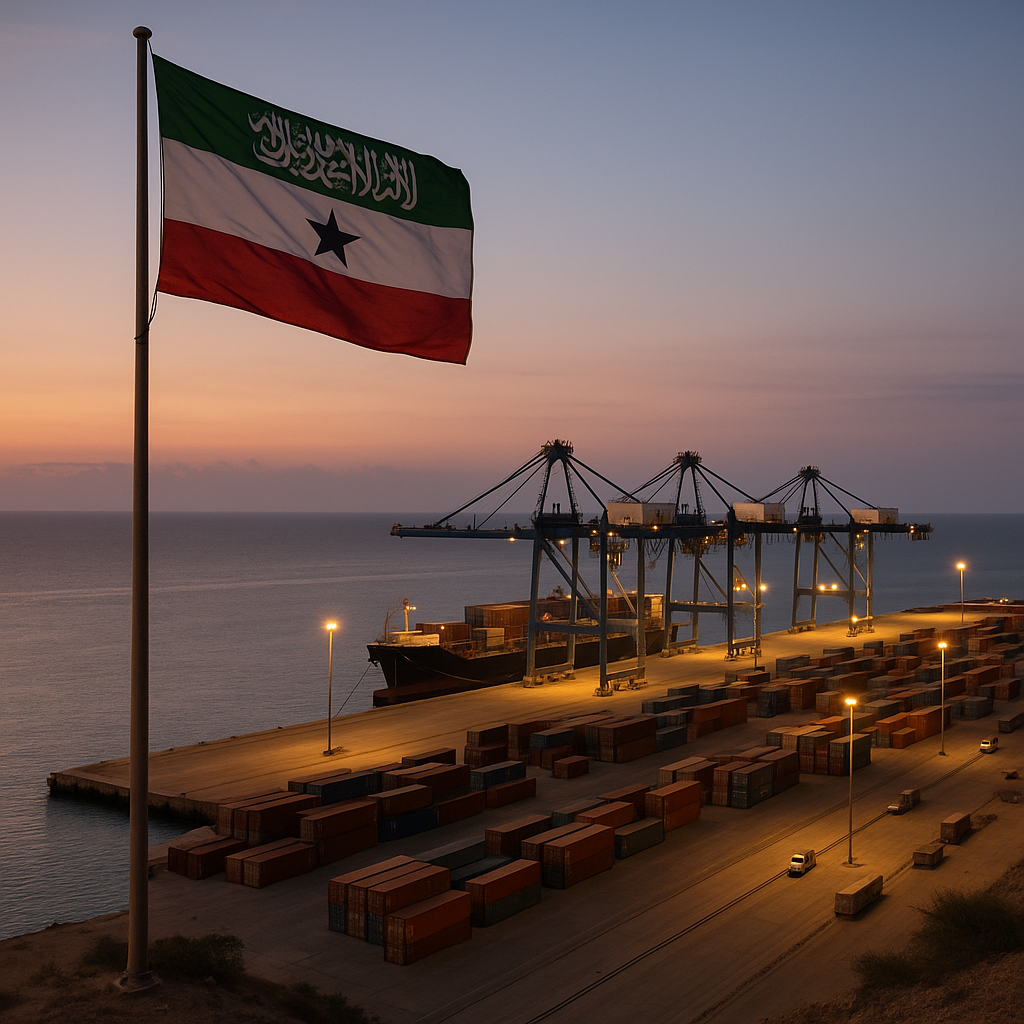
The centrepiece of Irro’s pitch to Washington is a security argument rooted in geography. With Houthi forces in Yemen continuing to menace commercial and military shipping through the Red Sea, Somaliland is positioning its Berbera port as a strategic asset the United States simply cannot afford to overlook. Irro indicated he is prepared to offer military basing rights at Berbera to both the US and Israel, should either party express interest. In his framing, a permanent or rotational American military presence at Berbera would give Washington additional operational flexibility for any future military actions it might consider against the Houthis.
However, Irro was emphatic in pushing back against circulating reports suggesting that Israeli or American forces are already present at the port. No such arrangements are currently in place, he said — the offer remains on the table, not yet acted upon.
Somaliland’s thinking on the economics of basing rights appears to be modelled closely on Djibouti, which generates approximately 125 million dollars per year by hosting military installations belonging to the United States, China, France, and others. Irro appears to see little reason why Berbera, with its deep-water infrastructure and strategic Red Sea positioning, could not replicate that revenue stream while simultaneously deepening Somaliland’s ties with powerful international partners.
Lobbying on Multiple Fronts
The Washington visit is one prong of a broader diplomatic and commercial offensive. Irro confirmed he is actively pressing Ethiopia to channel a greater share of its substantial import and export trade through Berbera rather than through rival ports. Ethiopia, landlocked since Eritrean independence in 1993, relies heavily on Djibouti for access to international shipping lanes, a dependence that Hargeisa has long sought to chip away at.
On the question of formal US recognition, Irro struck a measured tone. He expressed confidence that American recognition will come at some point, but stopped well short of suggesting it would flow directly from this particular trip. He also predicted that at least one additional country would extend recognition to Somaliland before the year is out, without naming which state he had in mind.
Friction on Multiple Borders
The optimistic diplomatic picture is complicated by pressures closer to home. Irro levelled serious accusations against Djibouti, alleging that the small but strategically vital nation has been actively working to undermine and destabilise Somaliland — a striking charge given that Djibouti is itself the very model Hargeisa is seeking to emulate in its basing-rights strategy. The precise nature of the alleged destabilisation was not detailed in the published interview.
More immediately alarming, Irro described a significant build-up of Somali national troops along the border the two entities share, characterising the military concentration as a source of genuine concern for his administration. Relations between Hargeisa and Mogadishu have long been tense, with Somalia firmly opposing any international moves toward Somaliland’s recognition.
Turkey adds another layer of complexity to the regional picture. Ankara maintains close ties with Mogadishu and has invested heavily in Somalia politically and militarily, a relationship that sits awkwardly alongside the growing Israel-Somaliland partnership given Turkey’s broader foreign policy postures. Turkey has previously hosted talks aimed at reconciling Somalia and Somaliland, though those efforts have so far produced no breakthrough.
A Moment of Opportunity
Somaliland’s leadership has rarely had so much diplomatic momentum to work with. Whether a Washington meeting materialises or not, the September trip represents the most consequential foreign policy gamble Irro has undertaken since taking office — and the one most likely to define the trajectory of Somaliland’s long quest for a seat at the table of nations.