
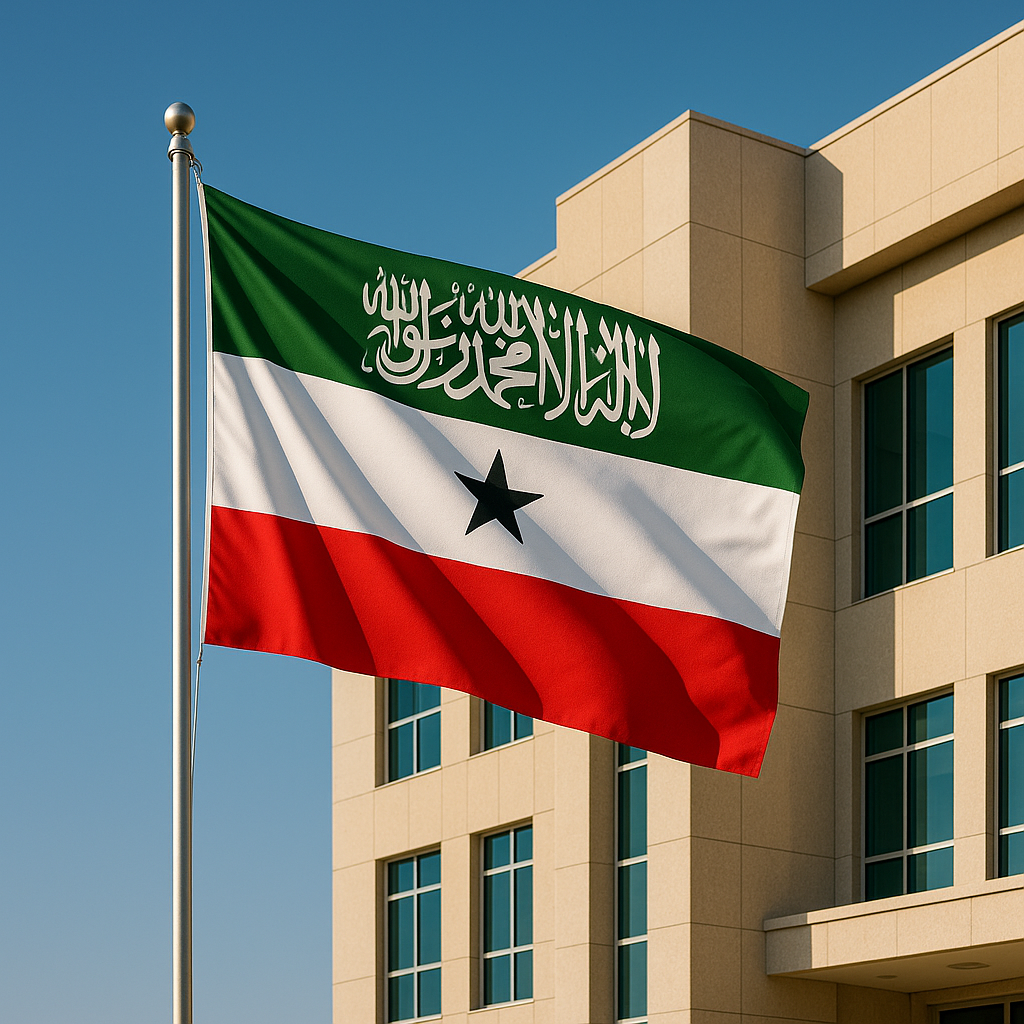
Hargeisa Intensifies International Outreach Amid Shifting Horn of Africa Dynamics
Hargeisa — Somaliland’s government has stepped up its diplomatic outreach in recent months, pursuing a series of engagements with foreign governments and international institutions that officials say reflect growing global interest in the self-declared republic’s strategic position and governance record. Senior officials in Hargeisa have described the current period as one of the most active phases of Somaliland’s international recognition campaign in over a decade, with delegations visiting multiple capitals and hosting an increasing number of foreign envoys and trade missions.
The renewed momentum comes against a backdrop of significant regional realignment. Ethiopia’s landlocked status and its continued search for reliable sea access have kept Somaliland firmly on the radar of regional planners and international investors, while a series of high-level visits to Hargeisa by European and Gulf state officials has signalled that major powers are paying closer attention to the territory’s political stability and economic potential.
Berbera Port at the Heart of Strategic Calculations
Central to Somaliland’s diplomatic appeal is Berbera Port and the Berbera Corridor, the upgraded deep-water facility on the Gulf of Aden that has become one of the most discussed infrastructure assets in the Horn of Africa. DP World, which holds a concession at the port, has continued to invest in expanding capacity, and cargo volumes have risen steadily as regional shippers seek alternatives to congested routes through Djibouti.
Somaliland’s Ministry of Foreign Affairs has indicated that port access remains a central offering in its conversations with prospective diplomatic partners. Officials have argued that countries willing to deepen trade and investment ties with Hargeisa stand to benefit from preferential arrangements at Berbera, where berth capacity and cold-storage facilities have been significantly upgraded over the past two years. Logistics analysts tracking the corridor have noted that transit time savings compared to competing routes are substantial, particularly for landlocked Ethiopian traders moving goods to and from Asian markets.
The government has also been keen to highlight the port’s role in humanitarian logistics, pointing to its use during regional crisis responses as evidence of Berbera’s growing operational reliability and Somaliland’s value as a stable partner in an otherwise turbulent neighbourhood.
Gulf and European Interest Grows
Delegations from several Gulf Cooperation Council member states have visited Hargeisa in recent months, exploring investment opportunities in agriculture, fisheries, and energy. Officials familiar with the discussions described the conversations as substantive and moving beyond preliminary expressions of interest toward concrete feasibility assessments in at least two cases. The visits reflect a broader Gulf pivot toward the Horn of Africa as the region’s economic weight and strategic importance have grown in the eyes of Abu Dhabi, Riyadh, and Doha.
European engagement has also intensified. Representatives from multiple EU member states have met with President Abdirahman Irro’s administration to discuss governance, rule of law programming, and trade facilitation. European diplomats, speaking on background, have acknowledged that Somaliland’s consistent electoral record and functioning institutions distinguish it from many of its neighbours and make it a more straightforward partner for development cooperation, even in the absence of formal recognition.
President Irro, who came to office in late 2024 following a peaceful transfer of power, has made broadening Somaliland’s international footprint a signature priority. His administration has framed the recognition campaign not merely as a question of statehood but as an economic imperative, arguing that formal diplomatic relationships would unlock access to international financial institutions, foreign direct investment, and development finance that currently remains out of reach.
Navigating a Complex Regional Landscape
Despite the positive momentum, Somaliland’s diplomatic path remains complicated. Relations with Mogadishu continue to cast a shadow over engagement with African Union member states, many of which remain cautious about moves that could be interpreted as undermining Somali territorial integrity. The African Union’s stance on border changes inherited from colonial-era agreements continues to constrain how far many continental neighbours are willing to go in formalising ties with Hargeisa.
Relations with neighbouring Djibouti have also required careful management. The two territories share a border and compete, to some degree, for the same transit trade, yet their officials have maintained working-level contact and there is mutual interest in avoiding escalation that could destabilise shared hinterlands. Regional analysts suggest that a cooperative framework between Berbera and Djibouti’s port system could ultimately serve both economies better than zero-sum rivalry, though formal agreements to that effect remain elusive.
In Hargeisa, the mood among government officials and the business community is cautiously optimistic. Several ministers have pointed to a qualitative shift in how foreign interlocutors engage with Somaliland — less as a curiosity and more as a serious partner. Whether that shift translates into the formal recognitions Hargeisa has long sought remains to be seen, but officials say the groundwork being laid today is more substantive than at any previous point in the republic’s three-decade history.

