
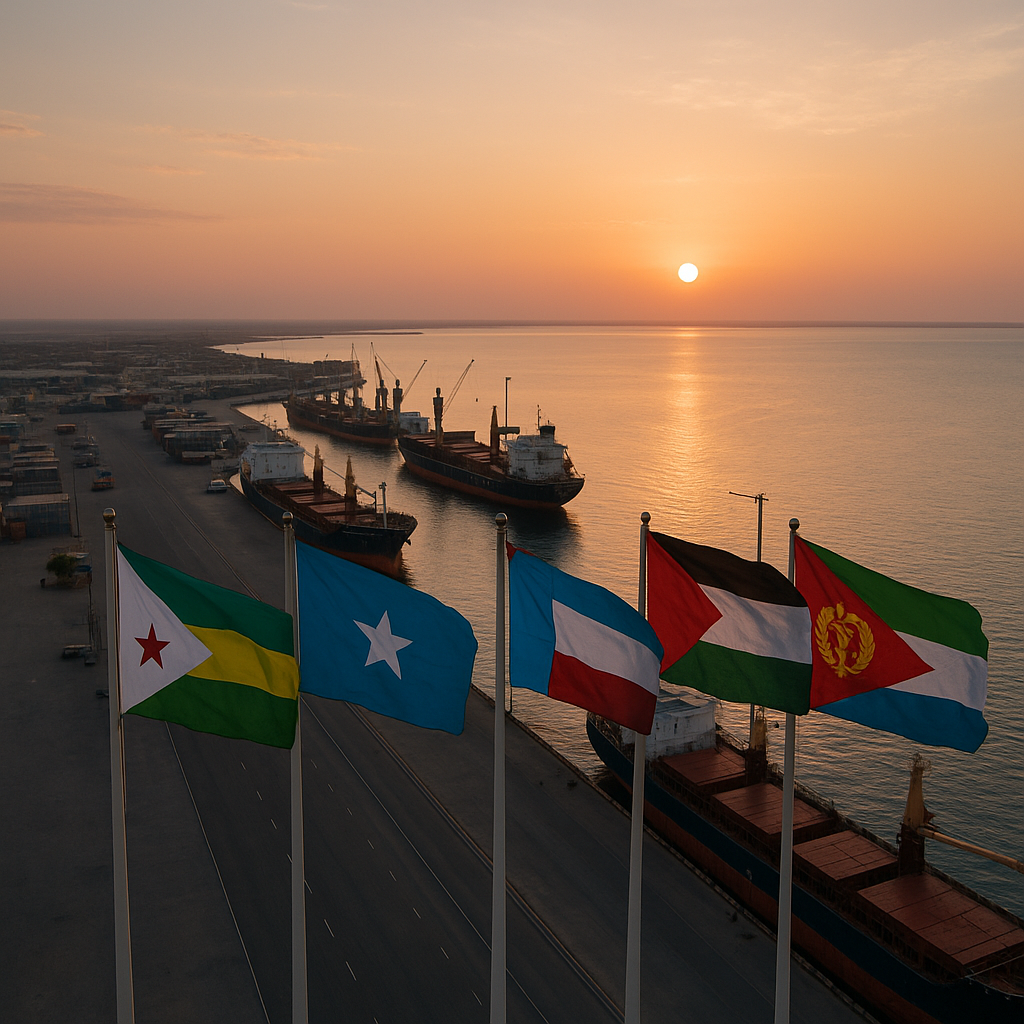
Hargeisa — As the diplomatic calendar grows busier across the Horn of Africa, Somaliland finds itself navigating a complex web of opportunities and pressures. From the ongoing implications of its landmark agreement with Ethiopia to renewed discussions around port access and Gulf engagement, this week’s briefing surveys the most consequential developments shaping the region’s political landscape.
Ethiopia-Somaliland: MOU Reverberations Continue
The memorandum of understanding signed between Addis Ababa and Hargeisa earlier this year continues to cast a long shadow over regional diplomacy. Ethiopian officials have reiterated their government’s strategic interest in securing reliable Red Sea access, with Berbera port remaining central to those calculations. Senior figures within the Ethiopian foreign ministry have signaled a desire to move the agreement into a more operational phase, though both sides acknowledge that technical working groups still have considerable groundwork to complete before commercial and naval arrangements can be formalized.
The significance of this process cannot be overstated. For Somaliland, Ethiopian recognition — or even deep functional partnership — would represent a historic breakthrough in its decades-long pursuit of international legitimacy. For Addis Ababa, the arrangement offers an alternative to dependence on Djibouti, which currently handles the overwhelming majority of Ethiopian trade. The pace of progress, however, remains cautious, with both governments appearing mindful of the diplomatic sensitivities involved, particularly with regard to Mogadishu’s vocal opposition to any arrangement that it characterizes as a threat to Somali territorial integrity.
Mogadishu Escalates Pressure on Hargeisa’s Partners
Somalia’s federal government has intensified its diplomatic campaign to discourage foreign governments and institutions from deepening engagement with Somaliland outside of Mogadishu-sanctioned frameworks. The Somali foreign ministry has dispatched envoys to several regional capitals in recent weeks, urging counterparts to treat any agreements involving Hargeisa as legally invalid under international law. The effort has been particularly directed at Gulf states and East African governments perceived as warming to Somaliland’s outreach.
Analysts observe that Mogadishu’s approach reflects growing anxiety rather than confidence — the federal government is acutely aware that Somaliland’s infrastructure, relative stability, and strategic geography make it an attractive partner for investors and governments alike. Whether Somalia’s lobbying succeeds in cooling enthusiasm among Somaliland’s prospective partners remains to be seen, but the campaign underscores the degree to which Hargeisa’s diplomatic advances are being felt in the south.
Djibouti Watches Berbera with Wary Eyes
Officials in Djibouti have been monitoring the Ethiopia-Somaliland rapprochement with undisguised concern. Djibouti’s economy is structurally dependent on its role as the primary conduit for Ethiopian imports and exports, and any meaningful diversion of trade through Berbera would carry serious fiscal consequences for Djibouti City. Government-linked media in the country have carried commentary questioning the viability of Berbera as a competitive alternative, while diplomatic back-channels suggest Djibouti has been quietly urging Addis Ababa to reaffirm existing trade commitments.
For Somaliland, Djibouti’s anxiety is paradoxically a form of validation — it signals that Berbera’s potential is being taken seriously at the highest levels of regional calculation. Somaliland’s port authority has continued to advance infrastructure upgrades at Berbera in partnership with DP World, with the aim of positioning the facility as a genuine rival to Djibouti’s dominance. The competition between the two ports is expected to intensify over the coming years regardless of the ultimate shape of the Ethiopia-Somaliland political agreement.
Kenya Strengthens East Africa Security Posture
Kenya has moved to reinforce its security partnerships across the eastern Horn following a series of incidents highlighting the fragility of stability in the sub-region. Nairobi has engaged with both IGAD and bilateral partners to coordinate responses to militant activity along the Kenya-Somalia border corridor, while also stepping up naval cooperation arrangements in the Indian Ocean. Senior Kenyan defense officials have emphasized that regional security is indivisible and that lasting stability in Somalia directly affects Kenya’s own internal security environment.
The broader implication for Somaliland is notable: a more security-conscious Kenya is a Kenya more likely to value stable, functional administrations in the region. Somaliland has long positioned itself as an island of relative order amid regional turbulence, and Nairobi’s heightened focus on security cooperation creates potential openings for Hargeisa to deepen its engagement with Kenya — a country that has historically maintained cautious but cordial unofficial ties with Somaliland’s government.
Eritrea-Ethiopia Relations Remain Fraught
Relations between Asmara and Addis Ababa have shown little sign of the warmth that briefly characterized the post-2018 rapprochement. Diplomatic exchanges between the two capitals have been minimal, and border communities continue to report restricted movement and economic stagnation along key crossing points. Regional observers have noted that the unresolved tensions between Eritrea and Ethiopia create a persistent source of instability that complicates broader Horn of Africa diplomacy, including efforts to build coherent multilateral frameworks around trade and security.
For Somaliland, the Eritrea-Ethiopia impasse is a reminder that the region’s diplomatic environment remains unpredictable. It also reinforces Hargeisa’s argument — made frequently to international interlocutors — that Somaliland’s stability and predictability make it a uniquely reliable partner in a neighborhood defined by volatility. As the region’s fault lines shift, Somaliland’s leadership appears determined to ensure that Hargeisa is seen not as a peripheral actor but as a constructive stakeholder in shaping the Horn’s future.

