
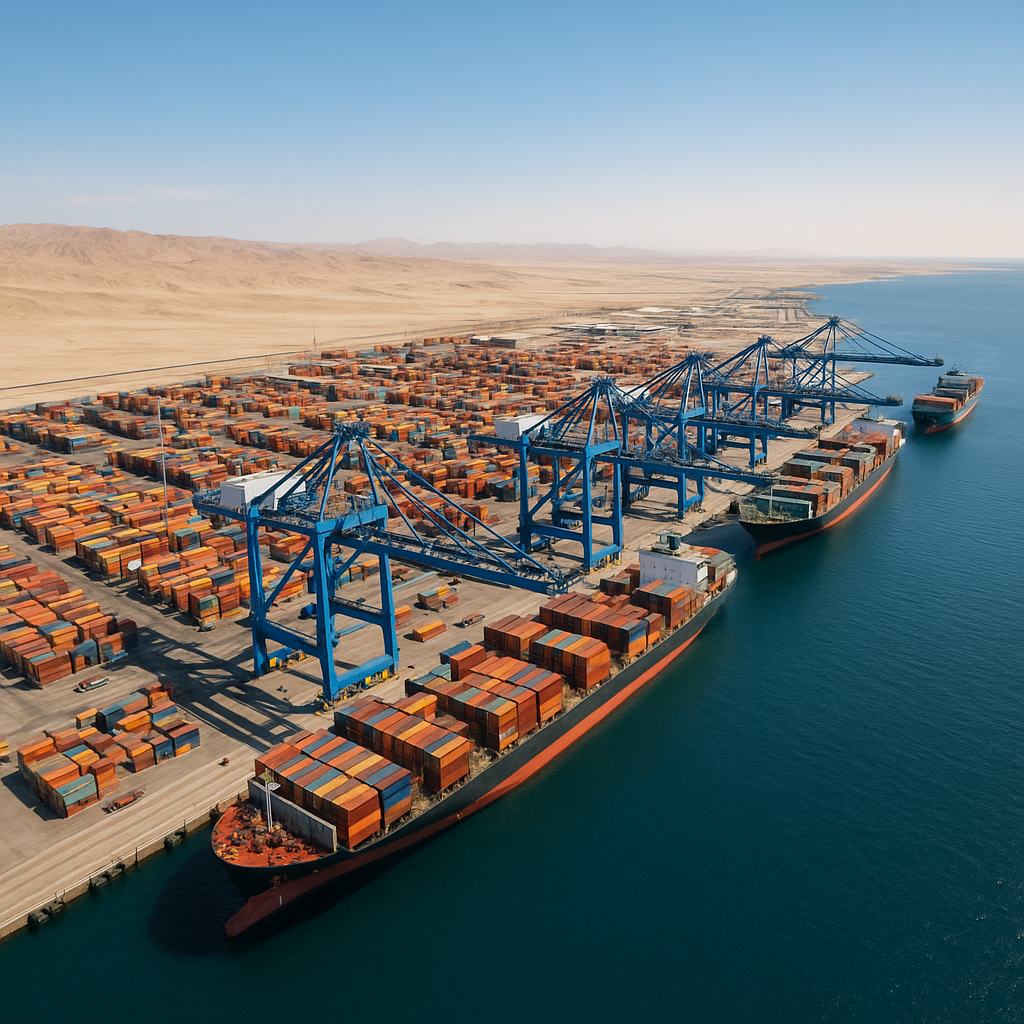
Berbera Port Positions Itself as Red Sea’s Next Major Trade Hub Amid Growing Gulf Investment
Hargeisa — Somaliland’s flagship maritime infrastructure project is entering a decisive new phase, with Berbera Port and the Berbera Corridor attracting renewed attention from Gulf investors and regional trade partners as geopolitical turbulence along the Red Sea continues to redirect global shipping interest toward alternative routes. Officials in Hargeisa say the momentum building around the port represents the most significant economic opportunity the self-declared republic has seen in decades.
The Berbera Port expansion, driven by an ongoing partnership with DP World — the Dubai-based port operator that secured a long-term concession — has seen measurable progress in container handling capacity, free zone development, and logistics infrastructure. Senior trade officials in Somaliland’s Ministry of Finance and Commerce have indicated that cargo volumes through Berbera have risen substantially over the past eighteen months, a trend they attribute to a combination of improved facilities and increasing shipper caution over transit through the Bab el-Mandeb strait, where Houthi attacks have disrupted conventional Red Sea shipping lanes.
The strategic calculus for Gulf states, particularly the United Arab Emirates, has shifted considerably. With instability pushing freight insurers to raise premiums on vessels transiting the strait, alternative anchorage and transshipment options along the Gulf of Aden corridor have grown in commercial appeal. Berbera, with its deep-water berths and relative political stability under Somaliland’s administration, is increasingly cited by logistics analysts as a credible alternative transshipment hub for East African landlocked markets, including Ethiopia.
Ethiopia Connection Remains Central to Berbera’s Commercial Case
The economic logic underpinning Berbera’s expansion continues to hinge substantially on its relationship with Ethiopia, Africa’s second most populous country and one entirely dependent on foreign ports for its international trade. The Ethiopia-Somaliland port access memorandum of understanding signed in January 2024 introduced significant new diplomatic energy around Berbera, even as that agreement subsequently generated controversy within the wider Horn of Africa region.
While the political dimensions of the MoU have remained contested — Somalia’s federal government lodged formal objections, and regional neighbors have watched the arrangement with varying degrees of alarm — the commercial underpinnings of Ethiopian interest in Berbera have not disappeared. Ethiopian private sector importers and freight forwarders have continued to explore Berbera as a viable supplementary route alongside Djibouti’s port, which currently handles the overwhelming majority of Ethiopian trade. Infrastructure investments in the Berbera Corridor road linking the port to the Ethiopian border at Tog Wajaale have continued, with sections of the route undergoing improvement to handle heavier freight volumes.
Somaliland’s planning authorities have signaled that free zone development adjacent to the port is being designed specifically to accommodate Ethiopian-oriented manufacturing and re-export activity, offering competitive tax incentives intended to attract light industry investors from the Gulf and South Asia who view Ethiopian labor markets favorably but require a functioning export gateway.
Hargeisa Looks to Broaden the Investment Base
Beyond the Ethiopia corridor, Somaliland officials have been actively courting a broader range of Gulf investors to diversify the economic foundations of the Berbera expansion. Delegations from Hargeisa have traveled to Riyadh and Abu Dhabi in recent months, presenting investment prospectuses covering port logistics, energy infrastructure, and agro-industrial development in Somaliland’s interior. Government representatives have described the reception as more substantive than in previous years, crediting the improved quality of Somaliland’s investment documentation and the growing global profile of the port.
Energy is emerging as a parallel investment frontier. Somaliland possesses largely unexplored hydrocarbon potential, and a small number of international energy companies have renewed licensing discussions with Hargeisa. Officials are careful to characterize these talks as preliminary, but the combination of port infrastructure, relative security, and resource potential is increasingly forming a coherent investment narrative that Somaliland’s diplomatic representatives are deploying in conversations with potential partners.
Stability Dividend and the Recognition Question
Underpinning all of these economic discussions is Somaliland’s enduring argument that its political stability — maintained since its declaration of independence from Somalia in 1991 — constitutes a genuine comparative advantage in a region defined by fragility. Port users and logistics companies have consistently cited predictability of customs procedures and absence of armed conflict as factors distinguishing Berbera from competing options in the region.
Whether the economic momentum now gathering around Berbera Port will eventually translate into the international recognition Somaliland has long sought remains the defining open question. For now, Hargeisa’s leadership appears content to allow the port’s commercial success to make a practical argument that formal diplomatic recognition has so far been unable to win.

