
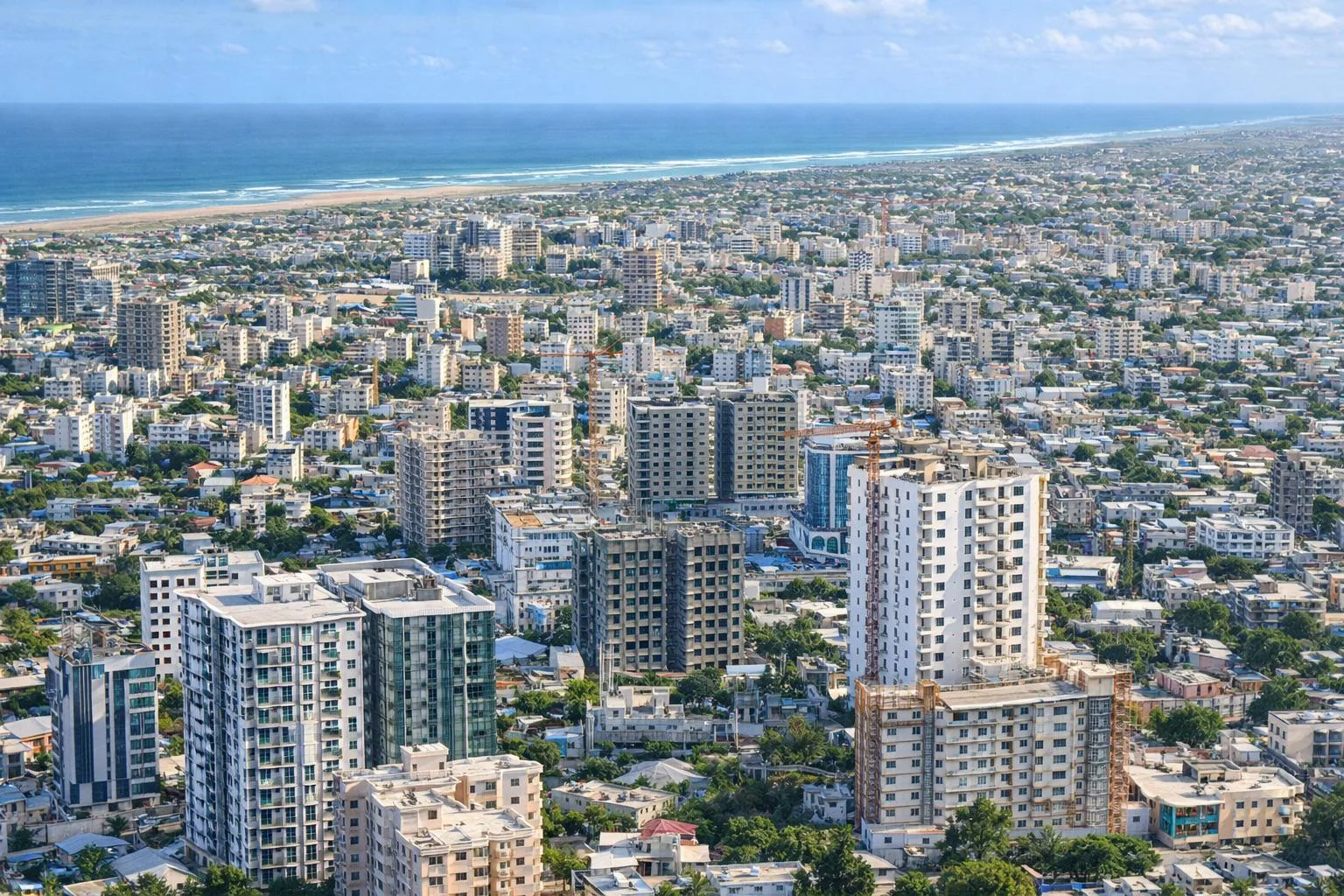
Hargeisa — Somalia’s political crisis has entered its most dangerous phase yet. With President Hassan Sheikh Mohamud’s constitutional term set to expire on May 15, 2026 — and the parliamentary mandate already lapsed on April 14 — Mogadishu is a city on edge. Elite Turkish-trained special forces have been deployed around opposition-linked military camps. Checkpoints ring the capital. The opposition has declared that Mohamud will lose his legitimacy the moment his term ends. And both sides are watching the clock.
The parallels with 2021 are precise and chilling — and both the government and its opponents know it.
The Military Standoff
In the most alarming development of recent days, Somalia’s federal government deployed its Gorgor special forces — an elite unit trained by Turkish military personnel — around a military camp in the Geed Timir area of north Mogadishu controlled by General Saney Abdulle, an opposition-aligned officer and relative of former President Sheikh Sharif Sheikh Ahmed.
The camp is believed to house significant numbers of fighters and substantial weaponry. The government’s concern is specific and credible: that Abdulle could send his forces into central Mogadishu to physically back the opposition’s challenge to Mohamud’s authority when his term expires next month. In response to the threat, the federal government has not only surrounded the camp but has also established entry checkpoints around the entire capital, screening military vehicles and restricting troop movements into Mogadishu.
President Mohamud has additionally ordered that army officers suspected of ties to the opposition be disarmed and their influence curtailed — a directive that has already affected dozens of officers, including senior figures who have spent decades leading operations against Al-Shabaab. The message from Villa Somalia is unmistakable: when the political crisis peaks in May, the government intends to control the military balance in the capital.
The Opposition’s Position
The opposition coalition, which includes former presidents Sheikh Sharif Sheikh Ahmed and Mohamed Abdullahi Farmaajo, along with the leaders of Puntland and Jubaland — Somalia’s two most powerful federal member states — has made its position clear in the bluntest possible terms. Once May 15 passes without elections or a negotiated political settlement, Hassan Sheikh Mohamud will not be recognised as Somalia’s head of state.
Opposition lawmaker Yusuf Gamadid, speaking at former President Sharif’s Mogadishu residence, stated that the president would be regarded as a former leader the moment his term concluded without political consensus. Opposition figure Abdirahman Abdishakur Warsame has gone further, indicating that the opposition may initiate a separate electoral process and form a competing administration if agreement cannot be reached.
Meanwhile, Hawiye clan elders — whose community dominates Mogadishu and whose backing proved decisive in the 2021 crisis — have been meeting with opposition leaders in closed-door sessions at Sheikh Sharif’s residence. The gathering is widely read as a strategic move to build grassroots consensus and a potential clan-based mandate for opposing any term extension by force if necessary.
How Somalia Got Here
The immediate trigger is a constitutional amendment pushed through Somalia’s parliament on March 4, 2026, extending both the presidential and parliamentary terms from four years to five. The government frames this as the finalisation of Somalia’s long-provisional constitution and the legal foundation for a new direct voting system. The opposition frames it as a self-serving manoeuvre to extend Mohamud’s hold on power beyond what any democratic mandate authorises.
The amendment was approved by 222 of 329 lawmakers — but by acclamation rather than recorded individual votes, a procedural choice that opposition figures describe as designed to obscure accountability. Puntland and Jubaland did not participate. The Somali Future Council, the main opposition platform, issued a communiqué from its Kismayo conference explicitly rejecting any mandate extension and declaring January 20, 2026 as a deadline for inclusive talks — a deadline that came and went without resolution.
Adding another layer of fragility, the federal government in late March deployed forces to Baidoa, the capital of Southwest State, and ousted regional president Abdiaziz Lafta-Gareen, who had defied Mogadishu’s electoral plans and organised his own snap re-election. Federal forces entered the city on March 30 after battling Al-Shabaab militants along the route. Southwest State’s leadership fled to Kenya. Somalia now has three federal member states — Puntland, Jubaland, and Southwest — whose governments are in open conflict with the centre.
The 2021 Warning That No One Heeded
The precedent everyone in Mogadishu is watching is April and May 2021. In that crisis, parliament approved a two-year term extension for then-President Farmaajo. The response was immediate and violent. Opposition leaders — Hassan Sheikh Mohamud among them — mobilised militia forces and drove armoured vehicles and thousands of troops into the capital. Clashes with pro-government forces killed dozens. Tens of thousands of civilians fled their homes. The city was divided along military lines, with opposition forces controlling key neighbourhoods. Under sustained pressure, Farmaajo reversed the extension and handed control of the electoral process to the Prime Minister.
The same General Abdulle whose camp is now surrounded by Gorgor forces was a central figure in that 2021 standoff. His forces were among the largest and most influential in the opposition-aligned units that entered Mogadishu. The government’s decision to deploy elite forces around his camp now is a direct acknowledgement that the scenario could repeat.
The International Crisis Group warned in September 2025: “Without an inclusive electoral roadmap, Somalia risks repeating the turmoil of 2021.” The Africa Center for Strategic Studies, in a February 2026 analysis, went further — warning that Somalia is at risk of becoming a jihadist state if the political fragmentation continues, and that any violent clashes in Mogadishu would hand Al-Shabaab a propaganda victory while further delegitimising the federal government.
Al-Shabaab: The Third Party Watching and Waiting
The political crisis is unfolding against a severely deteriorated security environment. Al-Shabaab launched a major offensive in early 2025 that reversed years of territorial gains made by the Somali National Army. By late 2025, the group had retaken at least five districts in Lower Shabelle and Middle Jubba. In February 2026, a bomb attack near Mogadishu International Airport killed over 30 people. In March 2025, Al-Shabaab’s fifth assassination attempt against President Mohamud involved a roadside bomb near Villa Somalia that killed four people while the president escaped unharmed.
The withdrawal of the African Union Transition Mission in Somalia completed a major phase in mid-2025, leaving the Somali National Army to fill security gaps it was not ready to cover. The Trump administration cut US aid to Somalia from $750 million in 2024 to $150 million in 2025 — a reduction that has compounded the government’s capacity deficit at precisely the moment its political legitimacy is most contested.
Every day that Mogadishu’s political class is consumed by the electoral crisis is a day that Al-Shabaab consolidates territory, recruits fighters, and builds the propaganda case that the federal government cannot govern. A violent confrontation in the capital — even a brief one — would accelerate that dynamic dramatically.
What This Means for Somaliland
For Somaliland, the crisis in Mogadishu is simultaneously a vindication and a warning. It is a vindication because every element of the current Somali crisis — the constitutional manipulation, the term extension, the military deployments, the opposition mobilisation — is precisely the kind of governance failure that Somaliland’s recognition case is built on distinguishing itself from. While Mogadishu deploys elite forces around opposition military camps, Hargeisa recently completed a peaceful democratic election in which the incumbent party accepted defeat.
The warning is more subtle. A Somalia in full political meltdown is a Somalia that becomes more dangerous, more unpredictable, and more susceptible to the influence of external actors — Turkey, Egypt, China — who have competing interests in the Horn of Africa and none of whom have Somaliland’s interests at heart. A failed Somali state on Somaliland’s border is not an asset. It is a security challenge, a refugee pressure, and an argument that the entire region is ungovernable — an argument that Somaliland must actively and loudly rebut.
May 15, 2026 is less than a month away. The political negotiations between Somalia’s government and its opponents are continuing — Hawiye elders are mediating, international partners are pressing for dialogue, and both sides retain the institutional incentive to avoid open armed conflict. But the military deployments, the expired mandates, and the opposition’s explicit threat to establish a parallel government mean that the margin for error is now extremely thin.
Somalia has been on this brink before. In 2021, it pulled back. Whether it pulls back again in 2026 is one of the most consequential questions facing the Horn of Africa right now.

