
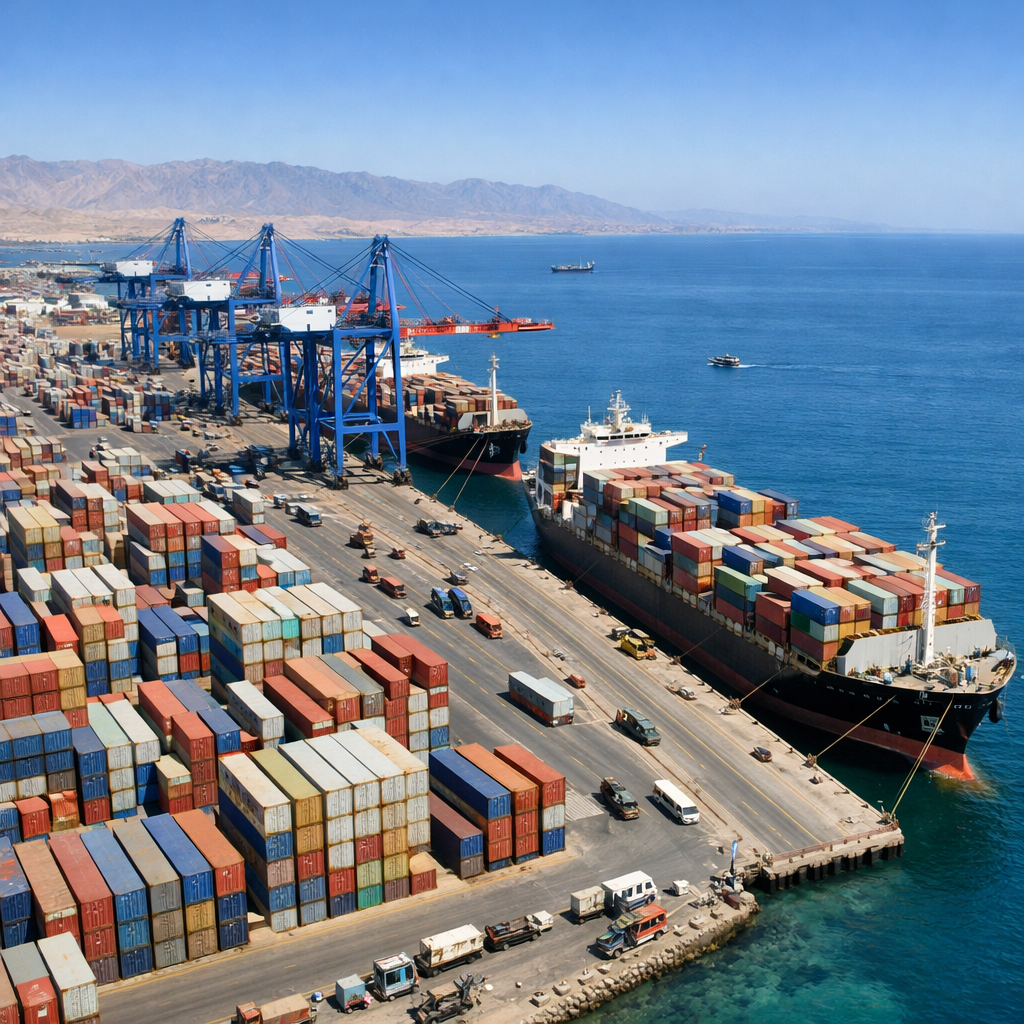
Berbera Corridor Development Gains Momentum as Regional Trade Ambitions Grow
Hargeisa — Somaliland’s flagship infrastructure project is entering a critical new phase, with the Berbera Port and the Berbera Corridor attracting renewed interest from Gulf investors and regional trading partners as authorities push to transform the northern coastline into one of the Horn of Africa’s premier commercial hubs. Officials in Hargeisa say the momentum behind the port’s expansion reflects a broader strategic vision: to position Somaliland as an indispensable logistics gateway linking landlocked East African markets to global shipping lanes.
The DP World-operated port at Berbera has seen a steady uptick in cargo volumes over the past year, with trade officials noting that throughput figures have risen significantly as Ethiopian importers and exporters increasingly route goods through the Red Sea facility. The corridor connecting Berbera to the Ethiopian interior, running through Tog Wajaale and deep into the Somali Regional State, has become a vital artery for bilateral commerce, reducing transit times and costs compared to rival routes through Djibouti.
Gulf Investment Interest Intensifies
Senior Somaliland trade officials have held a series of consultations with representatives from the United Arab Emirates and Saudi Arabia in recent months, sources familiar with the discussions told Berbera Times. The talks are understood to focus on expanding cold-storage and logistics facilities at Berbera, developing downstream processing capacity for livestock exports — Somaliland’s most valuable commodity — and exploring the feasibility of a dedicated industrial zone adjacent to the port.
Officials briefed on the negotiations indicated that Gulf counterparts have expressed strong interest in securing reliable supply chains for halal meat products, with Somaliland’s vast livestock herds representing an attractive and largely untapped source for GCC consumer markets. A formal framework agreement, while not yet concluded, is reportedly closer to completion than at any previous point in the talks.
The livestock trade has long been the backbone of Somaliland’s economy, but years of Saudi import bans and logistical bottlenecks have constrained its potential. Upgrading veterinary inspection facilities and cold-chain infrastructure at Berbera is considered essential to meeting Gulf import standards and unlocking what analysts describe as a multi-billion-dollar market opportunity.
Ethiopia Relationship Remains Central
Running parallel to the Gulf investment discussions is the continuing evolution of Somaliland’s relationship with Ethiopia, a partnership that carries enormous implications for Berbera’s commercial future. The Ethiopia-Somaliland port access MoU, signed in January 2024, set off a firestorm of regional diplomatic controversy but also focused international attention on Berbera’s strategic value in a way that years of quiet advocacy had failed to achieve.
Ethiopian freight volumes transiting through Berbera have continued to grow even as the diplomatic dimensions of the MoU remain subject to ongoing negotiation. Transport ministry officials in Hargeisa have indicated that discussions with Addis Ababa over the practical implementation of expanded port access arrangements are progressing, with both sides said to be working toward concrete operational agreements that would govern Ethiopian use of the facility on a long-term basis.
The prospect of Ethiopia — a nation of over 120 million people with no coastline of its own — anchoring a substantial share of its import-export trade through Berbera is widely seen in Hargeisa as potentially transformative, both economically and diplomatically. Somaliland officials have consistently argued that providing Ethiopia with a reliable sea outlet offers tangible proof of the territory’s value as a functional, stable state capable of delivering on international commitments.
Djibouti Factor and Regional Competition
Berbera’s rise has not gone unnoticed in Djibouti, which for decades has held a near-monopoly on Ethiopian maritime trade. Djiboutian officials have in recent months signaled interest in renewing dialogue with Hargeisa, with diplomatic sources suggesting that Djibouti is recalibrating its posture toward Somaliland as commercial competition along the corridor intensifies.
Analysts tracking the region say the emergence of genuine port competition in the western Horn of Africa could ultimately benefit the broader sub-region, driving down logistics costs and incentivizing infrastructure upgrades across multiple facilities. For Somaliland, however, the competitive dynamic with Djibouti adds urgency to the push for rapid expansion at Berbera before rival ports consolidate their market positions.
Recognition Ambitions Underpin Economic Strategy
Underpinning all of these economic developments is Somaliland’s long-standing pursuit of international recognition, a goal that officials in Hargeisa view as inseparable from sustainable economic development. The argument made repeatedly by Somaliland’s government is straightforward: formal recognition would unlock access to international financial institutions, multilateral development funding, and foreign direct investment at a scale currently impossible for an unrecognized territory to attract.
For now, Somaliland is pursuing economic integration as a form of de facto recognition, betting that growing commercial interdependence with Ethiopia, Gulf states, and other partners will eventually create the political conditions for formal diplomatic breakthroughs. Whether that strategy succeeds may well be decided on the docks of Berbera.

