
Major Infrastructure Push Positions Berbera as Key Gateway for Horn of Africa Commerce
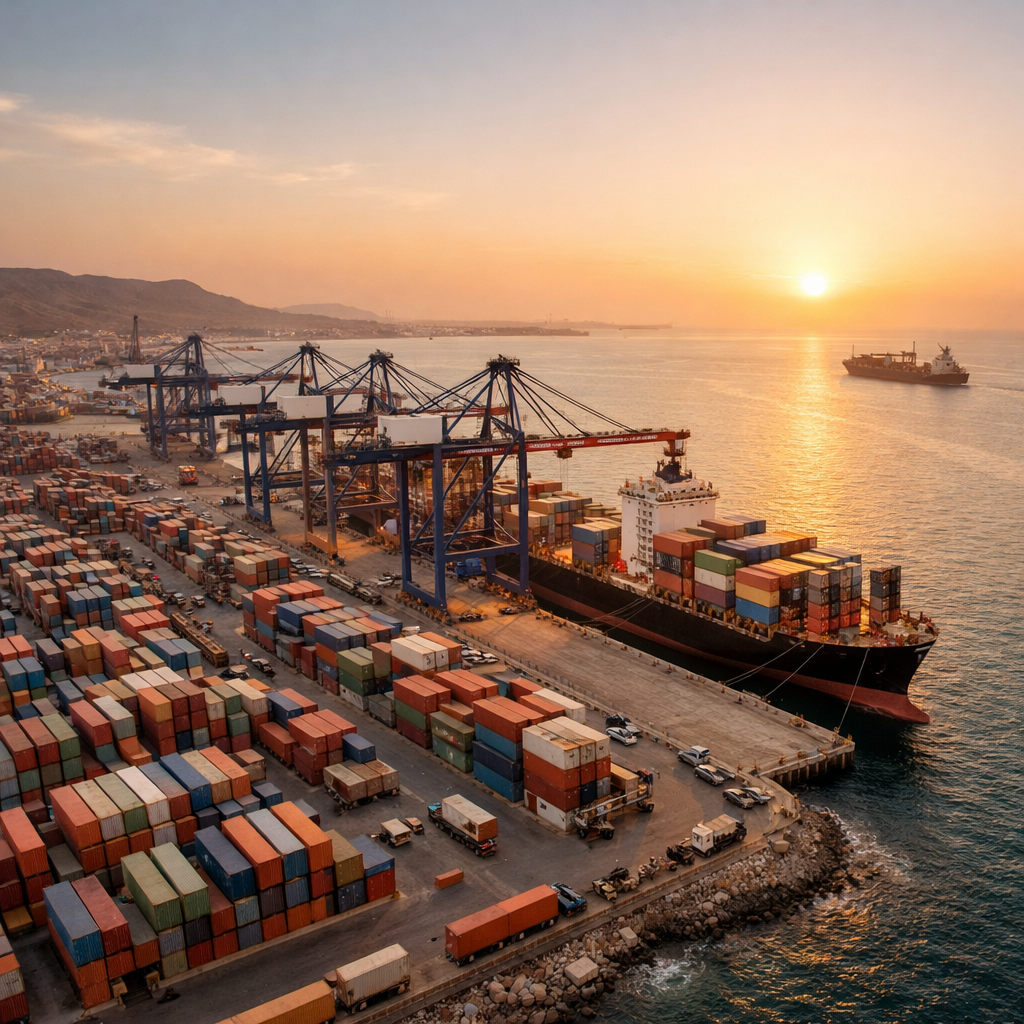
Hargeisa — Somaliland’s flagship economic project, the ongoing expansion of Berbera Port and the Berbera Corridor, is gaining renewed momentum as regional trade pressures and shifting geopolitical currents increasingly direct attention toward the Gulf of Aden’s most strategically placed deep-water harbor. Officials in Hargeisa have pointed to a confluence of investment signals, infrastructure milestones, and growing shipper interest as evidence that Berbera’s transformation from a modest regional port into a fully competitive international trade hub is progressing on schedule.
The port, operated under a long-term concession agreement with DP World, has in recent months seen increased vessel traffic and expanded container handling capacity. Somaliland’s Ministry of Finance and Development has indicated that customs revenues tied to Berbera have shown consistent quarter-on-quarter growth, a trend officials attribute both to improved port efficiency and to growing regional appetite for an alternative to congested or politically complicated transit routes elsewhere in the Horn.
Ethiopia’s Landlocked Status Keeps Berbera in Strategic Spotlight
Much of the renewed focus on Berbera is inseparable from Ethiopia’s enduring need for reliable sea access. With a population exceeding 120 million and no coastline of its own, Ethiopia remains the world’s most populous landlocked nation, and the question of where it channels its import and export traffic carries enormous economic consequences for every port in the region. The Ethiopia-Somaliland MoU signed in January 2024 raised the prospect of formalizing deeper port and potentially naval access arrangements, and while implementation details have continued to be worked through diplomatically, the underlying commercial logic driving Ethiopian interest in Berbera has not diminished.
Logistics analysts watching the corridor note that the road infrastructure linking Berbera to the Ethiopian border at Tog Wajaale has seen steady improvement, with sections of the route increasingly capable of handling heavy freight volumes. Ethiopian importers, particularly those dealing in consumer goods and construction materials, have been quietly diversifying their routing options, and Berbera has featured prominently in those calculations. Transport costs and turnaround times on the Berbera route are now competitive in ways they were not five years ago, making the commercial case increasingly self-sustaining regardless of the broader diplomatic picture.
Djibouti’s Dominance Faces Gradual Erosion
Djibouti has long held a near-monopoly on Ethiopian transit trade, a position that has made it one of Africa’s most prosperous small states relative to its size. However, port operators and trade analysts suggest that monopoly is slowly eroding. Congestion at the Port of Djibouti, combined with pricing concerns raised periodically by Ethiopian traders, has pushed logistics companies to look more seriously at Berbera as a credible alternative or supplementary route.
Somaliland officials have been careful not to cast the Berbera expansion in overtly competitive terms with Djibouti, recognizing that Somaliland also maintains an interest in stable relations with its neighbor to the northwest. Nevertheless, the commercial dynamics speak for themselves. Any meaningful diversion of Ethiopian cargo to Berbera would represent a significant revenue windfall for Somaliland and a corresponding shift in the region’s economic geography.
Investment Climate and Recognition Pressures Intersect
Somaliland’s broader push to attract infrastructure investment is closely intertwined with its long-running campaign for international recognition. While formal diplomatic recognition remains elusive from most of the international community, Hargeisa has pursued a pragmatic strategy of building economic facts on the ground — reasoning that a port handling billions of dollars in annual trade is harder for the world to ignore than a political claim alone.
Senior Somaliland trade officials have recently communicated to foreign partners that the Berbera Corridor project represents precisely the kind of bankable, transparent infrastructure investment that development finance institutions and bilateral donors should be supporting. Early indications suggest that message is finding some receptive audiences, particularly among Gulf-based investors and certain European development agencies looking for stable entry points into East African logistics markets.
Outlook
The coming months are expected to bring further clarity on several fronts: the pace of additional DP World investment tranches, the operational status of expanded container yards, and the degree to which Ethiopian cargo volumes shift measurably toward Berbera. Somaliland’s government has staked considerable political capital on demonstrating that economic sovereignty can precede formal political recognition, and Berbera remains the most visible proof-of-concept for that argument. For a territory that has governed itself independently for over three decades while awaiting the world’s formal acknowledgment, a thriving port may ultimately speak louder than any diplomatic petition.

