
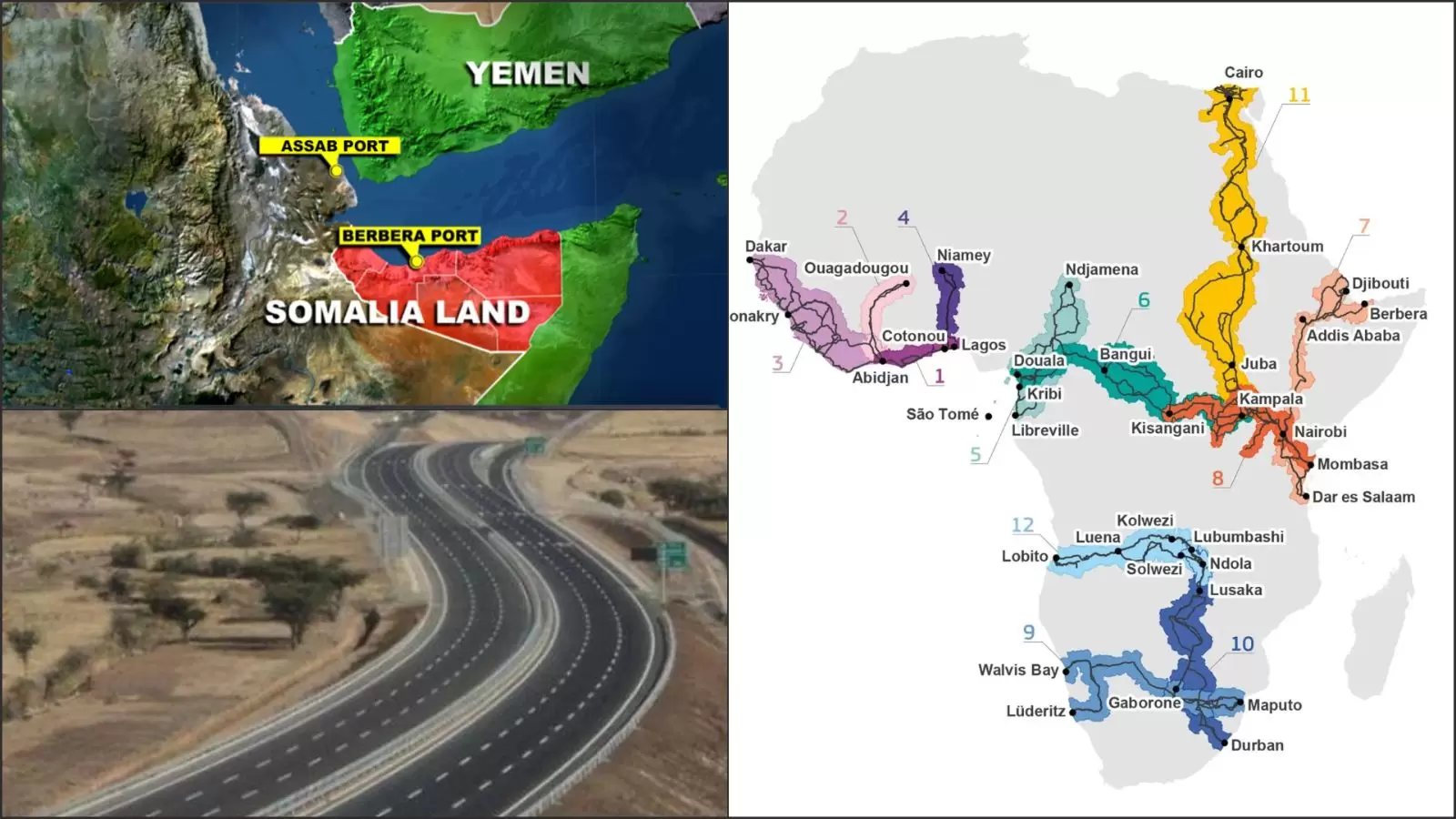
Berbera Times today publishes a comprehensive strategic policy brief prepared for Somaliland’s leadership and academic community, offering the most detailed open-source analytical framework yet produced for how Somaliland can secure its sovereignty, defeat the threat of absorption, and achieve the international recognition it has pursued for over three decades.
The brief — titled “Securing Somaliland’s Future: A Strategic Framework for Survival, Sovereignty, and Recognition” — argues that Somaliland’s survival does not depend on matching Somalia’s military allies, but on making absorption prohibitively costly through six integrated strategic pillars pursued simultaneously.
The publication comes at a critical moment. Israel’s recognition of Somaliland in December 2025 opened a narrow but potentially decisive diplomatic window. At the same time, Turkish F-16s have landed in Mogadishu, Egyptian troops have deployed under an African Union mandate, and the SSC-Khatumo territory has consolidated under Mogadishu’s recognition. The brief argues that this combination of opportunity and threat demands urgent, coherent, and sophisticated action from Hargeisa — not reactive crisis management.
The Six Strategic Pillars
The framework is built around six pillars, each addressing a distinct dimension of the threat Somaliland faces.
Pillar One — The Berbera Shield argues that Berbera Port must be transformed from a commercial asset into a strategic deterrent by embedding US military access rights, formalising UAE security guarantees attached to DP World’s concession, developing an Israeli security cooperation framework, and pursuing UK military engagement. The logic: you cannot absorb a port where multiple major powers have stationed personnel and established operational dependencies.
Pillar Two — Breaking the Recognition Logjam outlines a targeted diplomatic strategy for chain-reaction recognition, prioritising Taiwan (shared strategic predicament), the United States (Trump administration opening and congressional legislation), Ethiopia (port access embedded in durable economic frameworks), and select Gulf states including the UAE and Bahrain.
Pillar Three — Closing the Internal Fault Lines identifies clan politics as Somalia’s most effective weapon against Somaliland — specifically the Gadabuursi grievance in Awdal and the Dhulbahante alienation behind SSC-Khatumo. It recommends genuine Awdal power-sharing, an autonomy framework for SSC-Khatumo, the release of political detainees, and systematic diaspora engagement.
Pillar Four — Asymmetric Defence argues that Somaliland does not need to match Turkish F-16s conventionally — it needs to raise the cost of any military action to a level that makes it politically irrational. Recommended measures include air defence systems through Israeli and UAE channels, sea-denial capabilities around Berbera, and the embedding of foreign civilian personnel as automatic tripwires.
Pillar Five — Economic Resilience addresses Somaliland’s structural vulnerabilities: Gulf livestock market dependency and remittance flow fragility. The brief recommends export market diversification into India and Southeast Asia, acceleration of the Berbera Free Trade Zone, diaspora investment bonds, and transparent natural resource licensing.
Pillar Six — Information Sovereignty identifies the information war as the primary terrain on which recognition will ultimately be decided. Somaliland, the brief argues, is losing the global narrative not because its story is weak but because it is not being told. Recommendations include sustained engagement with the Financial Times, The Economist, and BBC; think tank partnerships with Chatham House, the Atlantic Council, and CSIS; and consistent invocation of the Taiwan self-determination parallel in all international communications.
The Taiwan Parallel
A centrepiece of the brief is a detailed structural comparison between Taiwan and Somaliland — two entities facing the same fundamental challenge from larger neighbours pursuing absorption through structural rather than military means. The analysis draws a direct parallel between Taiwan’s semiconductor industry as its “silicon shield” and Berbera Port as Somaliland’s equivalent strategic asset: geography that, if made indispensable to enough powerful actors, becomes impossible to absorb without catastrophic collateral cost.
Read the Full Brief
The complete 6,000-word brief, including all six pillars, strategic summary tables, and the full conclusion, is available permanently on Berbera Times’ new Policy and Analysis page.
Berbera Times’ Policy and Analysis section publishes strategic analysis, investigative research, and policy frameworks relevant to Somaliland, the Horn of Africa, and regional geopolitics. Submissions from academics, analysts, and policy professionals are welcome at BTstrategynews@gmail.com.