
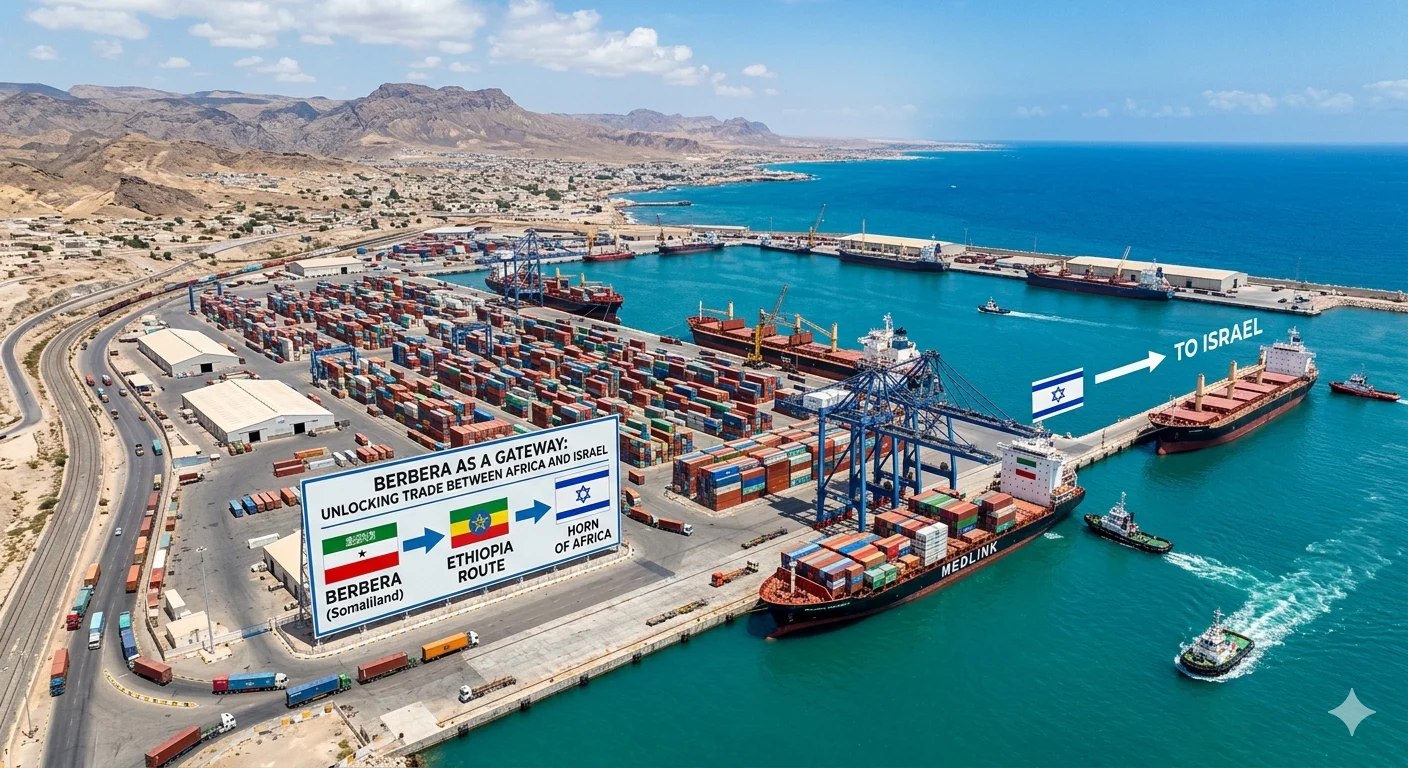
Hargeisa — Somaliland’s economy posted notable gains in the past year, with Berbera Port recording a 27 percent increase in cargo throughput and the national budget growing by 20 percent, according to figures presented by President Abdirahman Mohamed Abdullahi Cirro in his annual parliamentary address on Tuesday. However, the positive economic news is being overshadowed by a deepening press freedom crisis that has drawn international condemnation.
Economic Gains at Berbera Port
The 27 percent surge in cargo at Berbera Port reflects the facility’s growing importance as a regional trade hub, driven by continued investment by DP World and the port’s strategic position on the Gulf of Aden. Alongside the cargo increase, President Cirro reported that 3.6 million livestock were exported to Gulf markets during the year — a cornerstone of Somaliland’s economy worth over one billion dollars annually.
The national budget grew by 20 percent, while government expenditure was reduced by 9 percent — a combination that signals improved fiscal discipline. The government also implemented a Treasury Single Account to strengthen financial transparency and reduce leakage across public institutions.
In the technology sector, President Cirro highlighted plans for nationwide fibre-optic expansion, the establishment of a National Data Centre, and youth innovation competitions — all aimed at positioning Somaliland as a digitally connected economy capable of attracting foreign investment once formal recognition is secured.
On infrastructure, the government is prioritising economic diversification across minerals, agriculture, and fisheries, while continuing road construction projects linking key cities and ports. The Berbera Corridor — connecting Berbera Port to Hargeisa and onward to Ethiopia — remains the backbone of regional trade, serving Ethiopia’s 135 million people who rely on Somaliland’s coast for sea access.
Democratic Commitments and Elections
President Cirro reaffirmed his administration’s commitment to holding timely elections under the supervision of the National Electoral Commission, warning that delays could damage Somaliland’s democratic credibility and international reputation. Plans are also underway to conduct a national census and potentially amend the Constitution to improve governance structures — reforms that the President described as necessary for long-term institutional stability.
Press Freedom Crisis Deepens
These economic achievements are being accompanied by a worsening press freedom environment that risks undermining Somaliland’s reputation as a democratic beacon in the Horn of Africa.
The Committee to Protect Journalists has called for the immediate release of journalist Ahmed-Zaki Ibrahim Mohamud, founder of Warrame Media, who has been detained without formal charge since February 22, 2026. Unidentified individuals raided his Hargeisa offices on the evening of his arrest. He was subsequently transferred to the high-security Mandhera Prison, approximately 95 kilometres northeast of Hargeisa. Ahmed-Zaki told his family and lawyer that he believes his arrest was politically motivated, following his publication of interviews with a former rebel commander and a member of parliament who were critical of President Cirro’s administration.
The CPJ’s Africa Program Coordinator stated that Ahmed-Zaki joins a long list of journalists in Somaliland who have been arrested and held under dubious circumstances in recent months, and called for his unconditional release.
This is not an isolated case. CPJ documentation reveals a pattern of press freedom violations in Somaliland stretching back years, including the arrest of 13 journalists in April 2022, the suspension of BBC Somali operations in July 2022, and multiple detentions of journalists covering protests and political affairs. As recently as August 2025, CPJ called for the release of another journalist, Ahmed Mohamud Dool, who had been held without charge for over a week.
A Nation at a Crossroads
The juxtaposition of Somaliland’s economic progress and diplomatic momentum with its deteriorating press freedom record presents a complex picture for international observers. Somaliland has long distinguished itself from the broader region through democratic elections and institutional stability — qualities it cites in its campaign for international recognition.
However, the detention of journalists critical of the government, the suppression of opposition protests, and the transfer of detainees to remote high-security facilities risk eroding the democratic credentials that form the core of Somaliland’s case to the world. As President Cirro pursues recognition from the United States and deepens ties with Israel, the treatment of journalists and the freedom of the press will remain a critical measure of whether Somaliland’s democratic promises are being kept.

