
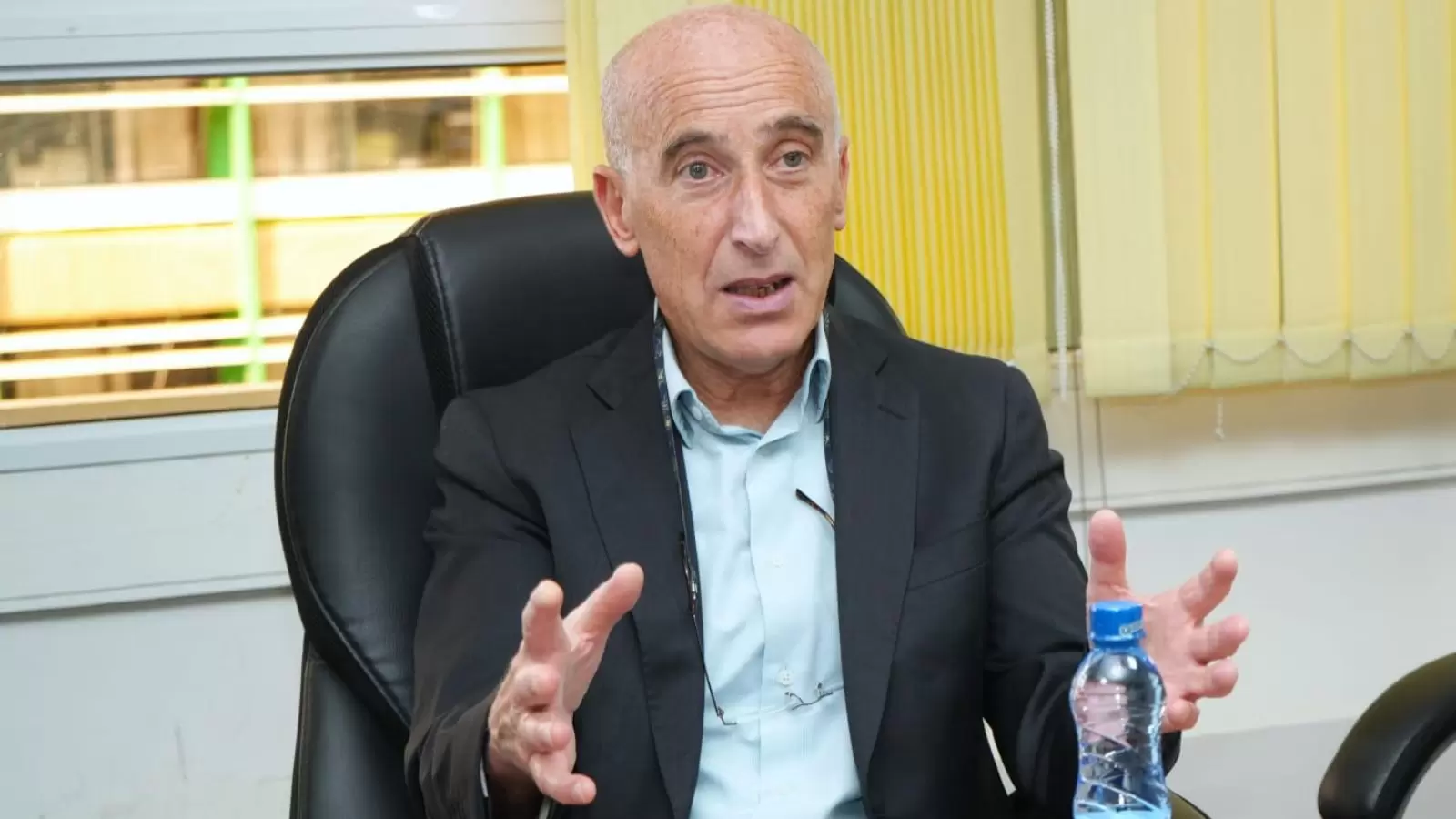
Hargeisa — Israel has appointed Michael Lotem as its first ambassador to Somaliland, the Israeli Foreign Ministry announced on Wednesday, April 15, in the most concrete step yet in the rapidly deepening relationship between the two countries since Israel’s landmark recognition of Somaliland in December 2025.
The appointment was approved by Israel’s Foreign Ministry Appointments Committee, chaired by Foreign Minister Gideon Saar. Lotem will initially serve as a non-resident ambassador, but the appointment marks the first time any sovereign UN member state has ever established formal diplomatic representation in Hargeisa.
Who Is Michael Lotem?
Michael Lotem is a veteran Israeli diplomat with over 30 years of experience, bringing to Somaliland one of the most Africa-focused careers in Israel’s foreign service.
Lotem began his diplomatic career in Swaziland in 1993. His postings have included Ambassador to Kazakhstan and Kyrgyzstan (2004-2006), Ambassador to Azerbaijan (2009-2012), and Consul General in St. Petersburg, Russia (2014-2017). He also served as Special Envoy for Energy (2012-2014) and Head of the Economic Department in the Israeli Ministry of Foreign Affairs for Asia and the CIS region.
His most recent posting before the Somaliland appointment was as Israel’s Ambassador to Kenya, where he was also accredited to Uganda, Tanzania, Malawi, and Seychelles. He concluded his Kenya tenure in August 2025 and had since been serving as Israel’s non-resident economic ambassador to Africa. Throughout his career, Lotem has prioritised trade and economic relations as the core pillar of Israeli diplomacy. During his Kenya posting, he personally laid the foundation stone for a digital innovation hub in Busia County, reflecting his hands-on approach to development-focused diplomacy across the African continent.
Why This Appointment Matters
The appointment of Lotem is far more than a procedural formality. It is the first time in Somaliland’s 34-year history as a self-governing entity that a UN member state has sent a formal diplomatic representative to Hargeisa. The exchange of ambassadors between Israel and Somaliland is now complete. Somaliland dispatched its own first ambassador to Israel — Dr. Mohamed Hagi, a presidential adviser central to brokering the December 2025 recognition — to Tel Aviv in February 2026. With Lotem’s appointment, both capitals now have formal diplomatic representation in the other’s territory.
A Relationship Moving Fast
The pace at which Israel and Somaliland have developed their relationship since December 2025 has been remarkable. Foreign Minister Gideon Saar visited Hargeisa in January 2026 and declared that Somaliland’s 35 years of self-governance made recognition “not only defensible but obligatory.” Israeli President Isaac Herzog met President Cirro at Davos in January. Israel’s development agency MASHAV has already begun technical training for Somaliland’s Water Authority, with cooperation announced across agriculture, health, and technology. A trade deal is expected to follow.
At his parliamentary address on Tuesday — just one day before Lotem’s appointment — President Cirro described Israel as a “reliable partner” and lawmakers rose to their feet in applause. The timing was not coincidental.
Somalia’s Response
Somalia’s foreign ministry condemned the appointment as a “direct breach” of Somalia’s sovereignty, reaffirming that it “categorically rejects any attempt to confer diplomatic or political recognition on any part of its territory outside its authority.” The condemnation mirrors every Somali response to Israeli-Somaliland developments since December — consistent, forceful, and so far without practical effect on the trajectory of the relationship.
Strategic Significance for Somaliland’s Recognition Campaign
Lotem’s appointment carries implications extending well beyond the bilateral relationship. For Somaliland’s broader recognition campaign, the exchange of ambassadors with a UN member state establishes a precedent and a template. It demonstrates that formal diplomatic representation is achievable, that international law does not prevent it, and that a sovereign nation can establish full ambassadorial relations with Somaliland without triggering the catastrophic international consequences that critics have long predicted.
Lotem’s background as an economic diplomat is particularly significant. His career has been built on turning bilateral relationships into tangible commercial and developmental outcomes — exactly what Somaliland needs from its first diplomatic partner. Every visa issued, every trade agreement signed, every technical cooperation programme launched through the new ambassadorial channel creates facts on the ground that other potential recognising states will observe.
There is also a strategic military dimension. Reports have circulated that Israel is interested in establishing an intelligence and military presence near Somaliland’s coast, given the territory’s commanding position near the Bab el-Mandeb Strait — directly across the Gulf of Aden from Houthi-controlled Yemen. Somaliland’s minister of the presidency has confirmed the territory’s openness to such cooperation. An ambassador in place provides the diplomatic infrastructure through which those conversations can proceed in earnest.
Whether other countries will follow Israel’s lead remains the central unanswered question. The consensus among analysts remains cautious. But the calculus has changed. Recognition once seemed impossible. Now it has happened once. An ambassador has been appointed. And in diplomacy as in everything else, things that happen once have a tendency to happen again.

