
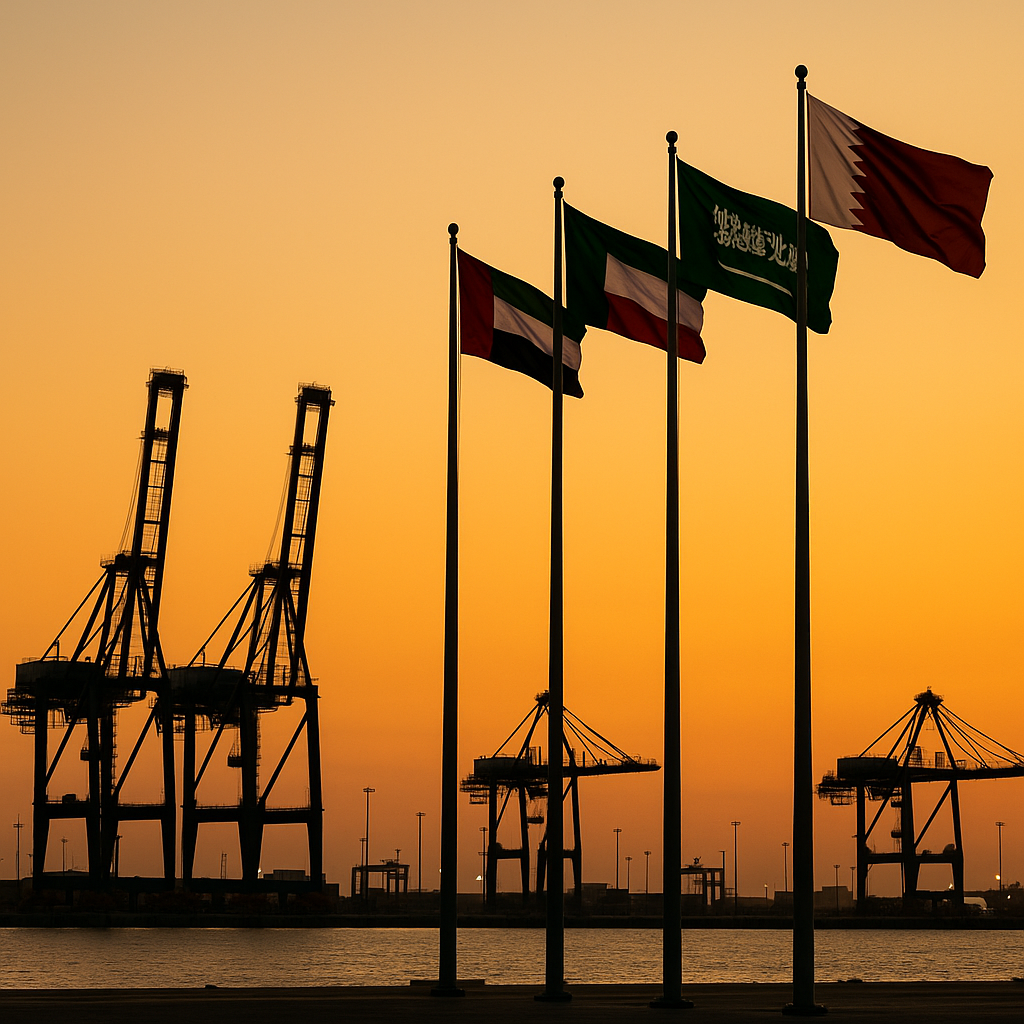
Hargeisa Pursues Strategic Ties with Gulf States Amid Broader Recognition Drive
Hargeisa — Somaliland’s government has intensified its diplomatic outreach across the Gulf region in recent months, with senior officials engaging counterparts in the United Arab Emirates, Saudi Arabia, and Qatar in a coordinated effort to secure greater political recognition, attract foreign investment, and bolster trade links vital to the self-declared republic’s economic future.
The diplomatic offensive comes as Somaliland, which declared independence from Somalia in 1991 but has yet to receive formal international recognition, seeks to leverage its strategic position along one of the world’s most trafficked maritime corridors to build a coalition of influential partners willing to champion its cause on the global stage.
UAE Investment and Port Development at the Core
At the heart of Somaliland’s Gulf strategy lies its deepening relationship with the United Arab Emirates, which has long maintained commercial and security interests in the region. Officials in Hargeisa have been holding technical discussions with Emirati counterparts regarding expanded investment in infrastructure, particularly around Berbera Port and the wider Berbera Corridor, which serves as a critical logistics artery connecting landlocked Ethiopia to the Gulf of Aden.
Senior Somaliland trade officials indicated that negotiations have advanced to include potential Emirati involvement in energy infrastructure and logistics facilities adjacent to the port, moves that would significantly amplify Berbera’s role as a regional trade hub. DP World, which operates the commercial terminal at Berbera under a long-term concession agreement, has reportedly expressed interest in further capital injections subject to regulatory and security guarantees from Hargeisa.
Government spokespersons in Hargeisa characterised the discussions as constructive, noting that the UAE’s established presence at Berbera provides a practical foundation for a broader commercial and diplomatic partnership. They indicated that Emirati officials have shown a willingness to engage on political questions surrounding Somaliland’s status, even if formal recognition remains a sensitive issue constrained by broader Arab League dynamics and relations with Mogadishu.
Saudi Arabia and Qatar Engagement on Trade and Security
Parallel to the UAE talks, Somaliland’s foreign ministry has been cultivating ties with Riyadh and Doha. Saudi Arabia remains one of the largest importers of Somaliland’s primary export commodity — live livestock — a trade worth hundreds of millions of dollars annually that underpins livelihoods across the country’s pastoral communities.
Officials described recent engagements with Saudi counterparts as focused on securing formal trade facilitation agreements that would regularise livestock export procedures and potentially open Saudi markets to additional Somaliland agricultural products. Somaliland’s minister responsible for trade was said to have conveyed to Saudi officials that formalised economic ties would serve as a stabilising force in the Horn of Africa, an argument that has gained traction in Riyadh given Saudi Arabia’s broader strategic interests in Red Sea security.
Qatar, meanwhile, has been engaging Somaliland through humanitarian and development channels, with Doha-linked foundations active in education and water infrastructure projects in the Sahil and Togdheer regions. Somaliland officials believe that sustained Qatari development engagement could evolve into a more overtly political relationship, particularly as Qatar seeks to expand its diplomatic footprint across the African continent.
Wider Recognition Drive Gains Momentum
The Gulf outreach forms one pillar of a broader recognition strategy being pursued by President Abdirahman Irro’s administration, which took office earlier this year following competitive elections widely praised by international observers as a model of democratic governance in the region.
Hargeisa has simultaneously been pressing its case in European capitals and Washington, with delegations visiting Brussels, London, and several Scandinavian cities to brief policymakers on Somaliland’s democratic credentials and strategic value. Officials in Hargeisa pointed to Somaliland’s stable security environment, functional multiparty political system, and its geographic position overlooking the Bab-el-Mandeb strait as arguments that resonate with Western security planners increasingly alarmed by Houthi disruption of Red Sea shipping lanes.
Analysts following the Horn of Africa note that Somaliland’s diplomatic moment may be more propitious than at any previous point in its history. The combination of renewed global attention to Red Sea security, the precedent set by various countries quietly strengthening ties with Hargeisa, and the territory’s demonstrated institutional resilience are converging to create a more receptive international environment.
One regional affairs analyst summarised the situation by suggesting that while formal recognition remained constrained by the reluctance of African Union member states to endorse border changes, a growing number of governments were finding pragmatic ways to engage Somaliland substantively — effectively operating as if recognition were a formality even as they stopped short of the diplomatic act itself.
Challenges Remain
Despite the optimistic tone from Hargeisa, significant obstacles persist. Somalia’s Federal Government continues to lobby Gulf states and international partners against any moves that could be construed as support for Somaliland’s independence bid. Mogadishu’s diplomatic network, backed by Turkey and some Arab League members, has worked actively to counter Somaliland’s outreach at multilateral forums.
Domestically, Somaliland’s government faces pressure to translate diplomatic engagement into tangible economic benefits for ordinary citizens, many of whom have experienced the effects of persistent drought, inflation, and limited public services. The administration will need to demonstrate that its international strategy produces concrete dividends if it is to maintain the political capital required to sustain an ambitious foreign policy agenda.
For now, however, the mood in Hargeisa’s foreign ministry corridors is one of cautious confidence — a sense that the pieces of a long-sought diplomatic breakthrough may, for the first time, be moving into alignment.

