
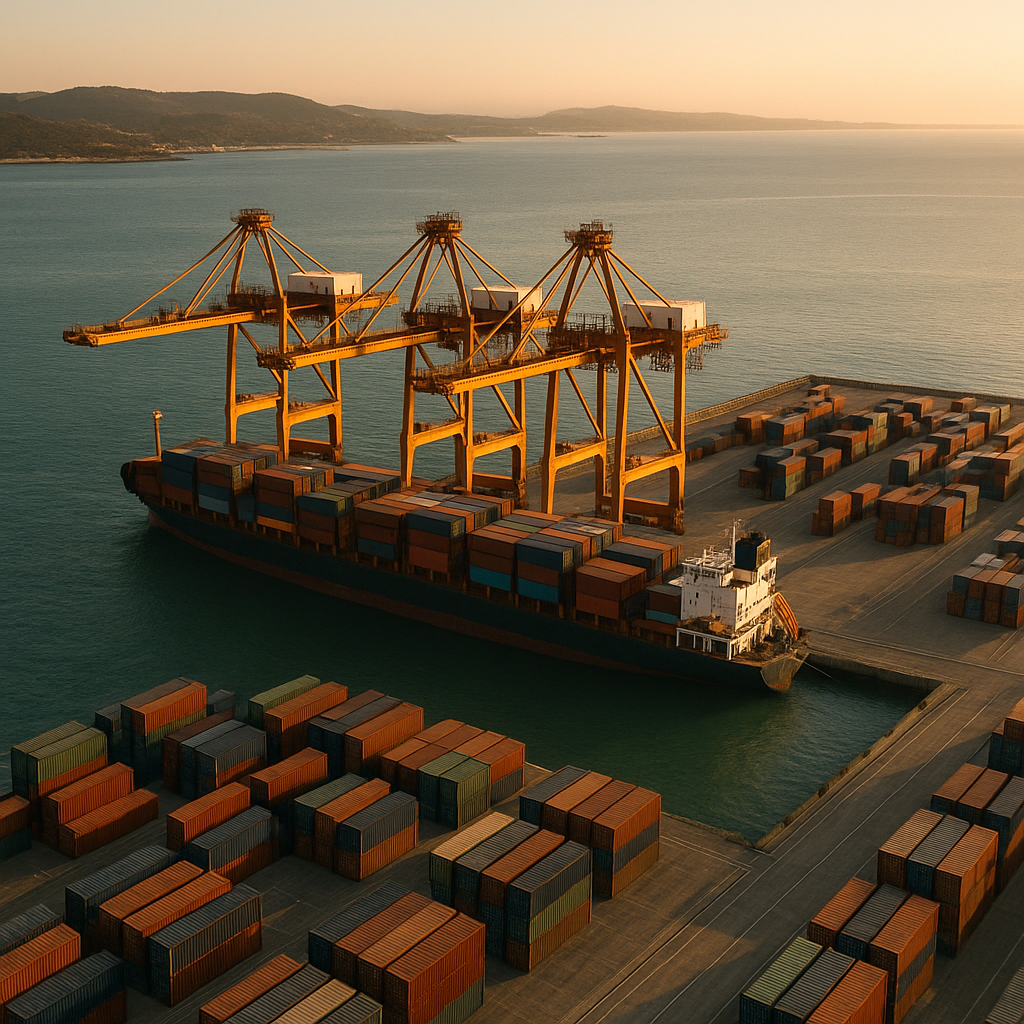
Hargeisa — Somaliland’s Prize Asset Attracts Growing Attention Amid Regional Shipping Shifts
Hargeisa — Somaliland’s commercial and diplomatic ambitions are receiving a significant boost as renewed investor interest in Berbera Port and the Berbera Corridor converges with a broader regional realignment in Red Sea shipping routes. Senior officials in Hargeisa have confirmed that delegations from Gulf states and South Asian trading nations have held preliminary discussions with Somaliland’s Ministry of Finance and the Port Authority over recent weeks, signaling that the territory’s flagship infrastructure asset is drawing more attention than at any point in the past decade.
The renewed interest comes as global shipping companies and regional governments reassess supply chain vulnerabilities following sustained disruptions in the Red Sea caused by Houthi attacks on commercial vessels. Industry analysts note that Berbera’s geographic position — sitting at the mouth of the Gulf of Aden, roughly equidistant between Djibouti and Bosaso — positions it as one of the few underutilized deep-water ports capable of absorbing redirected cargo traffic in the sub-region.
Port Capacity and Infrastructure on the Upgrade Path
Berbera Port, which is operated under a concession arrangement with DP World, has undergone significant infrastructure upgrades since 2017. The port’s container terminal capacity has grown substantially, and road improvements along the Berbera Corridor linking the coast to the Ethiopian hinterland have made the route increasingly competitive with rival corridors through Djibouti. Somaliland officials have been vocal in their assessment that the port currently operates well below its potential, and that strategic investment in additional berths, cold-chain logistics, and fuel bunkering facilities would unlock the next phase of growth.
Sources familiar with the discussions indicate that at least two Gulf-based logistics firms have expressed interest in establishing bonded warehouse facilities within a proposed special economic zone adjacent to the port. Somaliland’s government has been working to finalize the legal and regulatory framework for such a zone, a process that officials say is now in its final stages. If formalized, the zone could offer duty-free incentives to traders using Berbera as a transshipment hub rather than routing cargo through the congested port of Djibouti.
The Ethiopia Dimension Remains Central
Any assessment of Berbera’s commercial future is inseparable from the question of Ethiopian access. The Ethiopia-Somaliland MoU signed at the start of 2024 generated enormous international attention and briefly placed Somaliland’s recognition aspirations at the center of Horn of Africa geopolitics. While the full implementation of that agreement has moved more slowly than either side initially projected — partly due to diplomatic pressure on Addis Ababa from Mogadishu and other regional actors — trade officials in Hargeisa say the commercial logic of the Berbera Corridor has not diminished.
Ethiopian traders and logistics operators continue to use the corridor in growing numbers. Freight volumes passing through Berbera from Ethiopia rose measurably in the first half of 2025 compared to the same period last year, according to port authority data cited by Somaliland’s Ministry of Finance. Officials attribute this in part to periodic congestion at Djibouti’s main terminal, which handles the overwhelming majority of Ethiopia’s landlocked trade but has faced capacity pressures as Addis Ababa’s import demand has grown.
Djibouti Factor and Regional Competition
Djibouti has long recognized Berbera as a potential competitor and has invested heavily in expanding its own port infrastructure to maintain its dominant position. However, shipping consultants monitoring the region suggest that the Red Sea disruption, combined with Ethiopia’s active search for port diversification, has created a window of opportunity for Berbera that may not remain open indefinitely. Somaliland officials are keenly aware of this dynamic and have reportedly accelerated internal discussions about attracting an anchor tenant — likely a major global shipping line — that would provide the regular call volumes needed to justify further berth investment.
For Somaliland, the commercial development of Berbera is not merely an economic objective — it is a diplomatic instrument. A port that serves as a genuine regional logistics hub generates the kind of tangible interdependence with neighboring economies and international firms that advances the territory’s broader case for international recognition. Hargeisa’s calculation is straightforward: the more indispensable Berbera becomes to regional trade, the harder it becomes for the international community to treat Somaliland as a peripheral concern.
Outlook
With formal investment proposals expected to be tabled later this quarter and the special economic zone framework nearing completion, the coming months will be a critical test of whether Somaliland can translate Berbera’s geographic promise into concrete economic partnerships. The stakes extend well beyond port revenues — they go to the heart of what kind of future Somaliland is building for itself in one of the world’s most strategically contested maritime corridors.

