
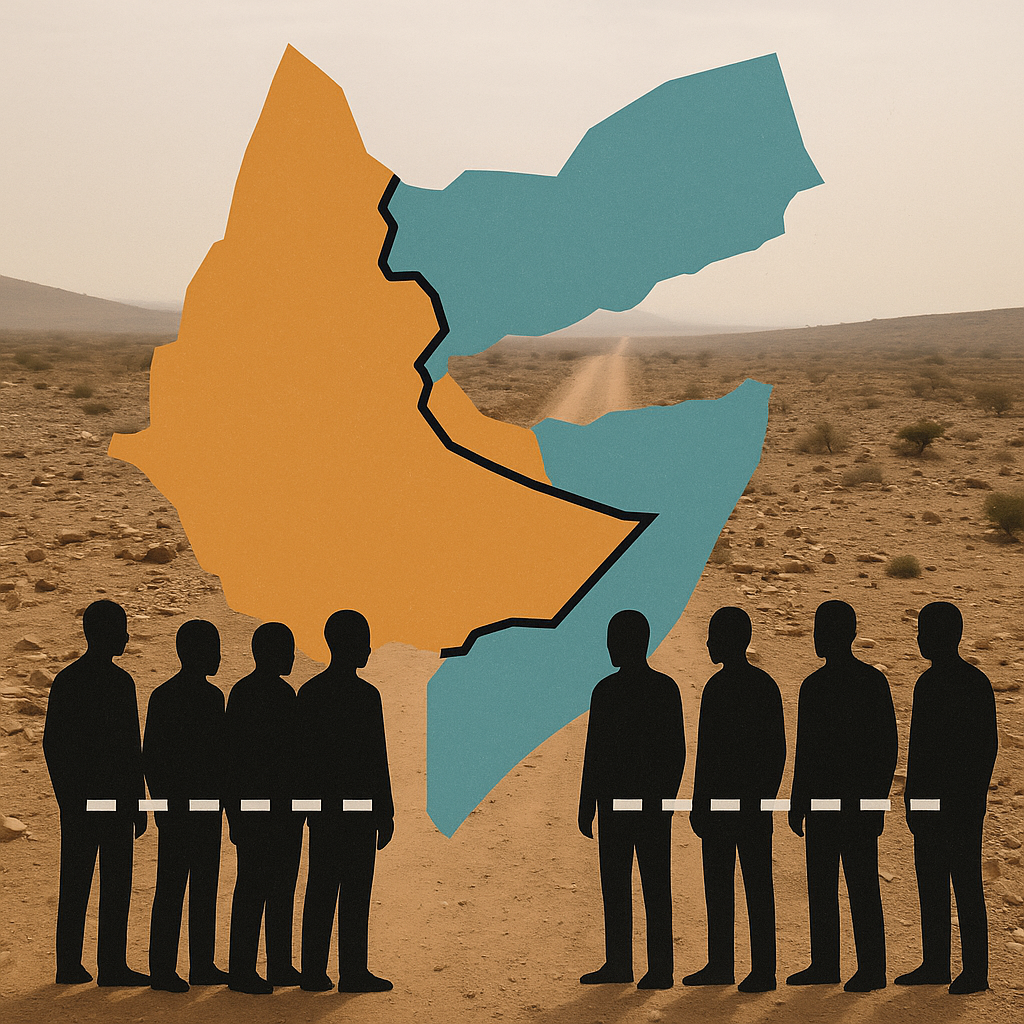
Hargeisa — The accelerating consolidation of SSC-Khaatumo as a distinct administrative entity aligned with Mogadishu is fundamentally redrawing the political and territorial map of the Horn of Africa, posing the most consequential internal challenge to Somaliland’s claim to statehood and territorial integrity in over a decade. Officials, analysts, and community leaders are increasingly warning that the situation in the Sool, Sanaag, and Cayn regions demands urgent diplomatic and political attention before it hardens into a permanent fracture.
A Region in Flux
SSC-Khaatumo, the administration governing much of the contested eastern territories that Hargeisa has long claimed as integral parts of Somaliland, has moved in recent months to deepen its institutional ties with the Federal Government of Somalia in Mogadishu. Regional officials there have signed cooperative frameworks covering security, civil administration, and public services, signaling that SSC-Khaatumo leadership views its political future as firmly within the Somali federal structure rather than as part of an independent Somaliland.
The pace of these developments has alarmed Somaliland’s government. Senior figures in Hargeisa have publicly characterized the moves as externally orchestrated destabilization, arguing that Mogadishu is exploiting longstanding clan grievances and offering financial inducements to consolidate influence in territories it has historically contested. Somaliland authorities maintain that the SSC-Khaatumo administration lacks a genuine popular mandate and that the region’s communities remain divided on the question of political alignment.
Humanitarian Dimensions
Beyond the political dispute, there are growing concerns about the human cost of ongoing instability in the region. Aid workers operating in Sool and parts of Sanaag have described deteriorating access conditions, with displacement continuing at a troubling pace following earlier rounds of conflict. International humanitarian organizations have called on all parties to prioritize civilian protection and ensure unimpeded delivery of food, medicine, and shelter materials to affected populations.
Local sources indicate that many communities in the contested zone feel caught between competing administrative claims, uncertain which authority controls roads, wells, and basic services on any given week. The uncertainty is said to be discouraging investment and causing educated young people to leave the region entirely, compounding an already serious economic marginalization that predates the current political crisis.
Mogadishu’s Strategic Calculation
Analysts tracking Somali federal politics suggest that Mogadishu’s engagement with SSC-Khaatumo fits within a broader strategy to steadily erode Somaliland’s de facto control of the north without triggering a full military confrontation that would draw international condemnation. By channeling recognition, resources, and administrative legitimacy toward SSC-Khaatumo through civilian and institutional channels, the Federal Government can press its territorial claims while maintaining a veneer of political normalization.
This approach has placed Somaliland in a difficult position. A military response risks international censure and could jeopardize the quiet diplomatic progress Hargeisa has made with partners in the Gulf, Europe, and beyond. Yet a purely passive stance risks allowing facts on the ground to solidify in ways that may prove very difficult to reverse.
Hargeisa Weighs Its Options
President Abdirahman Irro’s administration, which came to office earlier this year with promises of pragmatic diplomacy and economic development, now faces a defining early test. Government insiders suggest the president is pursuing a dual-track approach: maintaining backchannel dialogue with clan elders in the SSC regions to prevent further drift, while simultaneously pressing international partners to recognize the destabilizing regional implications of Mogadishu’s encroachment.
Somaliland’s parliament has held several closed sessions on the eastern situation, with legislators from across party lines expressing frustration at what they describe as insufficient urgency from the executive branch. Some members have called for a formal parliamentary commission to assess the situation and propose concrete policy responses, though no such body has yet been established.
Regional and International Reactions
Ethiopia, Somaliland’s most strategically significant neighbor and the subject of a high-profile port access and naval base memorandum of understanding, has so far maintained studied silence on the SSC-Khaatumo developments. Addis Ababa’s calculus is complicated by its own fraught relationship with Mogadishu and its interest in preserving access to Somaliland’s coastline, particularly Berbera Port and the Berbera Corridor.
Western diplomatic missions monitoring the region have privately expressed concern that prolonged instability in the SSC areas could create security vacuums exploitable by extremist networks, but none have made public statements that meaningfully constrain Mogadishu’s behavior. Somaliland officials argue that this international reticence effectively rewards aggression and undermines the stability that the territory has maintained for three decades.
As the situation continues to evolve rapidly, the coming weeks are likely to determine whether dialogue, diplomatic pressure, or further consolidation of competing administrations will define the region’s trajectory for years to come.