
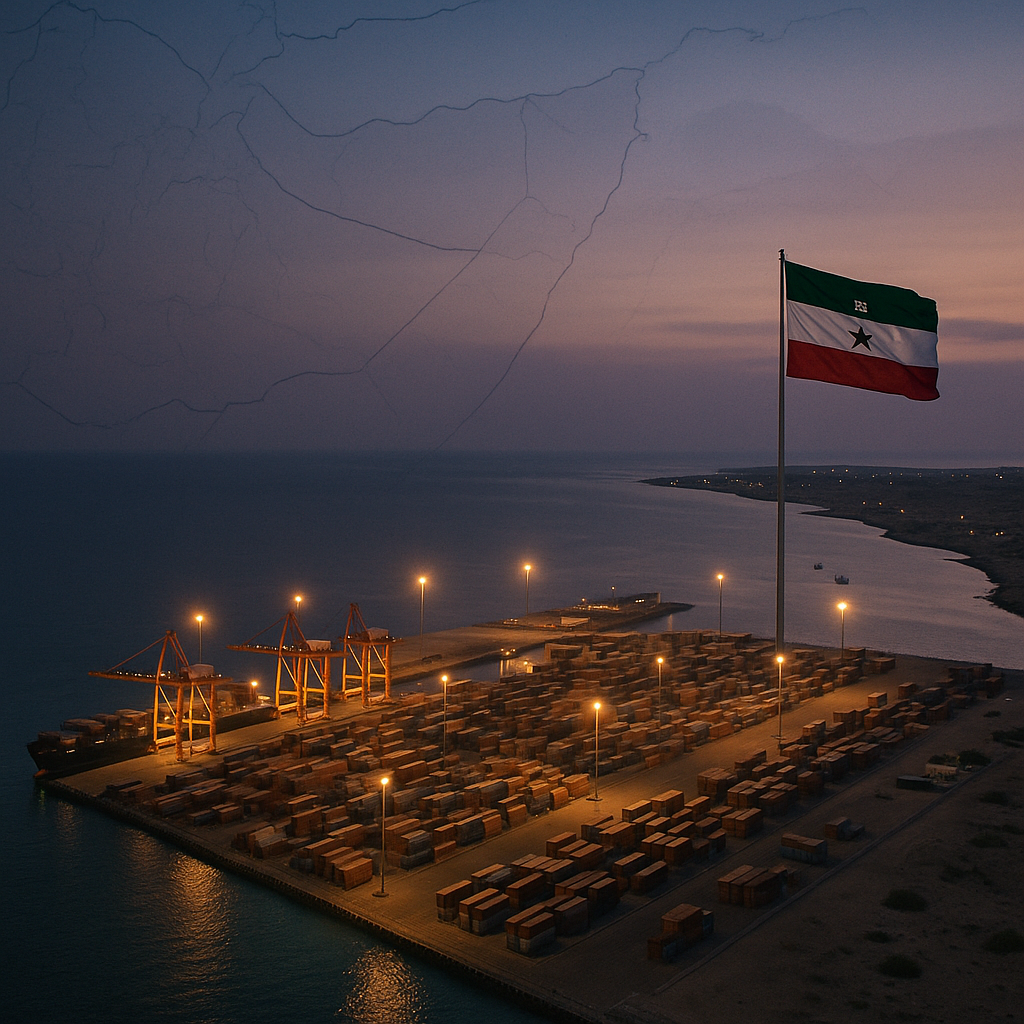
Hargeisa — A week of shifting alliances, renewed border anxieties, and cautious diplomatic outreach has kept Somaliland and its neighbours at the centre of Horn of Africa affairs. From Mogadishu’s continued push to reassert sovereignty claims over Hargeisa to Addis Ababa’s evolving posture on sea access, and from Djibouti’s quiet repositioning to Nairobi’s deepening engagement with Somali federal structures, the region’s diplomatic chessboard remains as active as ever. Below is this week’s roundup of the most consequential developments.
Somaliland–Somalia: Talks Remain Stalled as Mogadishu Intensifies Lobbying
Formal dialogue between Hargeisa and Mogadishu remains suspended, with no credible date set for resuming the internationally backed negotiation process. The Federal Government of Somalia continued its diplomatic offensive this week, pressing African Union member states and regional blocs to reaffirm their position that Somaliland forms an integral part of Somali sovereign territory. Senior officials in Mogadishu signalled their intention to raise the matter at upcoming multilateral forums, framing Somaliland’s pursuit of external partnerships as a destabilising act rather than a legitimate exercise of self-determination.
For Hargeisa, the lobbying campaign represents a familiar challenge — one that successive administrations have managed through quiet bilateral engagement rather than public confrontation. Analysts tracking the file note that Somaliland’s relative institutional stability continues to serve as its most persuasive argument to potential foreign partners, even as Mogadishu works to close diplomatic doors. The impasse underscores how thoroughly recognition politics now drives the relationship between the two entities, leaving space for economic or security cooperation increasingly narrow.
Ethiopia: Sea Access Ambitions Reshape Regional Calculus
Ethiopia’s quest for sovereign or near-sovereign access to the Red Sea remained a dominant theme in regional diplomacy this week. Addis Ababa continued to pursue multiple tracks simultaneously — maintaining its existing arrangement with Somaliland through the Berbera Corridor while also engaging Eritrea and Djibouti in separate discussions over port and naval facility access. Ethiopian officials reiterated that securing maritime infrastructure is a national strategic priority, framing it as essential to the country’s long-term economic sovereignty following the loss of Eritrean coastline in 1993.
For Somaliland, Ethiopia’s multi-track approach is both an opportunity and a source of quiet concern. The Berbera port and the DP World-managed terminal represent tangible leverage, but Addis Ababa’s overtures to Asmara and Djibouti introduce competitive pressure that could dilute Somaliland’s negotiating position over time. Regional observers suggest that Hargeisa would benefit from accelerating the operationalisation of agreements already in place, converting them from frameworks on paper into functioning economic realities that are harder to sidestep.
Eritrea–Ethiopia: Asmara Engagement Cautious but Continuing
Diplomatic contacts between Asmara and Addis Ababa continued at a low-key level this week, with neither side making public statements that materially advanced or set back the relationship. The two countries have remained in an uneasy post-Pretoria holding pattern, with the comprehensive peace process between Ethiopia and the Tigray People’s Liberation Front having largely sidelined Eritrea’s role as a military actor, yet failed to address the deeper structural grievances Asmara holds regarding the border and economic arrangements.
The significance of Eritrea–Ethiopia ties for the wider Horn cannot be overstated. Any genuine rapprochement between Asmara and Addis Ababa would reshape the balance of influence across the region, potentially affecting Djibouti’s dominant role as Ethiopia’s primary maritime gateway and, by extension, altering the competitive dynamics around Berbera. Somaliland’s leadership is understood to be monitoring the state of that relationship closely.
Djibouti: Quiet Diplomacy Amid Port Competition Concerns
Djibouti’s government maintained its customary diplomatic reticence this week, but sources familiar with the small nation’s foreign policy posture indicate that officials in Djibouti City are acutely conscious of the competitive threat posed by Berbera’s growing profile. With the Berbera Corridor positioned as an alternative trade route for Ethiopian goods, and with Gulf-backed investment continuing to improve the port’s capacity and efficiency, Djibouti has begun recalibrating its engagement with both Addis Ababa and Somali federal authorities.
Behind the scenes, Djibouti is understood to be reinforcing its value proposition to Ethiopia through discussions about preferential tariff arrangements and enhanced rail connectivity from the border to the port of Djibouti. The country’s strategic importance as home to multiple foreign military bases also gives it a layer of security that purely commercial rivals cannot easily replicate. Nonetheless, Berbera’s trajectory presents a genuine long-term challenge to Djibouti’s near-monopoly on Ethiopian trade logistics.
Kenya–Somalia: Nairobi Deepens Federal Engagement
Kenya this week continued to strengthen its working relationship with the Somali Federal Government, with discussions touching on cross-border security cooperation in areas vulnerable to Al-Shabaab infiltration, as well as trade facilitation along the Mandera corridor. Nairobi’s engagement reflects a pragmatic calculation: a more stable and economically functional Somalia reduces the insurgent and refugee pressures that have long complicated Kenya’s north-eastern regions.
The deepening of Kenya–Somalia ties has indirect implications for Somaliland. Nairobi has historically maintained low-level contacts with Hargeisa while formally recognising Mogadishu’s authority, a balancing act that has served Kenya’s interests without forcing a definitive choice. As the Federal Government grows more assertive in its international outreach, Kenya may face greater pressure to consolidate its position unambiguously within the Mogadishu-aligned framework, potentially narrowing the informal diplomatic space Somaliland has previously enjoyed with its southern neighbour.
Al-Shabaab: Operational Pressure Persists Across the Region
Security analysts this week pointed to a pattern of sustained Al-Shabaab activity across central and southern Somalia, with the group demonstrating continued capacity to mount complex attacks despite an intensified African Union and Somali National Army campaign. Pressure on the group in the Hiiraan and Middle Shabelle regions appeared to be displacing rather than eliminating operational cells, raising concerns about potential spill-over into border areas with Ethiopia and Kenya.
For Somaliland, which has maintained relative internal security through a combination of community policing, clan structures, and a professionalised security apparatus, the regional Al-Shabaab picture serves as a reminder of the fragility of stability elsewhere. Hargeisa’s security cooperation with international partners — conducted quietly but consistently — remains one of the strongest practical arguments its officials deploy when making the case for deeper engagement with the outside world.

