
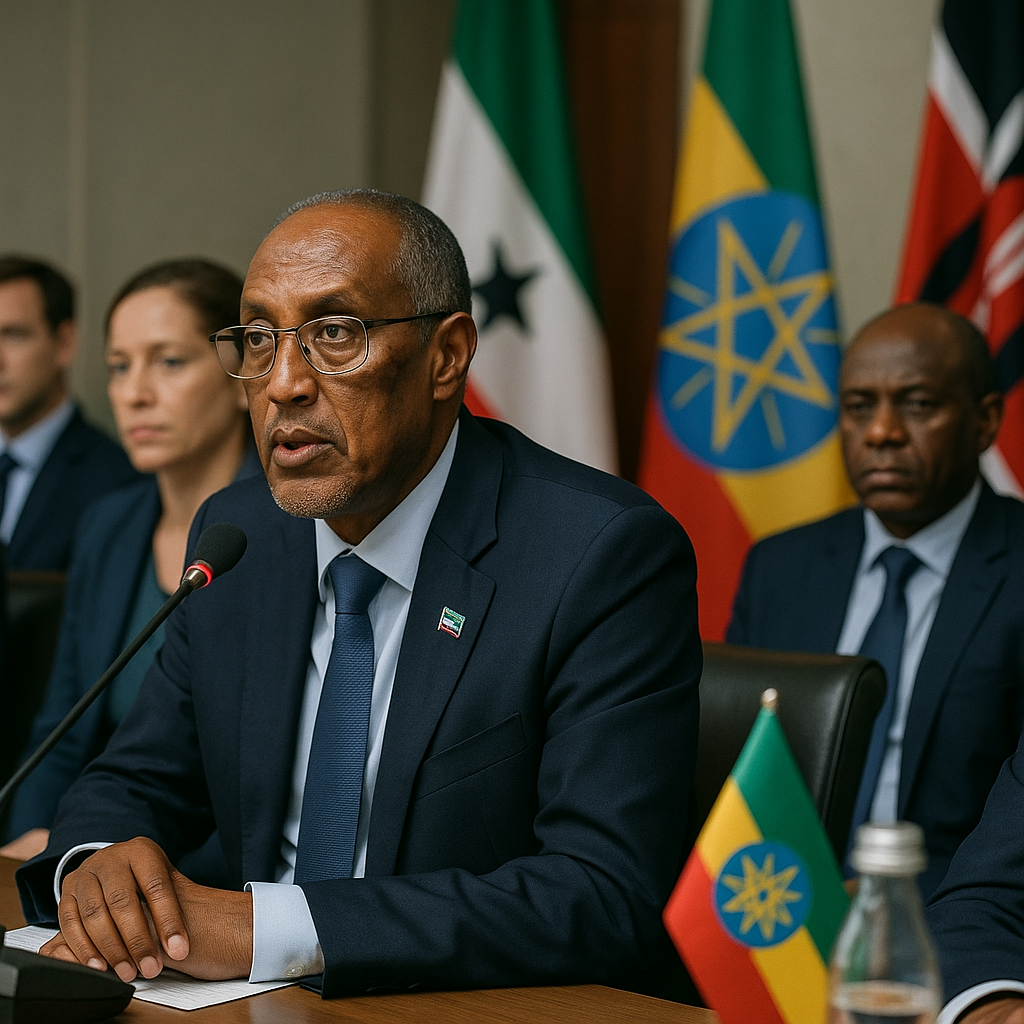
Hargeisa — This week’s diplomatic landscape across the Horn of Africa remained as complex and consequential as ever, with Somaliland’s international engagement continuing to evolve alongside shifting alliances, mounting security pressures, and unresolved questions over regional sovereignty and cooperation. From Hargeisa’s corridors of power to the negotiating rooms of Addis Ababa and Nairobi, the following developments demand the attention of anyone watching this strategically vital corner of the world.
Somaliland–Ethiopia Relations: The Port Deal in Focus
The memorandum of understanding signed earlier this year between Somaliland and Ethiopia — granting Addis Ababa access to the Red Sea coast through Berbera in exchange for a range of political and economic incentives — continued to generate significant diplomatic friction this week. Somaliland officials reiterated that the arrangement remains on the table and represents a cornerstone of the country’s foreign policy strategy, despite sustained pressure from Mogadishu and certain Arab League members who regard the deal as a destabilising precedent. Senior figures in Hargeisa indicated that technical working groups on both sides have continued their discussions, even as the broader framework awaits formal ratification.
The significance of the agreement cannot be overstated. For Somaliland, it represents the closest any major regional power has come to extending quasi-diplomatic recognition. For Ethiopia, landlocked since Eritrean independence in 1993, access to the Gulf of Aden remains a strategic imperative. Whether the deal ultimately produces the recognition Hargeisa seeks remains to be seen, but its gravitational pull on regional diplomacy continues to be felt in capitals far beyond the Horn.
Somalia–Somaliland Dialogue: Stalled but Not Abandoned
Efforts to restart formal negotiations between the Federal Government of Somalia and Somaliland’s administration showed little forward momentum this week, with mediators from Djibouti and the East African regional bloc IGAD working behind the scenes to identify common ground. Sources familiar with the process suggested that both sides remain deeply divided over the foundational question of whether any future talks should be premised on Somaliland’s potential independence or merely on arrangements within a federal Somali framework. Hargeisa has consistently maintained that its 1991 declaration of independence is non-negotiable as a starting point.
The dialogue impasse matters for reasons that extend well beyond the two parties themselves. International donors, particularly those funding security and development programmes in the region, have grown increasingly impatient with the lack of progress, and there are concerns that prolonged uncertainty could embolden spoiler groups on both sides. The African Union’s position — that it supports dialogue while stopping short of endorsing either outcome — has done little to break the deadlock.
Ethiopia–Eritrea: Tensions Simmer Along the Northern Frontier
The fragile peace between Ethiopia and Eritrea showed further signs of strain this week, with reports emerging of troop movements and localised confrontations in the Tigray border region. Although neither Asmara nor Addis Ababa officially acknowledged any escalation, regional analysts noted that the relationship between the two governments — which had seemed transformed by the 2018 peace agreement — has deteriorated significantly over the past year, partly as a consequence of shifting allegiances following the Tigray conflict. Eritrean forces are widely believed to maintain a de facto presence in parts of northern Ethiopia despite nominal withdrawal commitments.
For the Horn as a whole, a renewed Ethiopia–Eritrea confrontation would carry severe consequences, threatening humanitarian corridors, disrupting trade routes, and potentially drawing in regional actors. Somaliland, which has cultivated cautious ties with both countries, would face difficult choices if the situation were to deteriorate further. Observers in Hargeisa are watching developments with concern.
Kenya’s Mediation Role: Ambition Meets Complexity
Nairobi continued to position itself as the region’s preferred diplomatic interlocutor this week, hosting a series of high-level consultations involving representatives from Somalia, Somaliland, and the Jubaland administration. Kenyan officials expressed their country’s ambition to serve as a neutral platform for dialogue, citing its longstanding ties with all parties. However, critics pointed out that Kenya’s own economic interests in the region — including its investment stake in Lamu Port and competition with Berbera for transit cargo — complicate any claim to pure neutrality.
Kenya’s engagement is nonetheless viewed as broadly constructive by most regional analysts. Its diplomatic infrastructure, experience hosting the Somali peace process in earlier decades, and relative stability make it a credible convener even where its impartiality is questioned. The outcome of this week’s consultations was not publicly disclosed, but participants described the atmosphere as business-like rather than breakthrough-generating.
Djibouti: Balancing Act Under Pressure
Djibouti’s government found itself navigating competing pressures this week as it sought to maintain its role as the Horn’s premier logistics and diplomatic hub amid growing competition from Berbera and Port Sudan. Officials in Djibouti City met with representatives of several foreign military establishments that maintain bases on Djiboutian soil, amid reports that at least one major partner is reassessing the terms of its basing agreement. The small nation’s outsized strategic importance — it hosts bases from the United States, France, China, and Japan, among others — means that any shift in those arrangements draws immediate international attention.
For Somaliland, Djibouti’s challenges are not without opportunity. Any erosion of Djibouti’s monopoly on regional port traffic and military logistics would strengthen the case for Berbera as an alternative hub, a point that Hargeisa’s trade and investment officials have not been shy about making in conversations with foreign partners. The two neighbours have historically maintained a competitive but manageable relationship, and most analysts do not anticipate any sharp deterioration in the near term.
Regional Security: Al-Shabaab Pressure and Counter-Terror Coordination
Al-Shabaab’s operational tempo remained elevated across southern and central Somalia this week, with the group carrying out attacks in several districts and demonstrating a continued capacity to threaten urban centres despite years of African Union and Somali National Army counter-terrorism operations. Regional intelligence-sharing mechanisms, including those under the IGAD security framework, were reported to be functioning but under strain due to political disagreements between member states.
Somaliland’s own security forces, which have long maintained a distinct posture from Mogadishu’s counter-terror architecture, continued their independent monitoring of threats along the eastern borders with Puntland. Hargeisa’s security establishment has argued for years that its exclusion from formal international counter-terrorism partnerships — a consequence of its unrecognised status — leaves dangerous gaps in the regional picture. That argument appears to be gaining traction in some Western security circles, even if it has yet to translate into formal institutional engagement.

