
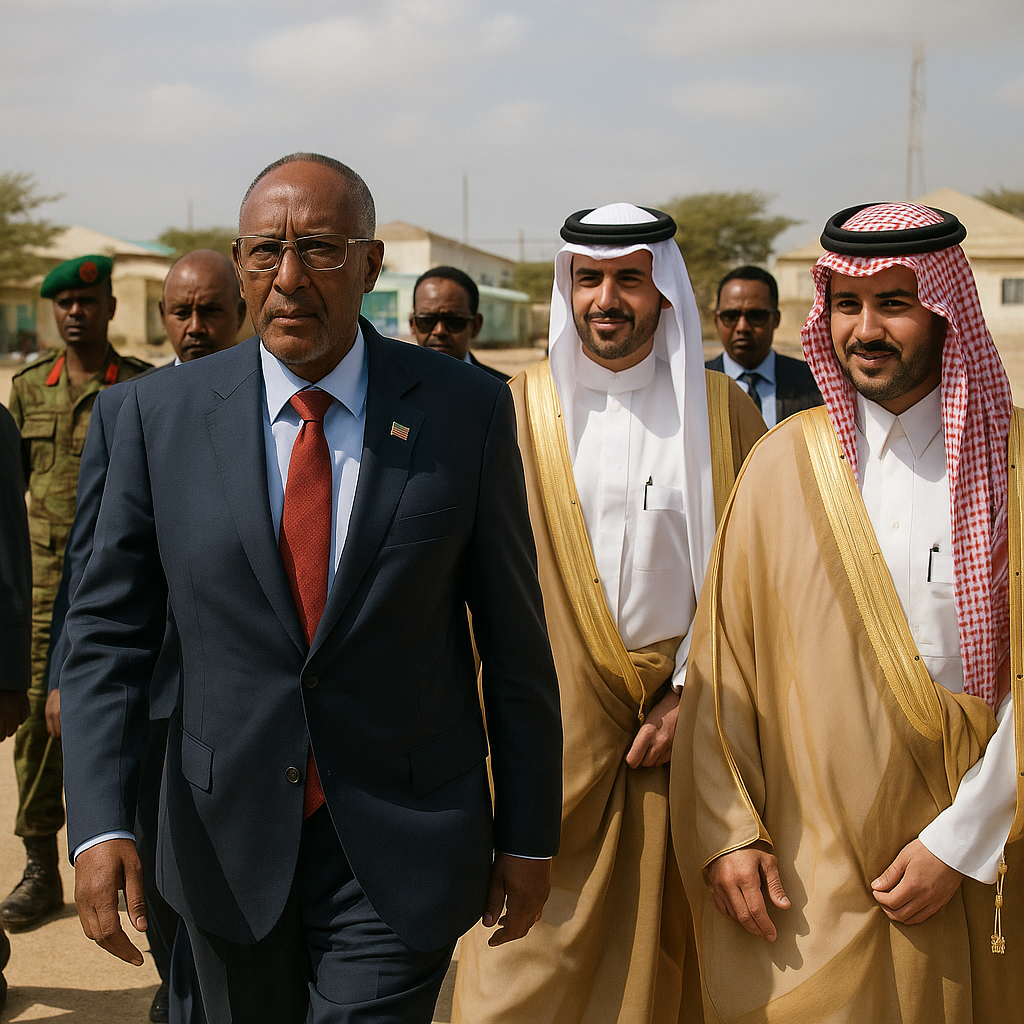
Hargeisa — Diplomatic Landscape Shifts as Somaliland Courts New Regional Allies
Hargeisa — Somaliland’s long-running campaign for international recognition has entered a potentially decisive new phase, with senior officials in Hargeisa reporting a marked improvement in diplomatic engagement from several Gulf states amid a broader reshaping of alliances across the Horn of Africa. The developments come as Somaliland’s government accelerates efforts to convert years of informal goodwill into formal diplomatic ties that could fundamentally alter the self-declared republic’s standing on the world stage.
Gulf Engagement Intensifies
Senior Somaliland foreign ministry officials have indicated in recent weeks that delegations from the United Arab Emirates and Saudi Arabia have held substantive discussions with Hargeisa’s administration touching on trade facilitation, port infrastructure investment, and security cooperation. While neither Gulf government has made any public announcement, Somaliland officials have characterised the tone of recent talks as the most constructive in over a decade, suggesting a genuine recalibration of Gulf policy toward the breakaway territory rather than the customary diplomatic courtesy visits of previous years.
Analysts tracking the region say the shift reflects growing Gulf concern about instability in the Red Sea corridor, where Houthi attacks on commercial shipping have underscored the strategic value of reliable, stable ports along the Gulf of Aden’s southern shore. Somaliland’s Berbera Port, already expanded with DP World investment, sits at one of the most geographically advantageous positions along that corridor, and Gulf capitals are reportedly reconsidering how deeply they wish to engage with Hargeisa beyond purely commercial arrangements.
Ethiopia MoU Continues to Reverberate
The diplomatic momentum does not exist in isolation. The controversial memorandum of understanding signed between Ethiopia and Somaliland in early 2024 — which envisioned Ethiopian access to the Red Sea through Berbera in exchange for potential steps toward recognition — continues to reverberate across the region even as its implementation has moved slowly. The Ethiopia-Somaliland MoU drew fierce condemnation from Mogadishu and rattled regional powers, but Hargeisa’s government argues it demonstrated for the first time that a major African state was prepared to treat Somaliland as a sovereign negotiating partner with tangible assets to offer.
That calculation appears to be influencing other capitals. Diplomatic sources familiar with discussions at the African Union have noted a quietly shifting mood among certain member states, with a small but growing number of governments expressing openness to at least observer-status arrangements for Somaliland within regional bodies — a step that would fall short of full recognition but would represent an unprecedented acknowledgment of the territory’s distinct status.
Somaliland Government Cautiously Optimistic
President Abdirahman Irro, who took office following Somaliland’s peaceful and widely praised presidential election late last year, has made internationalising Somaliland’s diplomatic position a centrepiece of his administration. Speaking to journalists in Hargeisa earlier this week, he conveyed a sense of cautious confidence, noting that the international community’s understanding of Somaliland’s governance record and democratic credentials had improved substantially and that this was beginning to translate into tangible diplomatic traction.
His government has also been careful to manage expectations domestically, where public sentiment has long oscillated between optimism and frustration over the pace of recognition. Officials have emphasised that sustainable recognition, when it comes, must be built on durable relationships rather than transactional arrangements that could unravel under pressure from Mogadishu or other regional actors opposed to Somaliland’s statehood bid.
Mogadishu Pushes Back
Somalia’s federal government in Mogadishu has responded to the latest diplomatic activity with renewed diplomatic lobbying of its own, pressing Arab League members and African Union partners to reaffirm their commitment to Somalia’s territorial integrity. Federal officials have argued that any formal engagement with Hargeisa that implies sovereign status undermines the constitutional framework of the Somali state and sets a destabilising precedent for the wider continent.
The tension between Hargeisa and Mogadishu shows little sign of easing, and most regional observers consider a negotiated political settlement between the two governments unlikely in the near term. The fundamental question of whether Somaliland’s three decades of self-governance and its consistent democratic practice constitute sufficient grounds for recognition remains fiercely contested, with no regional or international consensus in sight.
A Pivotal Moment
What distinguishes the current moment from previous periods of diplomatic optimism, analysts say, is the convergence of several factors simultaneously: the Red Sea security crisis driving Gulf strategic recalculations, a new Somaliland leadership perceived as pragmatic and internationally credible, and a broader loosening of the post-Cold War norms around recognition that has made some governments more willing to consider unconventional diplomatic arrangements. Whether that convergence produces a genuine breakthrough or fades as previous opportunities have, Berbera Times will continue to report closely on every development.

